Jump to ratings and reviews
Rate this book

Grey

Rate this book
In a world pushed beyond the moral simplicity of black and white, all that survives is Grey.


High fashion, corporate malfeasance, celebrity culture, and an obsessed media collide with exuberant violence and volatile intensity in Grey, the explosive debut novel by newcomer Jon Armstrong.


For Michael Rivers, life is perfect. Michael has everything; tall, handsome, and famous, he is worshipped by billions of fans around the globe. He is wealthy beyond measure, the heir apparent to RiverGroup, one of the handful of high-tech corporations that controls the world. He is fashionable, setting trends with his wardrobe of immaculate designer suits, each a unique and celebrated work of art. And Michael is in love, perfect love, sharing a private language based entirely on quotes from the latest fashion magazine advertisements, with Nora, his beautiful, witty, and equally perfect fianc

240 pages, Paperback

First published February 1, 2007

4 people are currently reading
336 people want to read

About the author

Jon Armstrong

13 books33 followers

Ratings & Reviews

What do you think?
Rate this book

Friends & Following

Create a free account to discover what your friends think of this book!

Community Reviews

5 stars
35 (11%)
4 stars
101 (31%)
3 stars
122 (38%)
2 stars
45 (14%)
1 star
15 (4%)
Displaying 1 - 30 of 68 reviews
Profile Image for Brandon.
64 reviews5 followers
Read
March 4, 2008
at first the story was holding up, then it slacked off when it went into cyber-punk territory (a prostitute with a prosthetic vagina instead of a bellybutton who dies after a run-in with the main character who gets... over... the barrier... ...), but it's back on course. this morning while listening to it on the way to work, the characters were eating elephant steaks and drinking cola made from krill.

now, here's the thing:
this takes place in a world where excess-like-we-have-no-idea-of is the expected way to live life.
one female character's outfit was described as rabbit (ears), beaver (tail) and cat (make-up) on top of such things as fake pink fur covering her chest instead of a shirt.
there are others, though, who follow an esthetic of grey-ness and subtlety.

but here's the thing, as bad as all the above sounds, the level of detail and confluence of bizarreness is amazing. it's also humorous and if you're at all associated with fashion or non-clothing design, or if you've been around fashion victims or designers, or if your grandmother still wore house dresses with crazy colors and patterns on them and you were embarrassed by that, you'll find amazing images in this book.
Profile Image for Nicholas Karpuk.
Author 4 books76 followers
May 29, 2009
"Grey" is not a great book, but it's indicative of the ability to write a great book.

I admit, I bought this book from Tattered Cover essentially because it has an awesome cover and an endorsement from Michael Chabon. Seriously, find a bigger version of that image, it's a stellar piece of artwork. But if you read Chabon's quote closely, it more or less falls into line with my feeling, he knows what this author has and is suggesting you get in on the ground floor.

Jon Armstrong makes all the typical rookie mistakes. Great ideas appear too late and without foreshadowing or proper introduction, the plot stumbles and doesn't hold well in the middle, and it comes to an end that stops short of satisfying.

But the writing is sharp and it's exploding with ideas, some of them more audacious than most people would expect from science fiction of any sort.

I described the book to friends as "Metrosexual Dystopia". In a future where various feudal houses control the world and all the major figures are loud, boorish idiots Michael Rivers rebels against his CEO father by dressing in subdued gray colors, a style he picked up from reading the magazine he worships, "Pure H".

The biggest issue with the book is that the protagonist starts out at least likable, but about halfway through the book the impression sinks in that he's a useless idiot and hasn't really done much except get knocked around by others. This could have worked if played for laughs or emphasized, but it seems more like something the writer accidentally realized after finishing the first draft.

I predict that Jon Armstrong will write a stellar book in the next few years.
Profile Image for Byron  'Giggsy' Paul.
275 reviews42 followers
June 1, 2020
Zoolander meets Jeff Noon-style post-cyberpunk weirdness. I must say the followup Yarn by Jon Armstrong Yarn was much better and I'd recommend reading that one first if you think you might like these.
Profile Image for YouKneeK.
666 reviews92 followers
February 10, 2014
This book was definitely not what I expected. I was expecting something with a more serious tone, but instead I found it to be quite bizarre. There was a glimmer of an interesting story in there somewhere, but the insane characters populating the story kept trampling over that glimmer and spitting on it with disdain.

The book started off ok. The main character, Michael, was somewhat likeable and his girlfriend Nora seemed interesting. But, as soon as other characters started entering the picture, things got really weird. Michael’s father had a tendency to start randomly singing and dancing mid-conversation and doing “pelvis thrusts”. Nearly everybody was obsessed with outrageous fashion trends and songs with violent, nasty lyrics. And most of the characters spoke as if their brain hadn’t developed past that of a five-year-old. They used an adult’s vocabulary, not to mention plenty of vulgarity and adult themes, but their actual attitude and their way of expressing themselves was that of young children.

A story about self-absorbed people with weird interests and messed-up priorities could have been interesting to me, but the characters were just so over-the-top that I couldn’t take the story seriously. I also felt like this was practically a romance novel disguised as science fiction. Michael is constantly obsessing over Nora. He’s crazy about her even though they’ve only had four dates, all of which were conducted on camera for public viewing. This book has some unique (if not to my tastes) world building and there was a bit of a mystery in there regarding who was responsible for the incident that occurred at the beginning of the book. There was also an unexpected (and rather disturbing) twist toward the end. However, despite the fact that the book had some different elements to it, it mostly just felt like a romance novel because Michael was so obsessed with Nora that his determination to be with her overshadowed anything else that was going on.

Despite the fact that I didn’t care for the book, I did finish it within a reasonable time frame so I guess somehow it held my interest. But I was definitely rolling my eyes a lot, especially when I got to the final sentence in the book.
Profile Image for Daniel Roy.
Author 4 books74 followers
June 18, 2012
It's probably my fault, but I didn't "get" this book. The setting is clever: dystopian near-future where the ultra-rich have become even richer and more decadent. What's a 19 year-old to do in this world? Why, reject all excesses and embrace a yearning for monochromatic prints and suits, of course.

Unfortunately, the story itself doesn't live up to the cleverness of the setting. The story is supposed to be about a love story--comparisons are made to Romeo and Juliet, but I think they only hurt the novel. The protagonist, Michael, doesn't do much more than whine and bitch his way through his privileged life, and his love affair with Nora, fellow adorer of all things gray and somber, feels stiff. There's no chemistry between the two, just a vague parroting of their favorite fashion magazine.

Worst thing is, Michael and Nora are the characters with the most nuance and color (hah!) in the story. The rest of the characters, except perhaps Joelene, are clownish to the point of being satirical. Michael's father, the antagonist of the story, is so over-the-top crass as to be annoying. He humps and curses his way through the story, while the entire world around him talks about semen and other bodily fluids.

Don't believe me? Early in the novel, there's a woman with a vagina in surgically implanted in her belly. No, it's not relevant to the story. It's just there to show us that this fashion-obsessed society is depraved. They don't come across as depraved to me, as much as Idiocracy casting rejects. Popular bands are called Alüminüm Anüs and Tôxic Tësticle Färm. Michael's father calls his girlfriends 'cunt spaceships'.

So yeah, the story and the characters didn't do anything for me. Still, the setting of Grey is a clever one. It's haute couture SF, with over-the-top decadence. The competitive ironing idea was cool. There's still potential for interesting stories to happen here; I just don't feel Grey was one.
Profile Image for Terence.
198 reviews
June 26, 2011
Like a crazy slap in the face with a steel-reinforced cummerbund. Grey depicts a future world where the corporations are like high tech medieval fiefdoms that promote their products with brutal, ear-piercing raves and use arranged marriages to solidify mergers. The book presents an interesting contrast between the narrator, 19-year-old Michael Rivers, a sensitive aficionado of calm, grey fashion, and his loud, obnoxious father, Hiro Bruce Rivers. Michael's favorite sport is competitive ironing; Hiro loves the Ultra band Aluminum Anus. A very inventive send-up of fashion, celebrity, and corporate excess. he one aspect that I found off putting were several typos and occasional dangling modifiers; the editor seems to have been asleep at the switch. I'mm looking forward to reading the prequel, Yarn, which has gotten even better reviews.
299 reviews
May 23, 2008
A plausible while over-the-top extrapolation of a certain aspect of the current society of spectacle.
Profile Image for Amaha.
68 reviews
June 23, 2008
Fun, dystopian novel about the cult of celebrity and fashion. Like Blade Runner meets Tiger Beat, with some Project Runway thrown in for good measure.
Profile Image for Nea.
5 reviews
March 26, 2023
A pretty good first novel! While there's definitely a pacing problem throughout and the main character is very weak personality wise, the evocative prose and imaginative world will keep you reading until the end.

I've heard that Yarn improves on many of the concepts found here and I can't wait to check it out!
Profile Image for sj.
404 reviews81 followers
November 26, 2011
I finished reading Grey last night before bed, and had a difficult time falling asleep because I couldn't stop thinking about it. I suppose that could be taken as a good sign, but my primary concern was trying to figure out if I'd actually, y'know, liked it.

There were elements of the book that I absolutely loved. The descriptions of the clothing and people were quite vivid, and I had no problem visualizing the entire book as a movie playing out in my head. Grey takes place in a futuristic world where corporate mergers are signaled by marrying off the children of rival companies. Competitive ironing is a televised sport, family security/assassins are known immediately by their garishly coloured leotard-uniforms, one (quite literally) needs protection when watching a band play live and there's an entire sub-culture of those who've had illegal surgery to burn out the cones in one eye so that they can only perceive the world in shades of grey - these are all interesting ideas and visuals that I had no problem getting behind.

The thought of your status as a company being determined - not by the type and efficiency of the service you provide - but by your favourite bands, fashion designers and what magazines you read...well, it hit a little close to home. In an era where everything we do can be cast into the public eye and the distiction between classes is greater than it has been at any time since the feudal ages, Armstrong's 'fashionpunk' dystopia seems all too plausible.

The 'commoners' live in an extremely poor area referred to as the Slubs, where odd forms of prostitution and drug use are the norm. In an attempt to better themselves, they have some seriously weird forms of elective surgery (There's a prostitute at the beginning who has had a second set of genitals added to her belly button. She charges extra for that. O.o), and all aspire to one day be part of the Families. The intense squalor they live in is further emphasized when we visit the Family Compound, which is encased in a bubble that keeps carbon dioxide out. Hugely intricate carved facades, oxygen gardens...just some really strange stuff - but, again, great visuals.

Against this backdrop, we follow the semi-love story of Michael and Nora. They are the children of two of the most influential Families/businesses and are set to marry to seal a merger. They fall in love on their first date, speak in a code derived from the ads in their favourite high-fashion magazine, and gaze lovingly at each other through their cone-less right eyes. In true dystopian fashion, their love simply cannot be - but they will be together, or die trying.

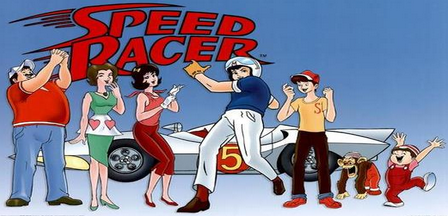
So, as I've already stated - I really appreciated the attention to detail in the world-building that went on in Grey, that being said...it still needed a lot of work. Editing problems aside (someone relied far too heavily on spellcheck and had a difficult time maintaining continuity - especially with regards to which eye was supposed to be greyed out), the story seemed to kind of fall flat in places. It was like the author knew where he wanted to go, but wasn't quite sure how to get there so he just threw in some more bizarre descriptions to distract us from the lack of plot. Another issue I had was with some of the dialogue. There were many times where I felt like I was reading a transcript of an old Speed Racer cartoon. This could have been intentional, though - the author did say that he started building the idea for this book while living in Japan.


(everyone-talks-really-fast-with-no-pauses-for-breath-haHA!)

Grey could have been great. Instead, it reads like a bit of a rough draft with promise. I can see where Mr Armstrong was headed and I really like that place. I just think it needed some fine tuning and a little more time in the editing bay. This is one of the few books I've read that I think would be better as a movie. I can see everything clearly in my head, and it would be a spectacularly gorgeous film.

As an aside - if you have issues with strong language (there are times when the eff bomb is dropped 10 times on a single page) or gore, this really isn't the book for you. Heather, I'm looking at you.

3/5 stars: Weird, but in that good weird kind of way. If it were a little better paced, and a little more attention were paid to the editing process, it would have been a four or five star book.

Review also posted here: http://wp.me/p1Zgyz-3k
Profile Image for Elf M..
95 reviews46 followers
October 30, 2011
Grey, by Jon Armstrong, is a science-fiction love story set in some far future Earth-based dystopia. The hero, Michael Rivers, is the scion of Hiro Rivers, owner of the RiversGroup Security Service, supposedly one of the most powerful families among the citified. Michael is in love with Nora, daughter of the owner of the MKG Security Service, a competing company with which there was to be a merger until, at the end of chapter one, someone gets through RiversGroup Security, attacks Michael, and makes the value of RiversGroup plummet. The two companies accuse each other of the assault, and Michael and Nora embark on a Romeo and Juliet-like attempt to get together even as their world starts to come apart around them.

The real treat of this novel is Armstrong's extremely over-the-top übercultures. Hiro has a film team record his every moment for posterity, listens to heavy metal so powerful every concert leaves dead behind (and every band has ümlauts over every vowel, such as Alüminüm Anüs, Töxic Tësticle Färm and Hammørhëd), and curses like a potty-mouthed schoolboy while being interviewed on celebrity televsion. At one point, Michael is slated to marry Elle from another family; her überculture, Pentunia Tune, is the worst excesses of candy-raver visual kei, with eye-tearing colors strewn in liquid excesses throughout overly bright and empty lives.

Michael belongs to the grey subculture; he lives for black, white, charcoal, soot, raven, graphite, onyx, and cobalt. He loves plain, severe suits in calm, elegant cuts. He's even had one eye surgically altered so that it only sees in black and white. He wants to be calm, cool, almost still-life. He and Nora get their inspiration and subculture from Pure H fashion magazine, and when they're together they quote to each other from captions as they attempt to understand what the photographer was saying.

But the novel never adds up to very much. While Armstrong is very inventive in his creation of the ültra and petunia subcultures, he never really gives you any impression that his civilization actually works. How do these people get fed? What kind of economy is there? There's immense amounts of labor and industry shown in these chapters, from the thousands of people assembling Hiro's various rock concerts, to the ones rebuilding and then partying at Michael's PartyHaus, and yet you never get the sense that these people are anything more than mannequins Armstrong put there to dress the stage. Michael is a deeply passive character, as befits the subculture he has chosen, and makes very few meaningful decisions throughout the story.

I wanted more out of this book. Sure, it's a satire, it's meant to show how shallow and flat the world can be if we allow our personas to be created and modified by our attachment to a media subculture. The last chapter, where Michael finally begins to understand Hiro, is meant to show that deep understanding comes only from deviating the script which you've been fed, but ultimately the power of the novel is cut short by Armstrong's bombastic finale. But to succeed it must be more than just satirical, it must be plausible, and Grey falls down on the job there. To create his malignant, magniloquent world, Armstrong has created a world that cannot exist, a world with too many contradictions, a world of post-human technologies and beastly excesses, and that ultimately detracts from the power of his satirical eye.
Profile Image for Jason Pettus.
Author 20 books1,453 followers
June 16, 2008
(Reprinted from the Chicago Center for Literature and Photography [cclapcenter.com]. I am the original author of this essay, as well as the owner of CCLaP; it is not being reprinted here illegally.)

This is one of four books that recently came in and out of my life without me finishing, which coincidentally enough also kicks off a little mini-series coming here to CCLaP this month; for, you see, by sheer dumb luck, I was able this month to get my hands on half of the ten science-fiction novels nominated this year for either the Hugo or Philip K Dick awards. This one here, for example, was nominated for the Hugo, an award which supposedly reflects the best SF novel of the entire year, and is considered by many to be the most prestigious award in that entire industry; but, oh, I don't know -- I don't want to say that Jon Armstrong's Grey is out-and-out bad, because it isn't, just that it's got one of those storylines that sounds a whole lot better as a premise inside an author's brain, while not so great or even that compelling when actually committed to paper. In fact, my brain is already fuzzy about the plot's details, a mere week after putting the manuscript down: it's the future, I remember that, a future run by royal Shakespearean families of sorts, where decorum and protocol rule all and the subtleties of fashion and music have become an outrageous arena for displaying one's political opinions. Unfortunately, though, Armstrong uses such a milieu to tell a mostly forgettable story, something about the wealthy and good-looking son of one of these outrageously-dressed patriarchs, who is part of some sort of weird countercultural fashion movement to dress only in infinitely subtle shades of grey, and I guess belongs to a religion that worships advertisements or something like that, and who along with his true love is fighting the prearranged political marriages that are the norm for their society. Or...something.

Like I said, I can see how this might've seemed like a cool concept for a fantastical novel when Armstrong was first dreaming it up; a shiny surrealist world where private armies wear stylish bright-orange satin suits and have three-foot-high hairdos, and where the ultimate form of rebellion a fey young fashionista can partake in is to only eat tan foods. But see, once you start writing stuff like that down, you start realizing just how ridiculous a lot of it would actually look if seen in the real world, or at least you should; this is the same problem, for example, that leads to all the ridiculous things you see in SF movie adaptations, from Zardoz to Southland Tales, all those silly cartoonish details that make you scratch your head and go, "Who the hell ever thought this would be a good idea?" Grey is not necessarily a bad book, but is definitely only for the most hardcore SF junkies out there, the genre apologists who not only own the DVD box-sets of crappy 1970s obscure television space operas, but actually watch them on a regular basis. Again, it makes me wonder why it got nominated for a Hugo in the first place, when you would think that the award-givers would want to concentrate on the absolute best their industry had to offer that year. Approach with caution.

Out of 10: 5.3
Profile Image for Charles Dee Mitchell.
854 reviews69 followers
April 11, 2012
I know this will be difficult, but try to imagine a world where millions of common, everyday people live their lives vicariously by following the fashion trends, the sex lives, and the day-by-day doings of a select group of super glamorous, super wealthy people.

Wait a minute! That's our world. But do not despair, the world Jon Armstrong creates in his debut novel takes all our fascination with celebrity and wealth and cranks it up several notches. (TMZ would seem as sober as C-SPAN in this world.) We are in an unspecified future with society divided between members of the elite, ruled over by families whose aristocratic status is determined by their corporate holdings and the amount of publicity they can generate, and then, down below, well, everybody else. The slubbers. Those who live in the slubs -- the vast wastelands of housing developments and thrown-together shacks visible some twenty feet below the highways were the families travel in luxury conveyances at jet propelled speeds. (Slubs is my favorite neologism of recent science fiction.)

Enter Michael and Nora, dream couple. Michael, once famous as a teenage dancer on programs watched by millions, is scion of the River Group. Nora family is older, possibly more distinguished, but not so loaded. The slubs and really everyone else in the world seem to watch the couple's every move. As the novel opens they are returning from a highly formalized date that took them around the Pacific Rim. Michael and Nora, however, are also rebels of a kind. In a world where you are defined by what fashion magazines you read, Micheel and Nora are dedicated followers of Pure H, a magazine of excruciatingly subtle layouts complemented by enigmatic statements. Devotees of Pure H reject the gaudy flamboyance of the world around them and wear only shades of gray, brown, and a few carefully chosen color accent pieces. It sounds like that want to live in a Calvin Klein shop from the 1980's, but they do go to extreme. Each has chosen to burn out the rods in one eye so that by closing the other they see the world only in shades of gray.

In a way you can't fault Michael and Nora for their revolt into tastefulness. Michael's father epitomizes the vulgarity of this society. His fashion crimes go far beyond mixing stripes and checks. He is always in what would be some ridiculous costume were it not accepted as high fashion by those around him. His mouth is a fountain of enthusiastic obscenities that would give Judd Apatow pause. He has a cameraman in charge of documenting his every move and a hairdresser, with the marvelous name Xavid, who never leaves his side.

This book does have a plot, taken loosely from Romeo and Juliet. As star-crossed lovers Michael and Nora may be rather tedious, but that's part of Armstrong's joke. Their coupling while on the run is left discretely off stage. It is impossible to imagine the two of them involved in anything as squishy as sex.

There are assassination attempts, betrayals, daring escapes, and a Mr. Toad's Wild Ride shortcut over the North Pole. And Michael's estranged mother runs a carnival. She's quite a character.

I can imagine people either loving this book or thinking it is too clever for its own good. I am obviously in the first camp.
Profile Image for Alexandra.
838 reviews138 followers
January 14, 2012
I'm glad I read YARN first, because if I had read this first I don't think I would have picked it up. That's a long way of saying that this book isn't nearly as good as the second (which is really a prequel).

GREY is focussed on the spoilt son of a big-time CEO, and his flouncing around when he doesn't get everything his own way. It has overtones of Romeo and Juliet with - I can't believe I'm saying this - even more pretensions, and less soul. (Also no Mercutio.) Michael is being set up to marry the daughter of a CEO whose company his own family's company is merging. Things go wrong, Michael has to start thinking about what he wants from life, things go more wrong. Very quickly.

One of the things I loved about YARN was its world-building. I really enjoyed the attention to detail of rooms, clothes, and architecture that Armstrong lavished on his made-up world - and the language that went with a world's total obsession with fashion. I didn't get the same detail or interest here. The attention to fashion is still present, and is indeed one of the things that sets Michael apart from his father: Michael has dedicated himself to grey, rather than the (literally) eye-watering colour combinations of his father's set. To the point of burning the cones in one eye so that it can only see greys. However, discussion of the slubs (which feature heavily in YARN), the 'Ceutical Wars, the "families" and their hold over the world - these things are skimmed over with not enough depth or tantalising clues to serve as much of an insight into this bizarre world. For me, it ended up making the world and the story just so much froth.

I also struggled to connect with Michael. My co-conspirators on Galactic Suburbia had a number of issues with Tane, the narrator of YARN, but I found him an interesting and engaging enough character that I didn't mind riding along with him. Michael just got annoying. He's pretentious, a bit of a whiner, spoiled, and entirely too self-obsessed for most of the novel. And not in very interesting ways.

Look, I finished it, so clearly I didn't hate it; if I could I would have given it 3.5. Possibly I finished it because I found it an incredibly fast read, mostly because the plot itself is frenetically paced. Reading it and imagining the events feels like being caught up in a whirlwind as Michael gets pushed here and there and visits this person and finds that out and oh costume change! One thing I did hate was Michael's father's taste in music. I understand - well, I presume - that the music of the Ultras is meant to be an ironic take on modern pop and rock and its idiocy, as well as the dark undertones of violence etc etc... but the fact that their music can actually kill because it's so loud, but even more that some of the performers have turned killing into part of their stage routine? Not. Cool.

Definitely read YARN. If you end up being really interested in what else Armstrong imagines for that world, read GREY. Otherwise, I wouldn't bother.
Profile Image for Paul.
300 reviews25 followers
June 5, 2010
Grey by Jon Armstrong is a Romeo and Juliet tale set in a hypersensitive, almost synesthetic world. The story is “sensual” in the most literal meaning of the word. Colors, tastes, textures and smells are all described in great detail and juxtaposed in discordant manners. It’s a technicolor phantasmagoria.

Michael and Nora are initially brought together in the hopes of merging the companies of their families. The attempted murder of 19 year old Michael results in the cancellation of the marriage under the belief that Nora’s family was behind the attempt. However, Michael still loves Nora and evades his father’s maneuverings for new matches. Just like the classic tale, Michael and Nora form a suicide pact to be together “in the end.” As part of his demise, Michael plans on also killing his father with his explosive nitrocellulose suit. The author brings the story to a satisfying conclusion in the epilogue.

Throughout the story are continual references to various fashion magazines by which characters live their lives and are identified. Michael and Nora both live for “Pure H.” From descriptions of the layouts and advertisements, this would be similar to a very dark (almost sadistic) version of GQ or Vogue. All of the fashion is neutral and based on shades of grey. Michael is so devoted that he had a surgical procedure to destroy all of the color sensing cones in one eye so that it can only perceive gray tones.

The book also speaks to the insanity of today’s celebrity glorification and commercialization. Every detail of the Michael’s life is broadcast and used to benefit the family business. The portrayal of the media is a caricature of what we might consider to be the worst examples of journalism.

I found Armstrong’s writing to be both unsettling and appealing at the same time. The richness of language overlays the dark subject matter. The reader wants to look away, but can’t. A word of warning that this story is not for the squeamish. It is both violent and gruesome. The Ultra (both a sub-culture and music style that makes punk-rock seem like NPR) performance by Aluminum Anus during the RiverGroup product launch is simply revolting.

This was so different from anything else I’ve read recently that I’m looking forward to investigating Armstrong further in his second novel, Yarn.
Profile Image for Chris.
68 reviews9 followers
August 21, 2011
This cyber/fashionpunk book tells the classic story of two young lovers separated by warring families. While the story is nothing new, the dystopian world and pop culture living is a fresh take. When fashion goes so far over the top, blending into culture like the lifestyle commitment only found in a sixteen year old, you have clothes ironing competitions, and hairstylists that are also CEO consultants, but in a razor sharp thong kind of way. The descriptive fashion and the clothing involved took precedence here; high-lighted by the dichotomy of the main character, who is obsessed with a muted minimalistic style and belief, versus his father, who is garish, loud, and offensive. The fathers dialog was some of the most colourful swearing I have ever encountered! Some of the absolutely funniest seeming off-the-cuff insulting mish-mash of slang in some time, it has even caused me to be way more creative about my swearing - much to my co-workers dismay however.
I didn't really like the main character in this, but he was a product of his environment and some what relatable. Right from the start a decent mystery was presented, but nothing original, I never really felt like there were any clues presented to me that I could form my own hypothesis, I was just as clueless as the main character. I wasn't really disappointed by the ending, it wasn't cliche, nor too cleanly wrapped up, I just felt a touch underwhelmed. It had more to do with the constraints of telling a classic story more than the authors ability. I will eagerly read the next book set in this world in hopes of an original storyline set in this fantastic world setting.
note - I looked through the stuff I've read, and much to my surprise I have read allot of fashion based fiction! This did not disappoint at all for a genre I wasn't aware I was reading so much of, it fell so much into the sci-fi cyberpunk dystopian speculative fiction that I am so fond of. Cookie-cutter plot, cyber-couture setting.
Profile Image for Aimee.
Author 7 books11 followers
October 27, 2012
Grey is one of those rare novels that takes a high concept and runs with it in a very careful and yet exhilarating fashion. It's a coming of age novel set in a bizarre future that is still incredibly familiar to anyone who remembers thinking they knew everything, only to have it fall down around them.

We're introduced to Michael, the main character, who is clearly in the teen stage of I Will Be the Exact Opposite of My Parents. His father is crass, loud, annoying, and wears bright conflicting colors. His mother is drugged further away from the world than a flower child. So to distance himself from his parents, Michael has embraced the lifestyle called Grey, where he avoids anything that isn't black, white, or some combination of the two. He adopts manners the Victorians would approve of, is a fan of pretentious high-concept magazines (he needs advisors to explain the meaning of the articles and ads, due to their extreme level of coy coolness) and competitive ironing, and has had the color-detecting cones burned out of one eye so he can see the whole world in monochrome if he closes one eye.

He's famous and hounded by paparazzi, and so is his perfect Grey girlfriend, Nora, and his journey to adulthood begins with a gunshot. He loses Nora, his place in the world, and manages to find his way back, even to forgiveness, even back to somber colors.

It's like a cyberpunk The Great Gatsby, if the comparison may be forgiven.

It's also a great example of how a fantastic cover can really, really help your book be noticed. I picked this up at the bookstore mostly due to the cover, which reminds me of an anatomy textbook. Grey, right? And I'm so, so glad I picked it up.
Profile Image for Michelle.
653 reviews48 followers
April 23, 2015
ah, what on earth did i just read?

the future of 'grey' echoes both our current obsession with celebrity for celebrity's sake, and oddly, 'idiocracy' in that you have to wonder how on earth anything gets done through all the mindless partying with willful igorants. Michael is the richest of the rich, only son of "the number one megacorp" (exactly what this business does, or how they do it, or who is actually paying for anything here is all fuzzy), who used to promote the family business by being the best ultraviolent dancer on the planet. after a sort of murder on the dancefloor, he's given up the garish hypercolor umlaut-bedecked world of Ültra music, learned to read (!!!), and gone grey. his new world view is all about flat-felled seams in bespoke suits - charcoal and platinum only, nothing so tasteless as color here - and the expensive, elite ad magazine that depicts the slow death of society. he may have found true love in the cone-less eyes of his first arranged marriage, and has to find himself to win her back.

it's very much more a character study than a plot-driven tale, and by the end it feels as though we've only traded one life of excess for a different-flavored one, with no clearly better choice to be found. still, the description is both fascinating and thoroughly repugnant, just like life dialed up to 11, and well worth checking out.
Profile Image for Becky.
253 reviews
June 30, 2011
In a society controlled in large part by an elite group of corporations and characterized by its wild extremes young Michael Rivers is a demigod. The heir apparent to high-tech security juggernaut RiverGroup, the 19-year-old has it all: He's handsome, fashionable, and literally worshiped by millions of people who monitor his every movement through the media. And his future looks even brighter -- his girlfriend, Nora, the daughter of the head of a competing conglomerate, is his ideal partner. But days before the couple is set to announce their engagement -- and the historic merger of their families' corporations -- an assassin almost succeeds in killing Rivers. When he recovers from the attack, he finds his engagement off and RiverGroup almost bankrupt. Rivers begins a perilous quest to reconnect with his true love -- only to come face-to-face with the horrible reality of his existence .

This was one of the most disturbing books I have read, Mostly because I think it provides a glimpse into our future. During points of this book, I was wondering if lady Gaga had read this book (it was published a few years ago) before she really took off. This book just makes me wonder what our future holds. Caution, not for the faint hearted readers.
Profile Image for Brian.
48 reviews4 followers
December 1, 2010
Like "Feed" crossed with Hamlet and Romeo and Juliet.

The description on the jacket describes the world as "neo-feudalistic," and that is definitely accurate. The vision of a crazily capitalist world where fashion and media are a way of life is compelling, as is the illustration of the ultimate result of the widening class gap, where "slubbers" (commoners) are diseased and barely literate, and the "families" (corporate aristocracy) live in an overprivileged insanity, constantly in fear of losing ratings or income.

I love the description of the fashion movement behind the magazine "Pure H," with its somewhat Japanese gothic undertones.

However "Grey" is ultimately sort of unsatisfying. While protagonist does make peace with his father, the way it is handled is so sudden and presented like a revelation that it's not very credible as portraying actual character growth. And while Jolene is definitely my favorite character, the reveal of her true nature and her fast exit seems as slapped-on as the ending. It's like "and then they woke up."
This entire review has been hidden because of spoilers.
Profile Image for Michael B. Duff.
Author 3 books8 followers
June 25, 2016
Like millions of aspiring science fiction writers in the world, there are some books I read and I think, "I could do that!"

But the books that really blow me away are books that seem to be written on another level entirely, written with the kind of skill and passion and originality that I could not emulate in a million years.

Grey is one of those books - a deeply relevant and powerful satire that spoke to me as a parable about Boomers vs. GenXers, but that could be relevant to any generation overwhelmed by the vulgarity of their parents.

It speaks to that deeply personal yearning for peace, quiet and elegance that grows in any kid that feels trapped by their origin story.

It's a searing indictment of our loud, brash, hypersexualized culture. It saddens me that works of satire like this seem to be misread by big swaths of the science fiction audience. This can be read as a mildly interesting cyberpunk/scifi narrative, but it's so much more than that - it's about a culture turned up to 11, and the deep yearning we have to just slow down and breathe.
Profile Image for Shinynickel.
201 reviews25 followers
Want to read
December 28, 2010
Off this review:

Now comes a bright and witty new practitioner of this honorable mode of speculatively savaging humanity's foibles. Jon Armstrong has archly labeled his own work "fashionpunk," since it takes the whole daft scene connected with haute couture -- media overkill, celebrities, status and wealth -- and rakes it over the coals by way of absurdist amplification.

In Armstrong's debut novel "Grey" we were introduced to a crazed yet consistent future in which clothes literally make the man -- especially our hero, Michael Rivers, a 19-year-old airhead in thrall to his corporate image, who eventually learns to rebel. Company mergers here are facilitated by the ritual marriage and public deflowering of scions. A private automated highway literally encircles the midsection of the planet. Press conferences are vast media orgies. And draped elegantly over everything, beautiful smart fabrics conceal bodily and spiritual ugliness.
Profile Image for Артём Багинский.
38 reviews1 follower
September 7, 2011
As far as I'm concerned, the best book on podiobooks.com (sadly, "taken off the shelf [...] by the request of the author"), what a delight it was to discover after a couple of disappointments (I did discover more gems there later, but none of them greater then Grey). Usually characterized as fashion punk, I read it more like yarn porn (and, hey, the prequel is called Yarn). I listened to the book read by the author and each time I hear him again on his podcast, I flashback to the world of Grey. The world is painted with weird vocabulary, bizarre devices and constructions, but also with characters that inhabit it. But they aren't just tools to show us the world, they are a treat to follow on their own – because they are so strange, I just couldn't help but desire to know what they'd do next, or what will be done to them.

Profile Image for Andrea Mullarkey.
459 reviews
August 2, 2012
The best way I can describe this book is to say it’s an upbeat Super Sad True Love Story for teens. Armstrong provides a highly stylized but not exactly optimistic vision of the future dominated by corporate families and style magazines. Michael, heir apparent to a high-tech security firm falls in love with the lovely Nora, daughter of their chief ally and rival MKG. It is a futuristic Romeo & Juliet complete with body modification surgery, metal and mineral fabrics and people living off the grid in the “slubs.” Armstrong has a clever way with words and ideas but I was disappointed with his copy editor. The typos and grammatical problems were so common it actually interfered with my ability to enjoy the book.
Profile Image for Ben Nash.
331 reviews16 followers
March 25, 2013
The whole time I was reading this book, I wondered why exactly I found it compelling. The main character and his dad both act, in different ways, like annoying little children. Maybe the love story kept me going. Maybe it was the hope that the 19 year old protagonist would grow up and stop acting like a kid.

That might make it sound all bad, but the world was cool, and the writing (and the 200 page length) made this a quick read. Armstrong makes the details of fashion an important part of the world. That and the stark difference between the corporate family structure and the rest of society make me want to read the sequel.

I got this book for free from Night Shade Books during a giveaway.
Profile Image for Zain Mirza.
96 reviews22 followers
September 7, 2014
I don't often read dystopian novels and this was a frightening one in terms of the extent of degeneration of culture. I loved the tenderness between Michael and Nora and wish there was some more of that instead of his repulsive father and the disgusting things he says. I also really like the concept of the magazine Pure H and how their minds were always in sync when they quoted the captions from the photographs. I think theirs is the ideal relationship to have - the completing each others' sentences kind, speaking with eyes not words.
Besides that however, the book held promise but failed to deliver. There were a few grammatical mistakes, the character development is flat and Michael's father is unbearably loud and boorish, the underlying reason why the book gets two stars.
186 reviews4 followers
February 22, 2012
Grey is a solid novel through and through that places you into a very much cyberpunk type of future, mixed with the movie idiocracy, and then touched off with an additional fashion explosion. Sounds ridiculous, right? Well it is. Ridiculous fashion and absolute absurdity reigns king in this futuristic society which pits the families against the slums. But it also means that families are pitted against eachother and may only merge through arranged marriages. Slight twists and turns lead you through a pretty good story, with very very unique characters on what is really quite an old plotline. Regardless, the story moves rather quickly... And overall is soundly done.
Profile Image for Katrina.
5 reviews1 follower
March 17, 2013
There were provoking elements: overly bombastic material culture, social degradation, murder plot, romance, but the pieces didn't work together. Why, if Michael was supposed to take over the corporation, was he not schooled as he was growing up? Why did an entire culture get to this point, and where are the people trying to save it (the only character seeking an outlet for hope is the mysterious author of Pure H). Who is in charge - the infrastructure, the govt, how does it all work? Bits of Romeo and Juliet, Clockwork Orange, Hunger Games, but this story needs its own purpose before it re-appropriates those of others.
Profile Image for Clare.
458 reviews28 followers
February 2, 2011
Jon Armstrong’s Grey is fascinating due to its setting, a hyper-fashionable dystopia where media, sex, violence, and fashion have finally consumed everyone’s minds. It’s also frustrating in that the main character, Michael, never questions his dystopia and merely focuses on reuniting with his estranged fiancée; when we encounter a character who thinks outside of the society and tries to subvert it, you almost want to leap into her head instead, no matter how elegant Michael is. A light, if interesting, read.
Displaying 1 - 30 of 68 reviews

Can't find what you're looking for?

Get help and learn more about the design.