

What do you think?

Dislocations
In brief, sharply drawn moments, Sylvia Molloy’s Dislocations records the gradual loss of a beloved friend, M.L., a disappearance in ways expected (forgotten names, forgotten moments) and painfully surprising (the reversion to a formal, proper Spanish from their previous shared vernacular). There are occasions of wonder, too―M.L. can no longer find the words to say she is dizzy, but can translate that message from Spanish to English, when it's passed along by a friend.
This loss holds Molloy’s sense of herself too―the person she is in relation to M.L. fades as her friend’s memory does. But the writer remains: “I’m not writing to patch up holes and make people (or myself) think that there’s nothing to see here, but rather to bear witness to unintelligibilities and breaches and silences. That is my continuity, that of the scribe.”
This loss holds Molloy’s sense of herself too―the person she is in relation to M.L. fades as her friend’s memory does. But the writer remains: “I’m not writing to patch up holes and make people (or myself) think that there’s nothing to see here, but rather to bear witness to unintelligibilities and breaches and silences. That is my continuity, that of the scribe.”
89 pages, Paperback
First published September 1, 2010
About the author
Sylvia Molloy
31 books117 followersSylvia Molloy is an Argentine writer and critic who has taught at Princeton, Yale and NYU, from where she retired in 2010. At NYU she held the Albert Schweitzer Chair in the Humanities. She is the author of two novels: En común olvido (2002). She has also written two short prose pieces, Varia imaginación (2003) and Desarticulaciones (2010). Her critical work includes La Diffusion de la littérature hispano-américaine en France au XXe siècle (1972), Las letras de Borges (1979), At Face Value: Autobiographical Writing in Spanish America (1991), Poses de fin de siglo. Desbordes del género en la modernidad (2013), and edited volumes such as Hispanisms and Homosexualities (1998) and Poéticas de la distancia. Adentro y afuera de la literatura argentina (2006). She has been a fellow of the Guggenheim Foundation, the National Endowment for the Humanities, the Social Science Research Council, and the Civitella Ranieri Foundation. She has served as President of the Modern Language Association of America and of the Instituto Internacional de Literatura Iberoamericana and holds an honorary degree in humane letters from Tulane University.
In 2007 she created the MFA in Creative Writing in Spanish, with the collaboration of Lila Zemborain and Mariela Dreyfus. The MFA is the first program of its kind in the United States. It is modeled along the lines of the NYU MFA in Creative Writing in English, taking advantage as well of a similar, bilingual Program, at University of Texas at El Paso. Classes and workshops are taught in Spanish and students are mostly Spanish, Latin American or Latino.
In 2007 she created the MFA in Creative Writing in Spanish, with the collaboration of Lila Zemborain and Mariela Dreyfus. The MFA is the first program of its kind in the United States. It is modeled along the lines of the NYU MFA in Creative Writing in English, taking advantage as well of a similar, bilingual Program, at University of Texas at El Paso. Classes and workshops are taught in Spanish and students are mostly Spanish, Latin American or Latino.
Ratings & Reviews
Friends & Following
Create a free account to discover what your friends think of this book!
Community Reviews
Displaying 1 - 30 of 205 reviews

March 1, 2017
Corto y devastador libro, sobre el ver a una persona que quieres perder la memoria. Es precioso, y triste. Sus reflexiones pasan por otros lados también, la memoria en general, y todo lo que se va al perderla, identidad, relaciones, territorio, país. Tristísimo.

November 9, 2022
Like Elizabeth Hardwick’s Sleepless Nights (my last read), this too seems autobiographical and not-a-novel, though both are classified as novels. Both utilize white spaces, though the chapters here are even shorter, many only one-page, or even one-paragraph, long. Unlike the Hardwick, Dislocations is tighter, much more focused on its one subject. Though both are about memory, this is more about the loss of memory, especially the attendant fear and empathy the narrator S. feels over her friend M.L.’s deteriorating condition and for herself.
I almost felt as if S. had come to visit the narrator of Sleepless Nights. But that’s a mere fancy: Dislocations is not as hopeful and there’s certainly no letters coming from L.M.’s pen during sleepless nights, only occasional bursts of words recorded and mused upon by S.
Jennifer Croft translated Dislocations, which is why I’ve read it. Of all the works she’s translated, it’s most like her original Homesick (a memoir-novel or novel-memoir, depending on where it was published).
*
I read this on Kindle via the library, though that edition doesn't seem to be listed on GR yet.
I almost felt as if S. had come to visit the narrator of Sleepless Nights. But that’s a mere fancy: Dislocations is not as hopeful and there’s certainly no letters coming from L.M.’s pen during sleepless nights, only occasional bursts of words recorded and mused upon by S.
Jennifer Croft translated Dislocations, which is why I’ve read it. Of all the works she’s translated, it’s most like her original Homesick (a memoir-novel or novel-memoir, depending on where it was published).
*
I read this on Kindle via the library, though that edition doesn't seem to be listed on GR yet.

October 18, 2022
As I write about her, I'm tempted to describe her as she was before, specifically when I first met her, to put her back together at the moment of her greatest strength, instead of in the midst of her implosion. But that isn't the point, I remind myself, that is not the point: I'm not writing to patch up holes and make people (or myself) think that there's nothing to see here, but rather to bear witness to unintelligibilities and breaches and silences. That is my continuity, that of the scribe. But I'm comforted when she occasionally emerges from her detachment - itself perhaps a form of wisdom – with some impertinent remark that takes me back to how she used to be: witty, ironic, snobby, critical, at times even malicious. Can she have been all those things, or am I remembering wrong?
Charco Press is an Edinburgh-based small UK press – they focus on “finding outstanding contemporary Latin American literature and bringing it to new readers in the English-speaking world”.
This is the 8th (and final) book of their 6th year of publication, written by an Argentinian author (which still remain at the core of their publishing) – and is best I think described as a work of short fiction as the book has less than 90 pages (of which around 40 are blank) and is set out in around 45 short chapters (of which the paragraph above is an example of a typical chapter).
The book’s narrator is recording her regular, almost daily, visits to a close friend and ex-lover ML, suffering with Alzheimer’s and in its explores how ML’s memory, thoughts, language and even sense of personal identity change over time – at the same time the narrator herself, under the influence of the encounters, finds her own mind wandering, particularly during dreams at night.
I found this an enjoyable and affecting read although perhaps one better suited to being included in a short story collection than published stand alone.
The book is translated by the prolific Jennifer Croft, best known I think for her translations of Olga Tokarczuk and her campaign to have translators names on book covers (which has never been an issue with Charco who have always given translators equal billing to authors) – and reads very naturally (there are a few areas where the narrator discussed Spanish language concepts and I was unclear if these had needed additional exposition or whether the discussion had been expanded).

October 29, 2022
TRANSLATION
Like rhetoric, the faculty for translation does not get lost, at least not until the very end. This I confirmed once more today as I spoke with L. I asked her if the doctor had been informed that M.L. had had a dizzy spell, and she told me he had. Out of curiosity, I asked her how she had conveyed this information, given that L. doesn't speak English. M.L. interpreted for me, she said. Which means that while M.L. is incapable of saying that she has had a dizzy spell, that is, incapable of remembering the state of being dizzy, she is capable all the same of trans-lating into English L.'s message that she, M.L., has had a dizzy spell. It is a way of accessing a momentary identity, a momentary existence, by means of that efficiently transmitted (transmuted) speech. For a second, in that translation, M.L. is there.
Dislocations is Jennifer Croft's translation of Sylvia Molloy's 2010 Spanish-language original Desarticulaciones.
The auto-fictional novel focuses on the relationship between the narrator(/author) and one of her dearest friends M.L., now in the latter stages of Alzheimer's disease with her memories dislocating.
The narrator tells us of various encounters with M.L. as her condition deteriorates in 45 fragmentary pieces of prose, each taking two pages in the novel, but often with the text taking less than one of those pages. As Molloy has explained (see interview link below) this form neatly captures both the fragmentary nature of their brief conversations, and Molloy's memories of them, but also the flashes of memory that M.L. still retains:
En el caso de Desarticulaciones se me impuso el fragmento para captar esos encuentros breves, esas ‘conversaciones’ entre dos personas en las que una recuerda y la otra casi no, pero en las que la comunicación –porque la hay– se da en el puro presente del lenguaje. Además, el fragmento se prestaba particularmente bien para anotar esos destellos en la memoria de quien la está perdiendo, esas irrupciones verbales sin ton ni son que funcionan como pequeñas epifanías de quien, a pesar del deterioro, ‘todavía está’.
Molloy, who passed away in 2022, was, amongst other things, a literary scholar, known for her Signs of Borges (in Oscar Montero's translation) and his work features in several of the chapters. When asked in an interview at the time of the original publication whether M.L. was still alive and whether she'd shared the book with her, Molloy answered that while M.L. was still with us, she was not in a position to appreciate the book, citing Borges's take in one of the people's in Gulliver Travels, that their memory would not follow from one line to another:
Sí, M. L. sigue viva, pero no creo que le lea nada del libro porque no le da la memoria para seguir lo que le leería, es como aquellos personajes de Swift de los que habla Borges, que no pueden leer (o en este caso escuchar) “porque la memoria no les alcanza de un renglón a otro”. Y me da pena, porque es un libro que escribí para sentirme más cerca de ella, un libro que en otra época hubiera querido que leyéramos juntas, y que ahora no podemos compartir.
Notably she also refers here to the sadness of writing a book to feel closer to M.L. but one she can now no longer share, and perhaps the most profound part of the novel is the impact of M.L.s deterioration on Molloy herself. The narrator finds herself unmoored with no one to share, to verify, even to challenge her memories of their friendship. Although if anything this makes her memories of her own family rise, involuntarily, to the surface more strongly, which she suspects is as unconscious attempt to prove her own faculties remain intact, but which might actually be the first sign of her own dislocation.
Me pregunto si la pérdida de memoria de M. L. tiene algo que ver con el exacerbamiento arbitrario de la mía. Si de algún modo estoy compensando, probándome a mí misma que mi memoria recuerda aun cuando yo no quiero recordar. Me pregunto también si a ML. no le habrá pasado lo mismo, si habrá padecido también este derroche de memoria, esta contaminación de presente y pasado, antes de empezar a perderla.
I wonder if M.L.'s memory loss has something to do with the arbitrary exacerbation of my own. If somehow I'm compensating, proving to myself that my memory recollects, recollects even when I don't want it to. I wonder, too, if the same might have happened to M.L., if she might also have suffered from this excess of memory, this contamination of the present with the past, before she started losing it.
Molloy is also known in Spanish for he as yet untranslated work Vivir entre lenguas, one that hopefully Croft/Charco Press might pick up in due course, and which concerns the impact, as the title suggests, of living between three languages, her father's Irish-English, her mother's French and her own Argentinian-born Spanish.
And language is key to the relationship between the narrator and M.L., including words and idioms that they share from their common roots - and again which, as M.L.'s memory fades, Molloy also starts to lose:
Con nadie, me doy cada vez más cuenta, hablo la lengua que hablo con ella, un español si se quiere de entrecasa pero de una casa que nunca fue del todo la mía. Una casa de otra época, habitada por palabras que ya no se usan, que acaso (o no) usaron nuestras madres o abuelas, como porrazo, mangangá, creída, chúcara, a la que te criaste, y por expresiones de amigos comunes ya muertos, qué me contds. Un español hecho de citas, pero entonces qué lenguaje no lo es; hablar es buscar complicidad: nos entendemos, sabemos de dónde somos. El lenguaje, después de todo, crea raíces y alberga anécdotas. Cuando hablo con otros -compatriotas, pongamos por caso-a veces uso alguna que otra de esas palabras o expresiones, cautelosamente, buscando el reconocimiento. A veces se da; otras, no.
Al hablar con ella me siento -o me sentía-conectada con un pasado no del todo ilusorio. Y conun lugar: el de antes. Ahora me encuentro hablando en un vacío: ya no hay casa, no hay antes, solo cámara de ecos.
(incidentally the author has acknowledged, in response to reader feedback, that one of those words, mangangá is somewhat incongrous versus the others, which are more Buenos Aires dialect)
I was interested how Croft would deal with the translation challenge in this passage, and she does so cleverly by leaving the dialect words untranslated, but inserting an English-language idiom:
With no one, I increasingly realise, do I speak the language I speak with her, an at-home Spanish, if you will, except that it's from a home that was never altogether mine. A home from another era, inhabited by words that are no longer in favour, that perhaps were (or perhaps were not) favoured by our mothers or our grandmothers, words like porrazo, mangangá, creída, chúcara, and expressions used by friends in common who are now dead, You don't say, It's like she was raised in a barn. A Spanish pieced together from citations, but of course, what language isn't; to talk is to seek complicity: we understand each other, we know where we're from. Language, after all, creates roots and houses stories. When I talk to others —compatriots, let's say — sometimes I use one or another of these words or expressions, cautiously, seeking recognition. Sometimes it appears; sometimes it does not.
When talking to her I feel — or I felt — connected to a past that is not entirely illusory. And with a place: that of before. Now I find myself speaking in a void: there is no longer a home, no longer a before. Only an echo chamber.
A brief but powerful work, and as so often with brief works - the Spanish original is 8,000 words and I assume this is similar - far more powerful than had this been much longer. 4 stars.
Like rhetoric, the faculty for translation does not get lost, at least not until the very end. This I confirmed once more today as I spoke with L. I asked her if the doctor had been informed that M.L. had had a dizzy spell, and she told me he had. Out of curiosity, I asked her how she had conveyed this information, given that L. doesn't speak English. M.L. interpreted for me, she said. Which means that while M.L. is incapable of saying that she has had a dizzy spell, that is, incapable of remembering the state of being dizzy, she is capable all the same of trans-lating into English L.'s message that she, M.L., has had a dizzy spell. It is a way of accessing a momentary identity, a momentary existence, by means of that efficiently transmitted (transmuted) speech. For a second, in that translation, M.L. is there.
Dislocations is Jennifer Croft's translation of Sylvia Molloy's 2010 Spanish-language original Desarticulaciones.
The auto-fictional novel focuses on the relationship between the narrator(/author) and one of her dearest friends M.L., now in the latter stages of Alzheimer's disease with her memories dislocating.
The narrator tells us of various encounters with M.L. as her condition deteriorates in 45 fragmentary pieces of prose, each taking two pages in the novel, but often with the text taking less than one of those pages. As Molloy has explained (see interview link below) this form neatly captures both the fragmentary nature of their brief conversations, and Molloy's memories of them, but also the flashes of memory that M.L. still retains:
En el caso de Desarticulaciones se me impuso el fragmento para captar esos encuentros breves, esas ‘conversaciones’ entre dos personas en las que una recuerda y la otra casi no, pero en las que la comunicación –porque la hay– se da en el puro presente del lenguaje. Además, el fragmento se prestaba particularmente bien para anotar esos destellos en la memoria de quien la está perdiendo, esas irrupciones verbales sin ton ni son que funcionan como pequeñas epifanías de quien, a pesar del deterioro, ‘todavía está’.
Molloy, who passed away in 2022, was, amongst other things, a literary scholar, known for her Signs of Borges (in Oscar Montero's translation) and his work features in several of the chapters. When asked in an interview at the time of the original publication whether M.L. was still alive and whether she'd shared the book with her, Molloy answered that while M.L. was still with us, she was not in a position to appreciate the book, citing Borges's take in one of the people's in Gulliver Travels, that their memory would not follow from one line to another:
Sí, M. L. sigue viva, pero no creo que le lea nada del libro porque no le da la memoria para seguir lo que le leería, es como aquellos personajes de Swift de los que habla Borges, que no pueden leer (o en este caso escuchar) “porque la memoria no les alcanza de un renglón a otro”. Y me da pena, porque es un libro que escribí para sentirme más cerca de ella, un libro que en otra época hubiera querido que leyéramos juntas, y que ahora no podemos compartir.
Notably she also refers here to the sadness of writing a book to feel closer to M.L. but one she can now no longer share, and perhaps the most profound part of the novel is the impact of M.L.s deterioration on Molloy herself. The narrator finds herself unmoored with no one to share, to verify, even to challenge her memories of their friendship. Although if anything this makes her memories of her own family rise, involuntarily, to the surface more strongly, which she suspects is as unconscious attempt to prove her own faculties remain intact, but which might actually be the first sign of her own dislocation.
Me pregunto si la pérdida de memoria de M. L. tiene algo que ver con el exacerbamiento arbitrario de la mía. Si de algún modo estoy compensando, probándome a mí misma que mi memoria recuerda aun cuando yo no quiero recordar. Me pregunto también si a ML. no le habrá pasado lo mismo, si habrá padecido también este derroche de memoria, esta contaminación de presente y pasado, antes de empezar a perderla.
I wonder if M.L.'s memory loss has something to do with the arbitrary exacerbation of my own. If somehow I'm compensating, proving to myself that my memory recollects, recollects even when I don't want it to. I wonder, too, if the same might have happened to M.L., if she might also have suffered from this excess of memory, this contamination of the present with the past, before she started losing it.
Molloy is also known in Spanish for he as yet untranslated work Vivir entre lenguas, one that hopefully Croft/Charco Press might pick up in due course, and which concerns the impact, as the title suggests, of living between three languages, her father's Irish-English, her mother's French and her own Argentinian-born Spanish.
And language is key to the relationship between the narrator and M.L., including words and idioms that they share from their common roots - and again which, as M.L.'s memory fades, Molloy also starts to lose:
Con nadie, me doy cada vez más cuenta, hablo la lengua que hablo con ella, un español si se quiere de entrecasa pero de una casa que nunca fue del todo la mía. Una casa de otra época, habitada por palabras que ya no se usan, que acaso (o no) usaron nuestras madres o abuelas, como porrazo, mangangá, creída, chúcara, a la que te criaste, y por expresiones de amigos comunes ya muertos, qué me contds. Un español hecho de citas, pero entonces qué lenguaje no lo es; hablar es buscar complicidad: nos entendemos, sabemos de dónde somos. El lenguaje, después de todo, crea raíces y alberga anécdotas. Cuando hablo con otros -compatriotas, pongamos por caso-a veces uso alguna que otra de esas palabras o expresiones, cautelosamente, buscando el reconocimiento. A veces se da; otras, no.
Al hablar con ella me siento -o me sentía-conectada con un pasado no del todo ilusorio. Y conun lugar: el de antes. Ahora me encuentro hablando en un vacío: ya no hay casa, no hay antes, solo cámara de ecos.
(incidentally the author has acknowledged, in response to reader feedback, that one of those words, mangangá is somewhat incongrous versus the others, which are more Buenos Aires dialect)
I was interested how Croft would deal with the translation challenge in this passage, and she does so cleverly by leaving the dialect words untranslated, but inserting an English-language idiom:
With no one, I increasingly realise, do I speak the language I speak with her, an at-home Spanish, if you will, except that it's from a home that was never altogether mine. A home from another era, inhabited by words that are no longer in favour, that perhaps were (or perhaps were not) favoured by our mothers or our grandmothers, words like porrazo, mangangá, creída, chúcara, and expressions used by friends in common who are now dead, You don't say, It's like she was raised in a barn. A Spanish pieced together from citations, but of course, what language isn't; to talk is to seek complicity: we understand each other, we know where we're from. Language, after all, creates roots and houses stories. When I talk to others —compatriots, let's say — sometimes I use one or another of these words or expressions, cautiously, seeking recognition. Sometimes it appears; sometimes it does not.
When talking to her I feel — or I felt — connected to a past that is not entirely illusory. And with a place: that of before. Now I find myself speaking in a void: there is no longer a home, no longer a before. Only an echo chamber.
A brief but powerful work, and as so often with brief works - the Spanish original is 8,000 words and I assume this is similar - far more powerful than had this been much longer. 4 stars.
October 24, 2022
Encounters with a Disappearing Friend
Review of the Charco Press paperback (November 1, 2022) translated by Jennifer Croft from the Spanish language original Desarticulaciones (Disarticulations) (September 1, 2010)
Dislocations is a non-fiction novel/memoir recording a series of encounters by the author Sylvia Molloy with her friend M.L. who has Alzheimer's Disease and is gradually losing her memory. The encounters vary from visits to M.L.'s home (where she has regular caregivers) and regular phone calls. Gradually we learn that M.L. & Molloy had both a partner and an artistic writing relationship previously. Molloy writes in tribute to her friend is still with her and yet disappearing.
I did not know Sylvia Molloy's writing previously (this is her first work published in English) and did some research about her and the first publication of this book in Spanish (see links below). Molloy was a breakthrough writer for gay / lesbian writers in Argentina starting from her early novel En breve cárcel (In Brief Prison) (1981), published in Spain during the time of the Argentinean military dictatorship. She studied and worked abroad for most of her life, especially in Yale, Princeton and New York Universities, USA where she taught creative Spanish writing. After retirement she lived in Long Island, NY where she passed earlier this year.
Dislocations is translated by the prolific & multilingual Jennifer Croft (who won the International Booker Prize 2018 for her translation of Olga Tokarczuk's Flights (orig 2007) from Polish) and the arrangement of its brief chapters is reminiscent of her own non-fictional novel/memoir Homesick (2019 USA as a memoir/2022 UK as a novel). The blank pages and the spacing allows the work and the reader to "breathe", as we join Molloy in witnessing the loss of her friend, while also celebrating their life.
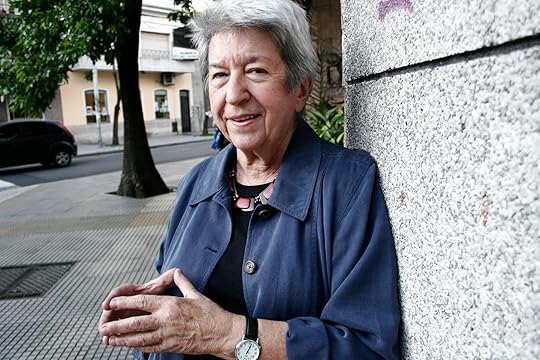
Author Sylvia Molloy in a photograph by Lucio Ramirez at the website of her Spanish language publisher Eterna Cadencia.
Trivia and Links
* Translated from the original: Sobre las caracterizaciones de escritora queer, Molloy aseguraba que se sentía "muy cómoda" porque explicitaba: "Si pensás de donde viene la palabra queer significa torcido, desubicado, raro y si creen que mis textos toman desvíos, tanto mejor. Me interesan textos que van por lados insólitos, incluso el ir de una lengua a otra. Tengo ese conflicto lingüístico desde un comienzo, ya que escribo en castellano pero me resuenan frases en otros idiomas".
Sylvia Molloy is interviewed at the time of the original Spanish language publication of Desarticularciones at her publisher Eterna Cadencia's website here.
Review of the Charco Press paperback (November 1, 2022) translated by Jennifer Croft from the Spanish language original Desarticulaciones (Disarticulations) (September 1, 2010)
Dislocations is a non-fiction novel/memoir recording a series of encounters by the author Sylvia Molloy with her friend M.L. who has Alzheimer's Disease and is gradually losing her memory. The encounters vary from visits to M.L.'s home (where she has regular caregivers) and regular phone calls. Gradually we learn that M.L. & Molloy had both a partner and an artistic writing relationship previously. Molloy writes in tribute to her friend is still with her and yet disappearing.
I did not know Sylvia Molloy's writing previously (this is her first work published in English) and did some research about her and the first publication of this book in Spanish (see links below). Molloy was a breakthrough writer for gay / lesbian writers in Argentina starting from her early novel En breve cárcel (In Brief Prison) (1981), published in Spain during the time of the Argentinean military dictatorship. She studied and worked abroad for most of her life, especially in Yale, Princeton and New York Universities, USA where she taught creative Spanish writing. After retirement she lived in Long Island, NY where she passed earlier this year.
Dislocations is translated by the prolific & multilingual Jennifer Croft (who won the International Booker Prize 2018 for her translation of Olga Tokarczuk's Flights (orig 2007) from Polish) and the arrangement of its brief chapters is reminiscent of her own non-fictional novel/memoir Homesick (2019 USA as a memoir/2022 UK as a novel). The blank pages and the spacing allows the work and the reader to "breathe", as we join Molloy in witnessing the loss of her friend, while also celebrating their life.
Author Sylvia Molloy in a photograph by Lucio Ramirez at the website of her Spanish language publisher Eterna Cadencia.
Regarding the characterization of a queer writer, Molloy assured us that she felt "very comfortable" because she explained: "If you think about where the word queer comes from, it means crooked, misplaced, strange and if they think that my texts take detours, so much the better. I am interested in texts that go in unusual directions, even going from one language to another. I've had this linguistic conflict from the beginning, since I write in Spanish but phrases in other languages resonate with me". - Sylvia Molloy (1938-2022) as quoted in a Spanish language obituary at Télam.
Trivia and Links
* Translated from the original: Sobre las caracterizaciones de escritora queer, Molloy aseguraba que se sentía "muy cómoda" porque explicitaba: "Si pensás de donde viene la palabra queer significa torcido, desubicado, raro y si creen que mis textos toman desvíos, tanto mejor. Me interesan textos que van por lados insólitos, incluso el ir de una lengua a otra. Tengo ese conflicto lingüístico desde un comienzo, ya que escribo en castellano pero me resuenan frases en otros idiomas".
Sylvia Molloy is interviewed at the time of the original Spanish language publication of Desarticularciones at her publisher Eterna Cadencia's website here.

October 20, 2022
A slight but powerful English-language debut from Argentine author Sylvia Molloy on the nature of memory and what it's like to watch a close friend be gradually robbed of theirs by disease. Beautifully translated by Jennifer Croft.

October 17, 2022
A devastating read. A brilliant book on memory and it’s fragility.

October 27, 2024
“Dislocations” by Sylvia Molloy is a very slim novel packed with emotions. In short chapters, most of which take half a page, the narrator/author describes her visits to a nursing home, where M.L. resides, an old friend who loses memory and thus loses herself, gradually disappearing from the world.
Much of the progressive grief is about loss of memories - inconsistent, flawed, debilitating but also probably to a certain extent liberating, and loss of language. “Language, after all, creates roots and houses stories.” M.L. is becoming rootless. The language she uses, very polite, very precise, very scripted, is often not accurate when it comes to the context and the intimacy of her relationship with Sylvia. In Spanish the pronouns one uses, the particular words of endearment, express the level of intimacy, and the choice of words made by M.L. breaks Sylvia’s heart as it betrays M.L.’s gradual decline - so much so that Sylvia doesn’t even want to mention Borges or Yves Saint Laurent to her friend in fear of the lack of recognition of these names.
Friendship wrapped in language, possible manipulation wrapped in memories - how much is the person who cannot express herself accurately and meaningfully and who does not share memories with her friend (whom she starts to not recognise even if she cannot even say that) still a friend? Is she a shadow of a friend, an apparition, an unintentional impostor? Can friendship disappear only on one side? What does friendship mean if one’s spirit is gradually being dissolved?
My heart ached reading this little book. Probably the most laconic, beautiful and lucid exploration of memory I have read.
Much of the progressive grief is about loss of memories - inconsistent, flawed, debilitating but also probably to a certain extent liberating, and loss of language. “Language, after all, creates roots and houses stories.” M.L. is becoming rootless. The language she uses, very polite, very precise, very scripted, is often not accurate when it comes to the context and the intimacy of her relationship with Sylvia. In Spanish the pronouns one uses, the particular words of endearment, express the level of intimacy, and the choice of words made by M.L. breaks Sylvia’s heart as it betrays M.L.’s gradual decline - so much so that Sylvia doesn’t even want to mention Borges or Yves Saint Laurent to her friend in fear of the lack of recognition of these names.
Friendship wrapped in language, possible manipulation wrapped in memories - how much is the person who cannot express herself accurately and meaningfully and who does not share memories with her friend (whom she starts to not recognise even if she cannot even say that) still a friend? Is she a shadow of a friend, an apparition, an unintentional impostor? Can friendship disappear only on one side? What does friendship mean if one’s spirit is gradually being dissolved?
My heart ached reading this little book. Probably the most laconic, beautiful and lucid exploration of memory I have read.
June 16, 2016
Sencillamente, tengo que decir que esperaba mucho más de este libro. El argumento principal me interesaba; las enfermedades mentales siempre me llamaron la atención, aunque nunca leí una historia que trate de ellas específicamente. Entonces, el surgimiento de la posibilidad de leer Desarticulaciones me pareció una oportunidad perfecta para ver cómo se podían tratar temas como este a través de la literatura.
Como decía, esperé que esta novela me transmitiera más de lo que efectivamente me transmitió. No necesariamente consideré tener lástima por la persona de cuya enfermedad se habla, pero sí interesarme o sentir algo por su situación. Lamentablemente, esto no pasó a lo largo de mi lectura. En ningún momento pude conectar ni con ella ni con la narradora. Es simplemente eso.
Por otro lado, no podría decir que me parece un libro malo o mal escrito, porque siento que no es así; se nota una prosa trabajada por parte de la autora, un estilo pulido que pasó por un innegable proceso de estructuración. No obstante, tampoco llegó a gustarme del todo su forma de narrar. En varias oportunidades me distraía fácilmente, y lo cierto es que esto se termina convirtiendo en un problema porque el lector, más adelante, no tiene mucho más tiempo sobre el que profundizar o terminar de adaptarse al estilo narrativo. Por lo tanto, no hay mucho margen para que nos insertemos en la narración de la autora. Si el lector no se engancha desde el principio, considero que es difícil que lo haga luego porque, casi sin darse cuenta, ya irá por la mitad del libro o, también, puede que ya lo haya terminado.
Desarticulaciones es, entonces, una novela que no llegó a impresionarme o interesarme como pensé que lo haría al leer la sinopsis. Me pareció un tema que podría haber sido explotado de otra manera, pero también entiendo la posición de la autora: esta misma tiene una estrecha relación con la persona cuya enfermedad describe, por lo que tampoco podría haber inventado mucho sobre la propia situación. Desde ese punto de vista, que sería algo así como una catarsis o una forma de desahogo por su parte, es una postura totalmente válida. Pero por otro lado, no terminó de producirme lo que mis expectativas pensaban que me produciría.
Como decía, esperé que esta novela me transmitiera más de lo que efectivamente me transmitió. No necesariamente consideré tener lástima por la persona de cuya enfermedad se habla, pero sí interesarme o sentir algo por su situación. Lamentablemente, esto no pasó a lo largo de mi lectura. En ningún momento pude conectar ni con ella ni con la narradora. Es simplemente eso.
Por otro lado, no podría decir que me parece un libro malo o mal escrito, porque siento que no es así; se nota una prosa trabajada por parte de la autora, un estilo pulido que pasó por un innegable proceso de estructuración. No obstante, tampoco llegó a gustarme del todo su forma de narrar. En varias oportunidades me distraía fácilmente, y lo cierto es que esto se termina convirtiendo en un problema porque el lector, más adelante, no tiene mucho más tiempo sobre el que profundizar o terminar de adaptarse al estilo narrativo. Por lo tanto, no hay mucho margen para que nos insertemos en la narración de la autora. Si el lector no se engancha desde el principio, considero que es difícil que lo haga luego porque, casi sin darse cuenta, ya irá por la mitad del libro o, también, puede que ya lo haya terminado.
Desarticulaciones es, entonces, una novela que no llegó a impresionarme o interesarme como pensé que lo haría al leer la sinopsis. Me pareció un tema que podría haber sido explotado de otra manera, pero también entiendo la posición de la autora: esta misma tiene una estrecha relación con la persona cuya enfermedad describe, por lo que tampoco podría haber inventado mucho sobre la propia situación. Desde ese punto de vista, que sería algo así como una catarsis o una forma de desahogo por su parte, es una postura totalmente válida. Pero por otro lado, no terminó de producirme lo que mis expectativas pensaban que me produciría.

May 10, 2023
'I guess I can't get used to not saying 'remember' because I'm still trying to maintain, in those slivers of our shared past, the furtive ties that bind us together. And because in order to keep up a conversation - to keep up a relationship - we have to recollect things together, or pretend to, even when she - that is, her memory - has already left my memory behind.' (p.32)
December 16, 2023
interesting, thought-provoking, sad. reminded me a bit of of Annie Ernaux's A Woman's Story (I think that's why I was initially convinced that M.L. and the narrator had a mother-daughter relationship), and of course, the last hundred pages of Rob Wilkins' excellent Pratchett biography. basically, Alzheimer's sucks :(
another excellent book club pick, i think we'll have a lot to discuss.
another excellent book club pick, i think we'll have a lot to discuss.

April 4, 2023
Hermosamente escrito y una maravillosa manera de salir de mi bloqueo lector. Me lo prestó mi queridisima amiga rochi. Un libro sobre amigas que se lee entre amigas es un libro que rescata.
Cuando abrí el libro vi que Rochi había hecho anotaciones en cada página. Sentí que había recibido dos cosas: un libro y una carta. Entonces cometí el pecado capital de la literatura: escribí un libro ajeno, para conversar con mi amiga.
A Molloy le hago mi ofrenda. En un relato sobre amistad y lenguaje, le ofrezco, nuestra amistad en nuestro lenguaje.
Cuando abrí el libro vi que Rochi había hecho anotaciones en cada página. Sentí que había recibido dos cosas: un libro y una carta. Entonces cometí el pecado capital de la literatura: escribí un libro ajeno, para conversar con mi amiga.
A Molloy le hago mi ofrenda. En un relato sobre amistad y lenguaje, le ofrezco, nuestra amistad en nuestro lenguaje.

August 21, 2023
Porque solo el olvido total permite el regreso impune; de algún modo ella ya ha vuelto.
Esta frase en particular me pegó durísimo porque sé lo que es que alguien poco a poco te olvide y se olvide a sí misma y tú no sabes qué es lo que te da más tristeza: perderla o perderte en ella. Un libro muy bello y breve que dice muchísimo sobre los recuerdos y la memoria.

January 4, 2023
Dislocations chronicles the memory loss of the narrator's friend M.L. in a series of vignettes that mirrors the Alzheimer's diagnosis that afflicts M.L. The fragmented narrative is as much a testament to the unravelling memory of M.L. as it is to the bond between the narrator and her. While at first, it seems that the essays focus on M.L. it soon becomes evident that it is all about the narrator and how they navigate slowly losing M.L. to her illness.
•
Despite being a somehow short book, Discolations touches on many topics. The prose as translated by Croft is effortless and limpid. If you're not a fan of non-linear narratives, this is not for you.
•
"It’s curious to think that sentences so well articulated – because she hasn’t forgotten the structure of language: you might even say she thinks about it more now that night is falling inside her head – will not lodge in any recollection"
•
"How does someone who remembers nothing speak in the first person? What is the location of that ‘I’, once the memory has come undone?"
•
"Twice her memory has burst its banks, giving rise to unconnected snippets of a past that had seemed lost forever, like islands a tsunami leaves when it recedes. At these times, it is as though she’s awakened from a long period of apathy, suffused with febrile thrill: she speaks without pause, asks questions, makes plans, seems efficient and clearsighted."
•
"I guess I can’t get used to not saying ‘remember’ because I’m still trying to maintain, in those slivers of our shared past, the furtive ties that bind us together. And because in order to keep up a conversation – to keep up a relationship – we have to recollect things together, or pretend to, even when she – that is, her memory – has already left my memory behind."
•
•
Despite being a somehow short book, Discolations touches on many topics. The prose as translated by Croft is effortless and limpid. If you're not a fan of non-linear narratives, this is not for you.
•
"It’s curious to think that sentences so well articulated – because she hasn’t forgotten the structure of language: you might even say she thinks about it more now that night is falling inside her head – will not lodge in any recollection"
•
"How does someone who remembers nothing speak in the first person? What is the location of that ‘I’, once the memory has come undone?"
•
"Twice her memory has burst its banks, giving rise to unconnected snippets of a past that had seemed lost forever, like islands a tsunami leaves when it recedes. At these times, it is as though she’s awakened from a long period of apathy, suffused with febrile thrill: she speaks without pause, asks questions, makes plans, seems efficient and clearsighted."
•
"I guess I can’t get used to not saying ‘remember’ because I’m still trying to maintain, in those slivers of our shared past, the furtive ties that bind us together. And because in order to keep up a conversation – to keep up a relationship – we have to recollect things together, or pretend to, even when she – that is, her memory – has already left my memory behind."
•

June 13, 2026
So, this is just a 90 page book about this woman documenting her friend's rapidly deteriorating memory. It is written in small small chapters and the author tells how as her friend forgets things, the author is also losing the specific type of language and understanding she has with her friend, how it feels like the friendship itself is drifting away even when you're constantly present in their life. Pretty great as par as message goes, but I did not get too moved by it and all, so it's just a 3 star.

November 6, 2022
2.5 rounded up
Some touching moments in this is-it-memoir-or-is-it-fiction offering from Charco Press, but it felt a tiny bit slight form my liking.
Some touching moments in this is-it-memoir-or-is-it-fiction offering from Charco Press, but it felt a tiny bit slight form my liking.

November 4, 2022
I received this book as part of my Charco Press subscription. It is Jennifer Croft’s translation of Sylvia Molloy’s “Desarticulaciones”.
I found the book to be a powerful account of the gradual loss of a friend, a relationship. It records, in a fragmentary fashion, the visits the narrator makes to see a friend in hospital as that friend gradually succumbs to Alzheimer’s disease. But it’s not a depressing book to read despite how that sounds.
If I have a complaint, it’s about the length of the book. It comes to us as a novel and at the price of a novel, but it’s 89 pages are mostly blank or only half full: at a rough estimate it consists of about 35 pages of text. In amongst other works of a similar length it would, I imagine, stand tall and possibly be the star of the show. But it’s hard not to finish it when presented like this without feeling slightly cheated. It’s a conflict of feelings because I thought it was an insightful read with a lot of beautifully phrased observations, but it was all over far too quickly.
I found the book to be a powerful account of the gradual loss of a friend, a relationship. It records, in a fragmentary fashion, the visits the narrator makes to see a friend in hospital as that friend gradually succumbs to Alzheimer’s disease. But it’s not a depressing book to read despite how that sounds.
If I have a complaint, it’s about the length of the book. It comes to us as a novel and at the price of a novel, but it’s 89 pages are mostly blank or only half full: at a rough estimate it consists of about 35 pages of text. In amongst other works of a similar length it would, I imagine, stand tall and possibly be the star of the show. But it’s hard not to finish it when presented like this without feeling slightly cheated. It’s a conflict of feelings because I thought it was an insightful read with a lot of beautifully phrased observations, but it was all over far too quickly.

Read
March 13, 2024me quebró

February 19, 2023
Este libro es, simplemente, excelente. Es delicado y terrible al mismo tiempo y en partes iguales. S, la narradora, a través de pequeñas viñetas, nos cuenta sobre su amiga ML, quien sufre de alzheimer y va olvidando todo aquello que alguna ve las unió. ¿Qué queda de una amistad si una de las partes ya no puede evocarla? ¿Qué es un recuerdo cuando la otra parte involucrada no responde la complicidad? ¿Quién es esa otra persona que, de cuerpo presente, va desapareciendo? Pero, queda la escritura para dar testimonio, registrarlo y, en este libro cariñoso, es realmente algo muy bello y lleno de vida.
Cuando terminé de leer Animalia y pregunté por aquí como podía seguir descubriendo a Molloy, sin dudarlo la genia de Agus (a.k.a @pasemospagina) me lo recomendó y Chiara refrendó sin dudarlo. Hoy, solo puedo agradecerles porque esta lectura me dejó con un montón de ideas dando vueltas en la cabeza y es de las más lindas de lo que va de 2023.
Cuando terminé de leer Animalia y pregunté por aquí como podía seguir descubriendo a Molloy, sin dudarlo la genia de Agus (a.k.a @pasemospagina) me lo recomendó y Chiara refrendó sin dudarlo. Hoy, solo puedo agradecerles porque esta lectura me dejó con un montón de ideas dando vueltas en la cabeza y es de las más lindas de lo que va de 2023.

Read
July 18, 2022Leyland Kirby meets Sylvia Molloy.
///
Momentos de suficiente lucidez
Es solo un recuerdo ardiente
Mar escondido enterrado profundamente
No tenemos muchos días
A la deriva a última hora de la tarde
Cavernas mentales sin sol
Una felicidad vacía más allá de este mundo
Desconcertado en ojos de otro
Vislumbres de esperanza en tiempos difíciles
Anochecer tranquilo llega temprano
El gran mar oculto del inconsciente
Pequeñas gradaciones de la pérdida
Rendirse a la desesperación
Camaradería al alcance de las manos
Una relación con lo sublime
Todavía siento como si yo fuera yo
La desesperación ardiente duele
Sublime más allá de la pérdida
Siento como si pudiera estar desapareciendo
Gradaciones del alcance de las manos
Mundo interno desconcertado
Camaradería lúgubre
Vislumbres del atardecer a largo plazo
Caverna dolorosa sin lucidez
Una felicidad brutal más allá de esta derrota vacía
Lo sublime es decepcionantemente esquivo
Una confusión tan espesa que te olvidás de olvidar
///
Momentos de suficiente lucidez
Es solo un recuerdo ardiente
Mar escondido enterrado profundamente
No tenemos muchos días
A la deriva a última hora de la tarde
Cavernas mentales sin sol
Una felicidad vacía más allá de este mundo
Desconcertado en ojos de otro
Vislumbres de esperanza en tiempos difíciles
Anochecer tranquilo llega temprano
El gran mar oculto del inconsciente
Pequeñas gradaciones de la pérdida
Rendirse a la desesperación
Camaradería al alcance de las manos
Una relación con lo sublime
Todavía siento como si yo fuera yo
La desesperación ardiente duele
Sublime más allá de la pérdida
Siento como si pudiera estar desapareciendo
Gradaciones del alcance de las manos
Mundo interno desconcertado
Camaradería lúgubre
Vislumbres del atardecer a largo plazo
Caverna dolorosa sin lucidez
Una felicidad brutal más allá de esta derrota vacía
Lo sublime es decepcionantemente esquivo
Una confusión tan espesa que te olvidás de olvidar

June 7, 2019
נושא עצוב מעין כמותו, הנוגע לרבים, מוגש לטעמי בצורה יבשה, לא מעניינת מספיק ואפילו מעצבנת. לדוגמה, השימוש באותיות התחיליות של הדמויות מעצבן, מבלבל ולא ברור לי מה תכליתו. דמות אחת נקראת א׳ (בקמץ), דמות שנייה א׳ (בסגול) והדמות נשואת הסיפור, שגם את זה לקח לי זמן להבין, נקראת מל׳.... נו באמת... אין בספר הזה מימד רגשי שאני מסוגל להתחבר אליו, הקשר בין הדמויות בסיפור נשאר עמום ומבחינתי זה סיפור עם פוטנציאל שהוא החמצה אחת גדולה.

July 15, 2023
Dislocations by Sylvia Molloy, translated by Jennifer Croft. What a gem, tenderly captured moments with a friend who disappears into the depths of dementia. The sensitivity of Molloy’s observations is amazing. Everything in this short book feels precious. The language is exquisite. I was visualising a friend walking away but looking at Molloy and then the eyes are no longer lucid and the mind is gone…
Very moving.
#sylviamolloy #charcopress #sylviamolloydislocations #books #book #bookstagram #ilovebooks #ilovereading #książki #czytambolubię #kochamksiążki #kochamczytać #ksiazka
Very moving.
#sylviamolloy #charcopress #sylviamolloydislocations #books #book #bookstagram #ilovebooks #ilovereading #książki #czytambolubię #kochamksiążki #kochamczytać #ksiazka

December 10, 2022
"I guess I can't get used to not saying 'remember' because I'm still trying to maintain, in those silvers of our shared past, the furtive ties that bind us together. And because in order to keep up a conversation- to keep up a relationship - we have to recollect things together, or pretend to, even when she - that is, her memory - has already left my memory behind"
Through Dislocations, Sylvia Molloy (who passed away recently in July 2022) offered short and powerful glimpses of her memories regarding her best friend, ML, who suffered from Alzheimer's disease. ML gradually becomes incapacitated due to her memory loss, and eventually, loss of her own self. Via 45 short chapters (each chapter is not more than 2 pages), Molloy records and captures her memories and conversations with ML when ML's memory is deteriorating. Certain philosophical questions were raised and the impact of ML's memory loss on Molloy was also explored. According to Molloy herself, the fragmented and sparse prose that she adopted in the short chapters is reflective of the fragmentary nature of ML's memories. The play of the theme of memory with this experimental form and Molloy's personal touch (with JenniferCroft's brilliant translation) renders the reading experience of Dislocations an emotional one. Molloy's sadness over the loss of her best friend is basically fleshed out from the first page until the end. Molloy further questioned ML's existence in her current state of mind where she is basically "disappearing" due to the disease and whether the writing of this book would assist in containing or retaining ML's existence. Definitely a strong 4.3/5 star read from me.
Quoting a few of my favorite passages from this book:
"Talking with someone who's lost their memory is like talking to a blind person, describing to them whatever you can see: your interlocutor witnesses nothing, cannot contradict what you have said"
"As I write about her, I'm tempted to describe her as she was before, specifically when I first met her, to put her back together at the moment of her greatest strength, instead of in the midst of her implosion"
"I want to be the proprietor of my memory, not for my memory to be in charge of me. This lurking of the past, almost constant, not only interrupts my present, but also literally invades it"
"I wonder if ML's memory loss has something to do with the arbitrary exacerbation of my own. If somehow I'm compensating, proving to myself that my memory recollects, recollects even when I don't want it to. I wonder, too, if the same might not have happened to ML, if she might also have suffered from this excess of memory, this contamination of the present with the past, before she started losing it"
"When talking to her I feel - or I felt - connected to a past that is not entirely illusory. And with a place that of 'before'. Now I find myself speaking in a void: there is no longer a home, no longer a before. Only an echo chamber"
"I feel that leaving this story is leaving her, that by not recording our interactions anymore, I'm denying her something, a continuity to which only I, with my visits, can attest. I feel like I'm abandoning her. But in some sense she's the only one who's been abandoning herself, so I won't feel guilty. Or just a little bit"
Through Dislocations, Sylvia Molloy (who passed away recently in July 2022) offered short and powerful glimpses of her memories regarding her best friend, ML, who suffered from Alzheimer's disease. ML gradually becomes incapacitated due to her memory loss, and eventually, loss of her own self. Via 45 short chapters (each chapter is not more than 2 pages), Molloy records and captures her memories and conversations with ML when ML's memory is deteriorating. Certain philosophical questions were raised and the impact of ML's memory loss on Molloy was also explored. According to Molloy herself, the fragmented and sparse prose that she adopted in the short chapters is reflective of the fragmentary nature of ML's memories. The play of the theme of memory with this experimental form and Molloy's personal touch (with JenniferCroft's brilliant translation) renders the reading experience of Dislocations an emotional one. Molloy's sadness over the loss of her best friend is basically fleshed out from the first page until the end. Molloy further questioned ML's existence in her current state of mind where she is basically "disappearing" due to the disease and whether the writing of this book would assist in containing or retaining ML's existence. Definitely a strong 4.3/5 star read from me.
Quoting a few of my favorite passages from this book:
"Talking with someone who's lost their memory is like talking to a blind person, describing to them whatever you can see: your interlocutor witnesses nothing, cannot contradict what you have said"
"As I write about her, I'm tempted to describe her as she was before, specifically when I first met her, to put her back together at the moment of her greatest strength, instead of in the midst of her implosion"
"I want to be the proprietor of my memory, not for my memory to be in charge of me. This lurking of the past, almost constant, not only interrupts my present, but also literally invades it"
"I wonder if ML's memory loss has something to do with the arbitrary exacerbation of my own. If somehow I'm compensating, proving to myself that my memory recollects, recollects even when I don't want it to. I wonder, too, if the same might not have happened to ML, if she might also have suffered from this excess of memory, this contamination of the present with the past, before she started losing it"
"When talking to her I feel - or I felt - connected to a past that is not entirely illusory. And with a place that of 'before'. Now I find myself speaking in a void: there is no longer a home, no longer a before. Only an echo chamber"
"I feel that leaving this story is leaving her, that by not recording our interactions anymore, I'm denying her something, a continuity to which only I, with my visits, can attest. I feel like I'm abandoning her. But in some sense she's the only one who's been abandoning herself, so I won't feel guilty. Or just a little bit"

November 30, 2020
⠀⠀⠀⠀⠀⠀⠀⠀⠀⠀⠀⠀⠀⠀⠀⠀⠀⠀
«No puedo acostumbrarme a no decir "te acordás" porque intento mantener, en esos pedacitos de pasado compartido, los lazos cómplices que me unen a ella. Y porque para mantener una conversación –para mantener una relación– es necesario hacer memoria juntas o jugar a hacerla, aún cuando ella –es decir, su memoria– ya ha dejado sola a la mía»
⠀⠀⠀⠀⠀⠀⠀⠀⠀⠀⠀⠀⠀⠀⠀⠀⠀⠀
Una enfermedad que se trague mis recuerdos dejándome como un carapacho vacío: ese es mi más enconado temor en la vida, uno potenciado por aquella ceguera facial no diagnosticada que a veces creo padecer. He estado tan obsesionado con sufrir alguna de esas enfermedades degenerativas de la mente, que nunca me había detenido a pensar en esa otra e igualmente cruel posibilidad: que yo no sea quien olvide sino el olvidado, que un ser querido deje de recordar lo que hicimos y lo que hablamos, deje de reconocer en mis expresiones y facciones un mensaje cifrado que demoramos años en perfeccionar, que olvide mi rostro, quién soy y finalmente quién es. No, no había considerado esa opción, hasta ahora, después de leer este libro de S. Molloy.
⠀⠀⠀⠀⠀⠀⠀⠀⠀⠀⠀⠀⠀⠀⠀⠀⠀⠀
La historia es precisamente esa: las reflexiones de una mujer cada vez que visita a su amiga y ex amante a medida que el Alzheimer agujerea su mente y su memoria, a medida que desarticula el “yo” no solo de la víctima en la que yace el mal sino de quienes la conocieron, porque no hay que olvidar ─y el libro no lo permite─ que uno solo es en relación con los demás. En ese sentido, ¿uno sigue siendo el mismo si quienes ayudaron a definirlo ya no lo recuerdan? Hacerme esa pregunta ─y ni que decir intentar responderla─ me llenó de pánico.
⠀⠀⠀⠀⠀⠀⠀⠀⠀⠀⠀⠀⠀⠀⠀⠀⠀⠀
El libro es conmovedor, descarnado y existencial, pero manejado con una narrativa sencilla, precisa e íntima en forma de pasajes, casi que de falso diario, que a veces pareciera sugerir que estamos frente a una biografía de la tragedia y, en otras, frente a una ficción del olvido. Quizás, como toda buena obra, la verdad está en algún punto entre los dos.
***
⠀⠀⠀⠀⠀⠀⠀⠀⠀⠀⠀⠀⠀⠀⠀⠀⠀⠀
⠀⠀⠀⠀⠀⠀⠀⠀⠀⠀⠀⠀⠀⠀⠀⠀⠀⠀
Volví a ella, como prometí que lo haría. Y cómo no hacerlo, si desde aquella primera vez que la leí (ver post del 16 de junio 2020) he agudizado mi oído para rastrear su nombre y me he dado cuenta de que ella, Sylvia, ha sido inspiración de algunas –de muchas– de las mejores escritoras que llenan mi orgullosa biblioteca: Schweblin, Enríquez, Meruane y un gran etc. Fueron ellas, principalmente ellas, quienes la sacaron del olvido en el que la había dejado la historia oficial de la literatura latinoamericana, aquella escrita por y para nosotros, los hombres.
⠀⠀⠀⠀⠀⠀⠀⠀⠀⠀⠀⠀⠀⠀⠀⠀⠀⠀
Lo que más me sorprende de ella es que aprendió a leer y a escribir primero en inglés y después en francés. No me refiero solo al abecedario y a sus primeras letras; literariamente hablando, incluso en su adultez, ella se acercó primero a las grandes plumas inglesas y francesas en sus idiomas originales, que a las latinoamericanas, curiosa paradoja en la vida de quien se convertiría no solo en una de las mayores expertas en la narrativa de este lado del hemisferio sino en una de sus mejores exponentes.
«No puedo acostumbrarme a no decir "te acordás" porque intento mantener, en esos pedacitos de pasado compartido, los lazos cómplices que me unen a ella. Y porque para mantener una conversación –para mantener una relación– es necesario hacer memoria juntas o jugar a hacerla, aún cuando ella –es decir, su memoria– ya ha dejado sola a la mía»
⠀⠀⠀⠀⠀⠀⠀⠀⠀⠀⠀⠀⠀⠀⠀⠀⠀⠀
Una enfermedad que se trague mis recuerdos dejándome como un carapacho vacío: ese es mi más enconado temor en la vida, uno potenciado por aquella ceguera facial no diagnosticada que a veces creo padecer. He estado tan obsesionado con sufrir alguna de esas enfermedades degenerativas de la mente, que nunca me había detenido a pensar en esa otra e igualmente cruel posibilidad: que yo no sea quien olvide sino el olvidado, que un ser querido deje de recordar lo que hicimos y lo que hablamos, deje de reconocer en mis expresiones y facciones un mensaje cifrado que demoramos años en perfeccionar, que olvide mi rostro, quién soy y finalmente quién es. No, no había considerado esa opción, hasta ahora, después de leer este libro de S. Molloy.
⠀⠀⠀⠀⠀⠀⠀⠀⠀⠀⠀⠀⠀⠀⠀⠀⠀⠀
La historia es precisamente esa: las reflexiones de una mujer cada vez que visita a su amiga y ex amante a medida que el Alzheimer agujerea su mente y su memoria, a medida que desarticula el “yo” no solo de la víctima en la que yace el mal sino de quienes la conocieron, porque no hay que olvidar ─y el libro no lo permite─ que uno solo es en relación con los demás. En ese sentido, ¿uno sigue siendo el mismo si quienes ayudaron a definirlo ya no lo recuerdan? Hacerme esa pregunta ─y ni que decir intentar responderla─ me llenó de pánico.
⠀⠀⠀⠀⠀⠀⠀⠀⠀⠀⠀⠀⠀⠀⠀⠀⠀⠀
El libro es conmovedor, descarnado y existencial, pero manejado con una narrativa sencilla, precisa e íntima en forma de pasajes, casi que de falso diario, que a veces pareciera sugerir que estamos frente a una biografía de la tragedia y, en otras, frente a una ficción del olvido. Quizás, como toda buena obra, la verdad está en algún punto entre los dos.
***
⠀⠀⠀⠀⠀⠀⠀⠀⠀⠀⠀⠀⠀⠀⠀⠀⠀⠀
⠀⠀⠀⠀⠀⠀⠀⠀⠀⠀⠀⠀⠀⠀⠀⠀⠀⠀
Volví a ella, como prometí que lo haría. Y cómo no hacerlo, si desde aquella primera vez que la leí (ver post del 16 de junio 2020) he agudizado mi oído para rastrear su nombre y me he dado cuenta de que ella, Sylvia, ha sido inspiración de algunas –de muchas– de las mejores escritoras que llenan mi orgullosa biblioteca: Schweblin, Enríquez, Meruane y un gran etc. Fueron ellas, principalmente ellas, quienes la sacaron del olvido en el que la había dejado la historia oficial de la literatura latinoamericana, aquella escrita por y para nosotros, los hombres.
⠀⠀⠀⠀⠀⠀⠀⠀⠀⠀⠀⠀⠀⠀⠀⠀⠀⠀
Lo que más me sorprende de ella es que aprendió a leer y a escribir primero en inglés y después en francés. No me refiero solo al abecedario y a sus primeras letras; literariamente hablando, incluso en su adultez, ella se acercó primero a las grandes plumas inglesas y francesas en sus idiomas originales, que a las latinoamericanas, curiosa paradoja en la vida de quien se convertiría no solo en una de las mayores expertas en la narrativa de este lado del hemisferio sino en una de sus mejores exponentes.

January 22, 2021
Desarticulaciones es un relato corto pero con una intensidad excepcional. Con una estructura narrativa que se asemeja a una bitácora/diario íntimo, la autora logra al instante posicionarnos en el lugar de la narradora.
‘S’ visita diariamente a su amiga ‘ML’ quien, en una habitación de hospital, se deja consumir por el mal Alzheimer. ‘S’ registra, dolorosamente, la erosión y el desdibujamiento de la memoria de ‘ML’ que, por momentos, no reconoce lo que es un alfajor.
Un ejercicio desgarrador por mantener la memoria de su amiga viva y, también, comprender y aceptar ese estar/no estar de una persona.
Asistimos a la narradora, como lectorxs, en el “dejar ir” y en la búsqueda forzada de huellas que la hagan sentir que ‘ML’ sigue ahí.
A partir de esta DESARTICULACIÓN PROGRESIVA DE LA MENTE DE ML, S se encamina en un proceso de introspección: ¿qué somos sin los recuerdos?, ¿qué podemos ser si no hay testigos de esos recuerdos?, ¿qué es lo que queda?
Un libro duro, crudo y sumamente poético que recomiendo -para cuando lo sientan- un montonazo.
🌼”No puedo acostumbrarme a no decir "te acordás" porque intento mantener, en esos pedacitos de pasado compartido, los lazos cómplices que me unen a ella. Y porque para mantener una conversación –para mantener una relación– es necesario hacer memoria juntas o jugar a hacerla, aún cuando ella –es decir, su memoria– ya ha dejado sola a la mía.”
‘S’ visita diariamente a su amiga ‘ML’ quien, en una habitación de hospital, se deja consumir por el mal Alzheimer. ‘S’ registra, dolorosamente, la erosión y el desdibujamiento de la memoria de ‘ML’ que, por momentos, no reconoce lo que es un alfajor.
Un ejercicio desgarrador por mantener la memoria de su amiga viva y, también, comprender y aceptar ese estar/no estar de una persona.
Asistimos a la narradora, como lectorxs, en el “dejar ir” y en la búsqueda forzada de huellas que la hagan sentir que ‘ML’ sigue ahí.
A partir de esta DESARTICULACIÓN PROGRESIVA DE LA MENTE DE ML, S se encamina en un proceso de introspección: ¿qué somos sin los recuerdos?, ¿qué podemos ser si no hay testigos de esos recuerdos?, ¿qué es lo que queda?
Un libro duro, crudo y sumamente poético que recomiendo -para cuando lo sientan- un montonazo.
🌼”No puedo acostumbrarme a no decir "te acordás" porque intento mantener, en esos pedacitos de pasado compartido, los lazos cómplices que me unen a ella. Y porque para mantener una conversación –para mantener una relación– es necesario hacer memoria juntas o jugar a hacerla, aún cuando ella –es decir, su memoria– ya ha dejado sola a la mía.”
August 3, 2020
La narradora visita a ML quien padece alzheimer, la narradora elige la escritura como medio para hacer perdurar un vínculo que se encuentra deshecho, para inmortalizar a quien se desarticula frente a sus ojos, para dialogar con sus textos y prolongar conversaciones inexistentes ya.
Es un libro corto pero en su profundidad y en su honestidad está su capacidad para transmitir y hacerle sentir al lector la emoción y la tristeza que vive en la narradora quien poco a poco y a través de cada escrito suelta a quien se encuentra mentalmente cada vez más lejos. Este libro es una oda al desprendimiento, a la despedida y a los recuerdos; es muy placentero leer a esta autora que, con una pluma exquisita y sumamente recursiva, hace que el lector se ponga en la piel no de quien padece la enfermedad sino de quien convive con ella, la acompaña y es testigo de cada recuerdo y de cada partecita de vida que se lleva consigo.
Transite la lectura con un nudo en la garganta y con una profunda sensación de nostalgia y añoranza. Es lo primero que leo de Sylvia Molloy y sin dudas no va a ser lo último.
“Tengo que escribir [...] para tratar de entender este estar/no estar de una persona qué se desarticula ante mis ojos. Tengo que hacerlo así para seguir adelante, para hacer durar una relación que continúa pese a la ruina, qué subsiste aunque apenas queden palabras”
Es un libro corto pero en su profundidad y en su honestidad está su capacidad para transmitir y hacerle sentir al lector la emoción y la tristeza que vive en la narradora quien poco a poco y a través de cada escrito suelta a quien se encuentra mentalmente cada vez más lejos. Este libro es una oda al desprendimiento, a la despedida y a los recuerdos; es muy placentero leer a esta autora que, con una pluma exquisita y sumamente recursiva, hace que el lector se ponga en la piel no de quien padece la enfermedad sino de quien convive con ella, la acompaña y es testigo de cada recuerdo y de cada partecita de vida que se lleva consigo.
Transite la lectura con un nudo en la garganta y con una profunda sensación de nostalgia y añoranza. Es lo primero que leo de Sylvia Molloy y sin dudas no va a ser lo último.
“Tengo que escribir [...] para tratar de entender este estar/no estar de una persona qué se desarticula ante mis ojos. Tengo que hacerlo así para seguir adelante, para hacer durar una relación que continúa pese a la ruina, qué subsiste aunque apenas queden palabras”

July 29, 2023
5⭐️
Es un libro muy cortito pero precioso. Me ha gustado muchísimo!!🥺🫶🏻
Algunas frases que he marcado:
✨✨✨
“Tengo que escribir estos textos mientras ella está viva, mientras no haya muerte o clausura, para tratar de entender este estar/no estar de una persona que se desarticula ante mis ojos. Tengo que hacerlo así para seguir adelante, para hacer durar una relación que continúa pese a la ruina, que subsiste aunque apenas queden palabras.”
“¿Cómo dice yo el que no recuerda, cuál es el lugar de su enunciación cuando se ha destejido la memoria?”
“Hablar con un desmemoriado es como hablar con un ciego y contarle lo que uno ve: el otro no es testigo y, sobre todo, no puede contradecir.”
“De olvidos míos, no suyos: para decir que uno ha olvidado hay que tener una mínima capacidad de recuerdo, palabra que, para ella, ya no tiene sentido.”
“Al hablar con ella me siento -o me sentía- conectada con un pasado no del todo ilusorio. Y con un lugar: el de antes. Ahora me encuentro hablando en un vacío: ya no hay casa, no hay antes, solo cámara de ecos.”
“Siento que dejar este relato es dejarla, que al no registrar más mis encuentros le estoy negando algo, una continuidad de la que solo yo, en esas visitas, puedo dar fe. Siento que la estoy abandonando. Pero de algún modo ella misma se está abandonando, así que no me siento culpable. Casi.”
✨✨✨
Es un libro muy cortito pero precioso. Me ha gustado muchísimo!!🥺🫶🏻
Algunas frases que he marcado:
✨✨✨
“Tengo que escribir estos textos mientras ella está viva, mientras no haya muerte o clausura, para tratar de entender este estar/no estar de una persona que se desarticula ante mis ojos. Tengo que hacerlo así para seguir adelante, para hacer durar una relación que continúa pese a la ruina, que subsiste aunque apenas queden palabras.”
“¿Cómo dice yo el que no recuerda, cuál es el lugar de su enunciación cuando se ha destejido la memoria?”
“Hablar con un desmemoriado es como hablar con un ciego y contarle lo que uno ve: el otro no es testigo y, sobre todo, no puede contradecir.”
“De olvidos míos, no suyos: para decir que uno ha olvidado hay que tener una mínima capacidad de recuerdo, palabra que, para ella, ya no tiene sentido.”
“Al hablar con ella me siento -o me sentía- conectada con un pasado no del todo ilusorio. Y con un lugar: el de antes. Ahora me encuentro hablando en un vacío: ya no hay casa, no hay antes, solo cámara de ecos.”
“Siento que dejar este relato es dejarla, que al no registrar más mis encuentros le estoy negando algo, una continuidad de la que solo yo, en esas visitas, puedo dar fe. Siento que la estoy abandonando. Pero de algún modo ella misma se está abandonando, así que no me siento culpable. Casi.”
✨✨✨
July 22, 2025
“
TRADUCCIÓN
Como la retórica, la facultad de traducir no se pierde, por lo menos hasta el final. Lo comprobé una vez más hoy, al hablar con L. Le pregunté si el médico estaba al tanto de que ML. había sufrido un mareo y me dijo que sí. Por curiosidad le pregunté cómo le había transmitido la información, ya que L. no habla inglés. Me lo tradujo ML., me dijo. Es decir, ML. es incapaz de decir que ella misma a sufrido un mareo, o sea, es incapaz de recordar que sufrió un mareo, pero es capaz de traducir al ingles el mensaje en que L. dice que ella, ML., ha sufrido un mareo. Es como lograr una momentánea identidad, una momentánea existencia, en ese discurso transmitido eficazmente. Por un instante, en esa traducción, ML. es.
“
Muy lindo este libro chiquito. En una hora se lee y me hace acordar que leer es casi siempre lo más lindo que se puede hacer. Siento que pasada esa hora un poco conozco a la autora, que nos dejó entrar a un lugar suyo e íntimo pero en sus propios términos y reglas. El relato es amable con la enferma pero no la infantiliza ni es exageradamente trágico. Extrañamente sereno y menos triste de lo que esperaba. Me gustó mucho. Estoy segura que voy a repetir esta hora muchas veces en mi vida.

September 27, 2026
Muy muy duro, incluso más que el último que me leí. Ver como una persona va perdiendo su memoria y su identidad poco a poco es de las cosas más dolorosas del mundo, el pensar que ya no hay vuelta atrás y que nunca volverás a estar con esa persona que conociste en el pasado.
La forma en la que se relata el alzheimer en esta obra es devastadora, porque no lo hace en forma de novela tradicional, sino en una especie de fragmentos con distintos recuerdos y momentos clave en el avance de la enfermedad.
Se nota que la protagonista lo está pasando muy mal, y está desesperada por hacer algo que pueda servir, pero sabe perfectamente que no hay nada que hacer. La última página ha sido como un puñal en el pecho.
La forma en la que se relata el alzheimer en esta obra es devastadora, porque no lo hace en forma de novela tradicional, sino en una especie de fragmentos con distintos recuerdos y momentos clave en el avance de la enfermedad.
Se nota que la protagonista lo está pasando muy mal, y está desesperada por hacer algo que pueda servir, pero sabe perfectamente que no hay nada que hacer. La última página ha sido como un puñal en el pecho.
Displaying 1 - 30 of 205 reviews