Jump to ratings and reviews
Rate this book

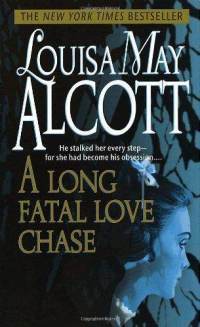
A Long Fatal Love Chase

Rate this book
"I'd gladly sell my soul to Satan for a year of freedom," cries Rosamond Vivian to her callous grandfather. A brooding stranger seduces her from the remote island onto his yacht. Trapped in a web of intrigue, cruelty, and deceit, she flees to Italy, France, Germany, from Paris garret to mental asylum, from convent to chateau - stalked by obsessed Phillip Tempest.

Two years before Little Women, serialized in a magazine under the alias A.M. Barnard in 1866, this was buried among the author's papers over a century.

356 pages, Mass Market Paperback

First published January 1, 1995

160 people are currently reading
9739 people want to read

About the author

Louisa May Alcott

4,036 books10.6k followers
Louisa May Alcott was an American novelist, short story writer, and poet best known for writing the novel Little Women (1868) and its sequels Good Wives (1869), Little Men (1871) and Jo's Boys (1886). Raised in New England by her transcendentalist parents, Abigail May Alcott and Amos Bronson Alcott, she grew up among many well-known intellectuals of the day, including Margaret Fuller, Ralph Waldo Emerson, Nathaniel Hawthorne, Henry David Thoreau, and Henry Wadsworth Longfellow.
Alcott's family suffered from financial difficulties, and while she worked to help support the family from an early age, she also sought an outlet in writing. She began to receive critical success for her writing in the 1860s. Early in her career, she sometimes used pen names such as A.M. Barnard, under which she wrote lurid short stories and sensation novels for adults that focused on passion and revenge.
Published in 1868, Little Women is set in the Alcott family home, Orchard House, in Concord, Massachusetts, and is loosely based on Alcott's childhood experiences with her three sisters, Abigail May Alcott Nieriker, Elizabeth Sewall Alcott, and Anna Bronson Alcott Pratt. The novel was well-received at the time and is still popular today among both children and adults. It has been adapted for stage plays, films, and television many times.
Alcott was an abolitionist and a feminist and remained unmarried throughout her life. She also spent her life active in reform movements such as temperance and women's suffrage. She died from a stroke in Boston on March 6, 1888, just two days after her father's death.

Ratings & Reviews

What do you think?
Rate this book

Friends & Following

Create a free account to discover what your friends think of this book!

Community Reviews

5 stars
1,744 (23%)
4 stars
2,504 (34%)
3 stars
2,186 (29%)
2 stars
681 (9%)
1 star
182 (2%)
Displaying 1 - 30 of 1,144 reviews
Profile Image for boogenhagen.
1,993 reviews884 followers
October 24, 2018
A Long Fatal Love Chase -- this is a true gothic story and while I respect various opinions that it is a stalker book, a statement for feminism and a tale of escape from abuse, to me this book is a dark romance. Tempest could be an early prototype for Anne Stuart's H's and I have wanted to ask her if she ever read this book.

The story is an interesting juxtaposition between innocence and carnality and has a lot of duality. The very name Rosamond has dual meanings -- it can mean either "pure rose" intimating innocence and chastity or it can mean "rose of the world" meaning knowledge and carnality. That double meaning pretty much describes the h of the book.

Rose is drawn to the forbidden and Phillip Tempest is the greatest attraction she ever meets. Tempest is compared to Mephistopheles, and like Meph of old, Tempest is both seducer and guide but it is Rose's will that makes it so. She is a woman who likes dark passions and she is determined to experience them. Rose has a yen for bad boys and Tempest really fits the bill. Tempest is a liar, murderer and thief, but he is also passionate and romantic.

Rose and Tempest start an affair and then Rose finds out that Tempest is already married, she is torn between the real world conventions that she is a scarlet woman living in sin and the deep yearning that overwhelms her whenever Tempest is near.

When Rose leaves Tempest, it isn't out of fear, it is a combination of shame and furious anger, plus Rose's determination that Tempest is going to suffer. She may love him more than life, but she is going to win this contest of wills and he will come begging.

She tries to justify herself by saying the love of a good woman can save Tempest, but in actuality she is in thrall to his sexuality and he is going to have to work hard for his love slave, and in that light, the whole running off and him chasing her scenario's become a kind of extended foreplay.

Curiously, Tempest never himself physically abuses Rose or even speaks harshly to her. I believe Tempest truly loves her and IMO Rose takes off on this long, varied journey more to keep him interested in her charms and focused on his predatory instincts.

Tempest is the cat and she is the mouse who really wants him to pounce and play. Rose is very aware that Tempest has more sophisticated tastes and her inexperience is not a bonus. She has enough perception to realize that Tempest wants a challenge and she feels she is up to the task.

In the eyes of the world, her relationship with Tempest is disgraceful at the very least and thus her internal conflict between wanting to be acceptable in the world and her craving for the passion Tempest brings her. Taken together her anger at his deception, her lust for him and also her ladylike morality all blend together to create a passion that is both wonderful and hateful to her.

Rose was raised to be good, her head tells her she needs respectability and social status, her heart just wants to be passionate with Tempest and there is no real way to reconcile the two. Rose also thinks she wants to be free but she has the need to submit/depend to a more dominant power and this conflict plays out in her vacillation between Tempest and Ingatius, the Pure Hero Priest and the power struggle between the two.

Her love for Ignatius has a dual role as well. He becomes her conscious and he becomes her forbidden lure. Again Alcott chooses to emphasize the duality that this story has so much of. Iggy wants Rose like no other woman ever but he is a priest and it is his purview to emphasize the virtues of the time.

Pure love with no physicality except in the bonds of marriage, obeyance to duty and respectability - these are Iggy's precepts and it is more his will that Rose is expressing when she says she hates Tempest. It is Iggy's determination that keeps her running even when she doesn't have to anymore and it is his words of forbidden love that keep Rose on the straight path until the end.

I suspect that had Iggy been the one to die, Rose and Tempest would have again run off together and that just wasn't socially acceptable at the time. Alcott uses heavy foreshadowing throughout the story and so when Rose tells Tempest " You will never have me again this side of death." It is a good bet that the ending will not be a traditional HEA.

Alcott was reputed to be greatly enamored of the works of Charlotte Bronte, especially Jane Eyre. Many of the elements in the beginning of this story are a sort of homage to JE. The age difference between Rose and Tempest, the emphasis on the goodness/innocence of Rose. The "mad wife" allusion and the bigamy.

I suspect she also had a fondness for Emily Bronte if the ending of the book is anything to go by, she certainly seemed to like Heathcliff given Tempest's resemblance in many aspects. The ending of this book strongly resembles Heathcliff's death and supposed reunion with Cathy in the hereafter.

Tempest, once again becoming the dominating force in Rose's life and ousting his rival permanently, finally succeeds in getting Rose in his full possession once again. Granted he kills her and then himself, but I have a feeling that LA secretly thinks they are together in eternity but overtly gives the impression of tragic justice done.

Tempest's final words of "mine in the grave" further convince me that the deaths at the end are really meant to be an HEA but the only acceptable way LA could get the couple together was to kill them and hope for a better afterlife.

Ultimately, A Long Fatal Love Chase can be interpreted in a lot of ways, but for me it was a really good love story and an intriguing lesson at what lies under the surface of a lady who I had always thought of as an entertaining, beloved but kinda moralistic author.
This entire review has been hidden because of spoilers.
Profile Image for Aditi.
920 reviews1,453 followers
December 6, 2016
“Wild roses are fairest, and nature a better gardener than art.”

----Louisa May Alcott


First let's just wish this talented and brilliant author, Louisa May Alcott, a very, very Happy 184th Birthday and we will only hope that her stories be loved, read and adored by all ages of readers from around the world. And on this special occasion, I'd like to pen a review piece about one of her not so popular book, A Long Fatal Love Chase which is targeted for mature audience and was written before her literary success for the books like Little Women, Little Men, Eight Cousins etc.. Although this particular book has not been widely read or loved by the readers, but I would like to notify such readers to not to judge the book harshly as this when she wrote this book, this young writer was on the road to financially support her family and did not even begin her writing career professionally at that time.


Synopsis:

Rosamond Vivian, brought up on a remote island by an indifferent grandfather, swears she'd sell her soul to Satan for a year of freedom. When Philip Tempest enters her life, she is ripe for the plucking, but is soon caught up in a web of intrigue, cruelty and deceit stretching back far into the past. Remarkable for its portrayal of a sensual, spirited Victorian heroine, Louisa May Alcott's work, too shocking to be published during her lifetime, tells a compulsive tale of love, desire and deceit. Its publication more than a century after being written marks a new page in literary history.


Rosamond Vivian is a charming, innocent and love-sick eighteen year old teenage orphan living with her cynical and mediocre grandfather in a small and remote island off the coast of England. Soon a handsome stranger sweeps her away with his promise of love and marital vows. Enter, Phillip Tempest, an old, mature and impossibly good-looking stranger with a yacht has arrived on the very same island where Rosamond lives with her grandfather. Within an instant, young Rosamond falls for the old, delectable man who speaks of a glittering future with hope, love and extravagance. Within a few days, Philip and Rosamond gets married and sets sail across the ocean. And after their journey, they settle up in a countryside town in Nice, along with a man-servant named, Baptiste and a child servant, Ippolito. Little did beautiful, naive and newly married Rosamond that her marital life is set up on lies and deceit that finally forces the young woman to escape the wretched life and that is when the great chase begins across the whole Europe from Italy to France to Germany, until death soars up across the feet of Rosamond.

This great book is perfect for those readers who love to read about Gothic love stories as well as highly thrilling romantic tales and that too with a touch of violence, darkness and fear. The author here explores the darkness of a human nature as well as relationships that are tied with marital vows. The book is interesting enough as each chapter ends with a cliffhanger that begs its readers to keep turning the pages of this book till the very end. The story is both beautiful and dark at the same time and only an author like Alcott could possibly achieve that with equal intensity. Hence the more the book allures, the more it will terrify.

The writing of this amazing author is so brilliant and striking that the readers are bound to feel the underlying mood of the story line. The narrative is equally engaging although it rarely falters from its own flow and misdirects towards boredom. The readers, no matter what, will be able to find the dialogues comprehensible enough to make them feel for the characters' ongoing plight. The pacing is really swift as there are chase scenes penned with extreme thrill and suspense that will soar the temperature of the readers while reading about the young woman's journey from one country to another.

The mystery concocted by the author is tightly wrapped under layers of twists that will only increase tension and anticipation of the readers. Reading this story will make the readers feel like riding high on a roller coaster ride that is filled with adrenaline rushing scenes, exciting and equally terrifying moments and lots of baffling challenges. The story will grip the readers right from the very beginning with its intensity of sweetness but then scares the hell out of the readers' mind when the chase begins.

The characters are very poorly crafted hence the readers will struggle to see beyond the characters and into their deepest core and that's the only disappointment I've while reading this book. In a nutshell, this is a riveting love story that is horrifying and equally compassionate enough to make the readers feel the bridge between the two.

Verdict: A classic read that will never lose its charm, no matter how many times a reader reads it!
Profile Image for Adrianna.
88 reviews12 followers
April 9, 2010
Review Dedication: Many thanks to Cafe Libri Yahoo Group member and now Cafe Libri Lunch Community member Cari for her help with the research for the review.

This was one of the best emotional roller coaster rides a book has taken me on in a long time. I have never been a fan of Louisa May Alcott's books because they always felt a little too wholesome. A Long Fatal Love Chase, however, shows that Alcott was able to write about the darker sides of human nature, especially as it concerned obsession.

The book not only explores the obsessive dark nature of humanity, but it takes the reader all around the nineteenth century European continent. It begins and ends, though, in a very fitting setting: a remote island off the coast of England. On this island lives a young and naive eighteen year old girl, Rosamond Vivian and her heartlessly indifferent grandfather. After just a few pages into the book, Phillip Tempest, a devastatingly charming and handsome man who is twice Rose's age, sweeps the young heroine off her feet as they travel the world in his yacht the Circe. The setting changes both because of their travels after being married and because of the infamous chase. The reader is taken across Italy, France, and Germany to a variety of locations such as a convent, chateau, and even a mental institute. The settings are brought to life with dark and vivid details. There are also many land marks that alert the reader where the chase has taken the characters next.

It's important that the setting takes the reader around the world because otherwise we wouldn't understand the fervor of the chase. Everything begins like a typical love story, but even then there are a lot of foreshadowing hints of darker days to come. Rosamond, in her naiveté, does not understand who Tempest really is before it's too late. About six chapters into the book, the dichotomous natures of the characters really becomes apparent--the innocent versus the experienced. The good and wholesome girl versus the power hungry evil man. It is at that moment when Alcott takes the reader on the most dangerous chase where freedom, and even life and death, are at stake.

Because the book was written in chapter installments for a newspaper, each section ends with a mystery that pulls the reader deeper into the story. This is the perfect tactic to keep the reader on edge as if she or he were being chased in real life. This writing style brings the story and plot to life. Unfortunately, the character development suffers. Rosamond is the only one who ever adapts and changes during the chase. She begins the book at eighteen years old, a sheltered and lonely girl, and ends the book around twenty-two or twenty-three years old, jaded and suspicious of those around her because of the Tempest's harsh treatment and unfailing pursuit. The rest of the characters feel a little flat because they are created to represent extremes about human nature. There are numerous points where the reader feels as if Tempest is changing and growing, but he always reverts back to old and comfortable habits. Ignatius, Rose's monk and confidant, is the polar opposite of Tempest. He represents all that is good and healthy about love and sacrifice while Tempest represents the overindulgence and control that men from history often felt about life, especially during the Victorian era. Rose's grandfather seems different by the end of the book, but the reader never sees how or why he changes because we are too busy with the chase. Other supporting characters, such as Baptiste, Tempest's faithful servant, and Lito, Tempest's little Greek servant, offer interesting surprise developments during the progression of the story. Regardless of whether the characters seemed "realistic" in their presentation, every single person the reader meets adds to the mystery and suspense. There were many surprises as it's discovered that appearances can be deceiving, even with minor supporting characters.

The themes and motifs of A Long Fatal Love Chase are tied to the characters with the most obvious theme being that appearances can deceive. There are lots of allusions made to the devil and Mephistopheles, a demon who worked for the devil. Other themes included women's freedom from an oppressive and patriarchal society, reflected in the role of a husband, women's yearning for monetary freedom to travel the world, whether or not monks and priests should have the religious freedom to marry, and the most important motif--love. Love is explored in all its heavenly glory and darker depths. The reader is drawn into questions about whether love is fleeting, if it change over time, and who can truly claim that he or she loves someone based on their actions. Love takes on its own life as it becomes a character in the book. Love is obsession. Love is not letting go of someone, or even the idea of someone. Love is powerful and destructive. Love changes. It's the most interesting exploration of love since William Shakespeare's tragic play Romeo and Juliet. A Long Fatal Love Chase was easier to indulge one's imagination into because the language was not as convoluted or archaic as Shakespeare's. This attribute is because A Long Fatal Love Chase was written in the Victoria era.

Because the book was written in the Victorian era, it relied on traditional Gothic elements to hold the reader's interest throughout the mystery and suspense of the story. There were dark storms, eerie descriptions of people and buildings, and little mysteries that weren't solved until many chapters later in the book. The cliff hanging chapter endings also contributed to the Gothic and "sensational" feel of the book.

Along with the Gothic literary devices, there were many similes and metaphors used throughout the book, like comparing Tempest to Mephistopheles. These literary and mythological references were difficult to note or understand without some education of the history of literature. There have been many critics who speculated that Louisa May Alcott included these cultural references as a shortcut in creating her characters, tones and moods; after all, she wrote the book in just two months! Some references in A Long Fatal Love Chase include "Mariana in the Moated Grange," a poem by Alfred Lord Tennyson about a young woman who is abandoned by her lover when she loses her dowry. Ganymede is referenced to describe the Greek boy Lito (Ganymede was an attractive Greek boy who became Zeus' lover). Even the character of the monk Ignatius can be compared to the Catholic Saint Ignatius because of their demeanor, attitudes, and histories. For those who are reading A Long Fatal Love Chase and want more information on these literary references, check out the text file located in the Yahoo Cafe Libri Reading Group.

Some members in the Yahoo Cafe Libri Reading Group likened the story to something that Jo from Little Women would have written even going so far as to provide quotes from that book. Jo did in fact write sensational novels but unlike Louisa May Alcott, whose story was published posthumously in 1995, experienced success with her writing. Alcott's original reason for writing the story was similar to Jo's--they both needed to make money to provide for their families. Although brilliant as a transcendentalist, Alcott's father struggled to support his wife and children.

Though Louisa May Alcott never published A Long Fatal Love Chase in the reading magazine as originally planned (it was most likely dropped because of the scandalous content), it represented many of her sentiments in regards to women's rights. Alcott wrote about ideas that were unpopular in her lifetime through the guise of this "sensational novel." During a time period when it would have been unpopular to say that women deserved to have freedom from their husbands, had a right to divorce, and should be allowed to keep their children even after said divorce, Alcott spoke out in a loud clear voice. She firmly believed that women should not be treated like objects to be owned and conquered as she expressed in A Long Fatal Love Chase. Because of the unpopularity of these ideas, her manuscript was overlooked. Alcott has no answers to many of the questions she raised in A Long Fatal Love Chase, like why Tempest was so obsessed with Rose, but she does show how a bright young flower can wither and fade from being held too tightly. A woman needs space to breathe, and this book hearkens to many sentiments that would be later expressed by Virginia Woolf's essay A Room of One's Own.

A Long Fatal Love Chase is highly recommended to any reader, no matter your age, gender, or ethnicity. It is a compelling read because of its fantastic story that gets you thinking about major life issues. I fervently hope that this book is adapted into a film because it would be amazing to see this story brought to life through a visual interpretation. Though many parts are predictable to a close reader because of the overuse of foreshadowing, the ending still leaves a chilling feeling in the pit of a reader's stomach. It's a story that I will remember forever and would gladly read again just to live through the chase, both the romantic and frightening aspects of it, one more time.
Profile Image for Mariel.
667 reviews1,209 followers
March 24, 2011
I was reading Little Women in the school library one ever so wintery day and it was ever so fun to pretend I was just making fun of it. The movies are so stupid. It seems like someone is running out with some big news every other minute. (This is spoilerish, if you're Joey on Friends.) "Oh my god! Beth just died!" Then someone else runs in. "We're having twins!" And then "Daddy died in the war!" And then "I'm getting married!" "My novel was published!" "The nazis are coming!" On and on with the news. Maybe it isn't as wholesome as I'm remembering. The headlines are The Commish instead of The Shield (I've never actually seen The Shield). I do know that Alcott had a sick teen girl side that would've written trashy fanfic about her favorite characters from Twilight. Was it a bad thing that it remained unpublished until the slutty 1970s? They loved smut in the '70s. Bodice rippers and Luke and Laura. Maybe it is better to concentrate on story rather than what you think the public does or doesn't want. The news is delivered much the same way, only more tabloid sensation than the boys in Newsies.
This is just a reenactment using actors of me in the library feeling stifled by wholesomeness just like Ms. Alcott. I didn't take photos at the time.

"I wanna read sexier stuff! I was alive for nearly three months of the '70s! How many of these *beep* books are there gonna be?"
Rosamund lives on a crappy island with her crappier grandfather (or was he her uncle?). She has no friends, never gets to do anything. She's pretty desperate. Straight out of any trashy gothic horror story, a mysterious rogue appears just as she's wishing to be taken away.
Grandpa barters her away to the man in a card game. Rosamund is delighted by the man because any company seems like good company after what she's had.

Any guy seemed cool after the guys I knew. Any steamy book seemed good. Maybe it was fun to write this stuff. Alcott probably shared filthy letters with L.M. Montgomery.
Oops, forgot to mention that his name is Philip Tempest. He has a creepy little slave boy that he "saved" who lives with him on the yacht he takes Rosamund away on. Rosamund falls for the boy, and the sexing. It's only when she discovers that their marriage is false (Philip is already married! Gasp!) that she starts to think that maybe all of that sex isn't changing his soul and he just might be a creep who has slave boys on his ship, among other things like bullying women.

Rosamund runs away and he always finds her. Eventually, she stays in a convent to fall in love with a priest.
Tempest isn't giving up his ass until he's done with her. True love will not prevail. That's The Thornbirds.
Alcott didn't try to pretend Tempest was an okay man. He gets away with it because he's a psycho killer like in a Rutger Hauer movie. Or the Energizer bunny. Unfortunately, it still reads like a silly gothic novel despite that. I didn't like that whole had to be married thing over being a total creep thing.
Bonus points for the nuns!
It'd probably make a better (as in bad tv) movie starring some fun actors.
Profile Image for Haleigh DeRocher .
135 reviews208 followers
July 4, 2024
I have this conspiracy theory that this book wasn't actually written by Louisa May Alcott. The claim is that it is a "newly discovered lost novel" from the author - if that's the case it should just have remained lost.

Absolute trash. Poor pacing, no character development, awkward dialogue, and totally unbelievable sensationalist plot devices. The writing itself is just plain bad. The story might have worked if it had been properly (and heavily) edited or been written by a different author like Daphne Du Maurier or Mary Elizabeth Bradden. But as it stands, this book never needed to be published.

Is it interesting that Louisa May Alcott wrote thrillers to support her family monetarily? Yep, super interesting. But this trash novel didn't need to be resurrected in 1995. It should have stayed where it was in Alcott's forgotten papers and we all would have been better off being blissfully unaware of its existence. I'll probably read some of her other thrillers (written under the penname AM Barnard) to see if they are equally bad. I dearly hope not.
Profile Image for Katie(babs).
1,867 reviews530 followers
May 12, 2009
A Long Fatal Love Chase has a true obsessed villian, a heroine on the run from him and a man she loves but can never have. For fans of Wuthering Heights or Jane Eyre, this book should be read and kept on your keeper shelf.

Rosamond our heroine wants adventure and to live life. She is bored nd borderlined depressed. She thinks her savior comes to her as an old friend of her grandfather's. Philip marries Rose and whisks her away. Things seem to be perfect in their marriage. Philip and Rose have an incredible love and life. Simply everything Rose ever wanted.

But then Philip's secrets come out. Rose runs away and hence the name of the book comes into play.

Where as Philip started out as the too good to be true hero of this piece, he turns into an obsessed madman. He needs Rose back to complete his life no matter the cost to her or those she encounters.

Philip is so oily and sneaky that even though he does harm the heroine, he can't see the right or wrong in the situation. He has no morals and wants to win. Rose comes across as the stereotypical nieve heroine (Hey, she did love the man afterall) but she learns fast and tries to outwit Philip anyway she can, but the results don't end the way we the readers think it will.

For suspense, drama and an adventure of wits between two passionate people, this book has everything.

This is defintely not Alcott's "Little Women". A very dark and brooding story.

Profile Image for Tara.
271 reviews4 followers
July 14, 2008
I had a really hard time with this book because the antagonist in the story is just horribly manipulative, controlling, and scary. For the first almost 3/4 of the book, I felt like I just had to endure Tempest's evil nature. Having said that, it did keep me reading in hopes to find some resolution and peace for Rosamond in the end. Well, peace of some degree came for a time in the form of a dear, attentive, true friend, Ignatius the priest. I loved watching this relationship form with he and Rosamond, a stark contrast to Rosamond and Tempest's relationship. It was just full of goodness. It is when this dear priest appeared more frequently in the book that I most enjoyed reading it.

There was one point in the book when I felt compassion for Tempest as he appeared to have a conscience and some hope of goodness (only appeared, nothing really existed). It was when he returned to his ex-wife's place, discovered his son was alive, and gave Rosamond the information from her grandfather. My compassion didn't last beyond that moment, and Tempest proved he had no goodness as he killed Rosamond in attempting to destroy Ignatius, as he plunged a dagger into his own chest, and as he attempted to take and have Rosamond, even in the grave. His dying words were, "Mine first-mine last-mine even in the grave!" What a horrible man!

I loved Ignatius's peace and confidence in the end, after losing his true love. When Tempest is trying to take Rosamond's body and is saying she is his, Ignatius says, "She is mine and you can never take her from me, for in time I shall rejoin her in a blessed world where such as you cannot enter. Nothing can part us long; our love was true and pure, and though forbidden here it will unite us forever in the beautiful hereafter." I loved that, in a way and eventually, Rosamond will get her happily ever after. I loved, too, that the idea of eternity, heaven, and continued relationships is brought forth. I thought this ending resulting in Rosamond's death was really perfect for the story. She would have never been free from Tempest had one of them not died. The love between her and the priest could have never resulted in union. So, while I hated to see Rosamond die after suffering so much and having such little happiness, I think that her happiness will yet be great.

In conclusion, it really didn't like the story for the most part, but the conclusion intrigued me and the characters caught my attention in the end.
This entire review has been hidden because of spoilers.
Profile Image for Dafne.
238 reviews38 followers
May 18, 2024
È passato tanto tempo dalla prima e unica volta che ho letto un romanzo della Alcott; si trattava del suo titolo più famoso: Piccole donne, che ha accompagnato generazioni di lettrici durante l’infanzia e l’adolescenza. È stato il primo di tanti ed è per questo che ho sempre ricordato con piacere quest’autrice americana; dopo tanti anni eccomi nuovamente a leggere una sua opera.
Un lungo fatale inseguimento d’amore (già il titolo è tutto un programma ^_*) è uno dei primi romanzi scritti dalla Alcott e rimasto sconosciuto fino a qualche decennio fa.
Narra la storia di Rosamond Vivian, giovane ragazza, intrepida, sognatrice, stanca della noia e con il grande desiderio di vedere il mondo, che vive con il nonno in un’isola vicino alla costa dell’Inghilterra. Un giorno, sull’isola, arriva il giovane e misterioso Phillip Tempest (già il cognome…), ricco, scapestrato, affascinate e dal passato oscuro. La giovane ragazza rimane subito affascinata dall’uomo ma non sa che Mr. Tempest è un bugiardo, bigamo e perverso, e rimane invischiata nel gioco di quest’avventuriero senza scrupoli. Scoperta la vera natura dell’uomo, Rosamond, scappa ed inizia così un lungo inseguimento (durante il quale la protagonista attraverserà mezza Europa, lottando con tutta se stessa per difendere la propria libertà ) fatto di fughe rocambolesche, travestimenti, false identità, l’entrata in convento e anche l’ospedale psichiatrico. Tutto sembra invano ma pare aprirsi uno spiraglio con l’arrivo di un giovane e affascinante prete, padre Ignatius…

Un romanzo che si fa leggere tutto d’un fiato e mi sono divertita tantissimo a leggere.
Nonostante abbia tanti cliché tipici delle telenovele (la protagonista giovane e ingenua, ma indomita, perseguitata dalla sfortuna; l’uomo affascinante e seducente, ma anche falso e cattivo; “il cavaliere in scintillante armatura” – in questo caso in abito talare – che viene a salvare la giovane donna in pericolo); il tutto condito da tradimenti, scambi d’identità, figli e coniugi segreti, corruzione, suore invidiose, amori impossibili e perfino una profezia; insomma c’è tutto quello che può attirare l’interesse del lettore ed è scritto in modo talmente avvincente e trascinante da somigliare ad uno di quei thriller che si pubblicano in questi anni (anzi è anche scritto meglio).
Devo dare grandissimo merito alla Alcott per aver trattato, nella metà dell’ottocento, un argomento importante e ancora molto attuale (ahimè) nel 21° secolo: la violenza sulle donne e la dissennatezza di alcuni rapporti. Narra il tutto senza mai condannare apertamente il protagonista maschile ma lascia al lettore la scelta di farsi un’opinione propria, provare orrore, repulsione e odio per un amore che non è amore ma solo possesso di un’altra persona.
Durante la lettura non si può far altro che parteggiare per Rosamond, donna forte e romantica, che ha il coraggio di ribellarsi e di rifuggire quelle situazioni che contrastano coi suoi principi, anziché subirle a testa bassa.
Un libro in cui è denunciata la perversità di alcuni amori, quando l’uomo si auto-proclama marito, amante e soprattutto padrone della donna (come se quest’ultima fosse un oggetto di cui proclamare la proprietà, tzé!) ed arriva perfino ad uccidere l’oggetto del presunto amore.

Storia romantica e avventurosa, trascinante e coinvolgente, stile accattivante e scorrevolissimo, trama a tratti un po’ scontata, con evidenti pecche sia nell’intreccio sia nella caratterizzazione dei personaggi e delle situazioni, ma che è difficile smettere di leggere sino all’amarissimo, concitato e ingarbugliato finale.

Sicuramente sarebbe stato così se Rosamond non fosse mutata, ma gli anni trascorsi dal loro primo incontro ne aveva rafforzato la natura attraverso il dolore, l’esperienza e la lunga battaglia contro la tentazione. Perfino in quel momento avrebbe potuto cedere al potere sottile dell’uomo che un tempo aveva tanto amato se un altro e più nobile sentimento, misconosciuto e completamente inconfessato, non avesse protetto il suo cuore dal tradimento e dalla sconfitta durante l’abile assedio.
Profile Image for Tarissa.
1,580 reviews83 followers
June 16, 2018
Here is a tale of love and love lost. Of good verses evil. Of an angel and a devil.

Be forewarned, this is quite a departure for our beloved Louisa May Alcott, if you're wanting another great American novel such as Little Women – with it's quaintness, happiness, and steadfastness in family and sisterly love. 'Love Chase' is much darker and more dramatic. In fact, it was so sensational that even though Louisa's publisher asked her for a novel with “absorbingly interesting” cliffhangers, he couldn't accept this product of her imagination and print such a scandalous story... In fact, it remained unpublished for more than a hundred years after her death, until chance landed it into the hands of just the right editor who would dust the cobwebs off the story and bring it forth to the public in 1995.

Rosamond Vivian, a sheltered 18-year-old who lives with her uncaring grandfather in East England, has finally found a bit of adventure... in the shape of a visitor to their little island, a visitor named Mr. Tempest. Away naive Rosamond is swept, in a flurry of frivolous fun and deceit.

“He was simply a man without a conscience. Do you know, Rose, I sometimes think I have none.”

Rosamond takes it upon herself to turn her lover upon the right path in life. Tempest freely warns her in the first days of their companionship that he is not a good man; he certainly couldn't be confused with a saint. I did love her response, “No, everything is possible with God. I do not give you up. I pity you, and love can work miracles, so I shall still hope and work.” Girl, you get an A for effort, because that's a tall order.

“Rose, remember one thing. I am master here, my will is law, and disobedience I punish without mercy.”

This life of adventure with an all-too-charming man begins to take its toll on Rosamond. She is unable to bear the days half so cheerily as he strives to defeat her in emotional games. He toys with her mind, and with her very being, her soul... the chase is on. It's a chase that was destined from its misguided start to end in tragedy of some kind.

“You love him still, and struggle against your love, feeling that it will undo you. He knows this and he will tempt you by every lure he can devise, every deceit he can employ.”

Note to the discerning reader: There's so many topics covered in this book, such as suicide, murder, divorce, bigamy, deep obsession, and one too many other dark secrets. To be honest though, I didn't feel that any of this was too “sensational”, especially for modern readers.

To me, this novel certainly feel like an epic piece of refined literature such as 'The Hunchback of Notre Dame' (without Hugo's additional inner essays, thank goodness), combined with the intensity and intrigue of a Gothic classic such as 'Rebecca', and a unique cast of characters such as would be found in any Dickens novel. Don't overlook 'Love Chase' simply because it is one of Alcott's lesser known publications, as it ranks well with these other classics in terms of pathos, and a unique perspective on human nature.

This is a story where our American authoress takes on the task of painting a colorful European landscape, creating a heroine who lives in England, not the States. In fact, Louisa, I'm sure, used much inspiration from her own European trips to vividly tell us all about some of the other countries whose shores are touched in this roller-coaster tale, as the love chase bounds from location to location.

Overall? Certainly it felt thrilling and suspenseful while each chapter passed. What fun it truly was to discover a different facet of Louisa's writing skill.

Reading age level: This is considered to be one of the few “adult” novels that Alcott wrote.

My favorite quote – just a random snippet that I love, when singled out from the book...

“What now, my little bookworm?” he asked, as he threw himself down on the couch near the table where she sat reading and lit his cigar always laid ready for him.

My 2nd book is complete for the Louisa May Alcott reading challenge on www.inthebookcase.blogspot.com.
Profile Image for Amy.
58 reviews3 followers
June 14, 2008
This book is very much like what Little Women's Jo (the character most like Alcott herself) would have written. Her phrasing at times is overly dramatized, much as her original "sensationalized" stories may have been. The style is similar to her other book The Inheritance. What I really loved about this book was the timeless theme of obsessive love which isn't really love at all, but a distorted sense of posession/ownership of another human being. Tempest's relentless pursuit of Rosamond is classic in the current themes of stalkers and abusive husbands of today. ****SPOILER ALERT**** Interestingly, she did not have a happy end to her story as many of these situations don't. However, it did somewhat take me by surprise but was perfectly fitting for the tone of this story. Although the language/style is dated and much exaggerated at times, I really enjoyed it and would love to see a film version.
Profile Image for Петко Ристић.
169 reviews13 followers
February 22, 2024
Meine liebenswürdige Frau empfahl mir dieses Werk schon seit geraumer Zeit und endlich fand ich mich dazu bereit mich in dieser allzu-klassischen Geschichte von Gut gegen Böse zu verlieren. Freilich, Frau Alcott's Werk besteht aus vielen uns aus amerikanischer Literatur bekannten und dort beliebten Bauteilen, die eine Geschichte dort wie auch hier populär werden läßt.

Die wesentlichen Einzelelemente dieses Roman's kann man durchweg mit Leichtigkeit benennen: es geht um Kampf für die Freiheit, um menschliche Fehler, um Tyrannei und naturgemäß nicht zuletzt um die Stellung und Widerstandskraft der Frau gegen einen despotischen Mann. Frau Alcott versteht es mit weiblichem Zartgefühl für das Schaurige, Spannung zu erzeugen und mit einem ihrem Geschlecht üblichen Liebreiz zu würzen, so dass zu keinem Zeitpunkt Langeweile oder Überdruss aufkommt.

Gemäß der Zeit in der es geschrieben wurde ist zu keinem Zeitpunkt das Ende ersichtlich, ganz im Gegensatz zu zeitgenössischen Romanen dieser Art. Die Hauptprotagonistin Rosamund ist schlicht, aber stark und entsprechend ihrer christlichen Moralvorstellungen prinzipiengetreu. Dass es da für das Gelingen einer moralischen Geschichte einen Mephistopheles mit Namen Tempest als Antagonisten bedarf ist selbsterklärend.

Das Menschenbild dass der Roman zurück läßt sprüht von christlicher Tugend, die einem Tolstoi ebenbürtig ist. Christliche Werte wie Vergebung, Mitleid und Nächstenliebe siegen, trotz des tragischen Endes, gegen Niedertracht, Skrupellosigkeit und Boshaftigkeit. Insofern kann man hier einen wohlfeil gewürzten Roman lesen und gleichsam viel Wohlgefallen daran haben, denn Frau Alcott beherrscht ihre Prosa mit Eleganz und Geschmeidigkeit und bezeugt durchaus viel Menschenkenntnis und Lebenserfahrung.

Bekanntlich ist die Moral der wirksamste Mechanismus die Menschen zu zähmen und abzuschwächen, doch ist man sich dessen bewusst, vermag man auch die Moral zu dieser Geschichte ganz nüchtern zu erkennen ohne sich an all dem Übel zu stören, die man der Moral verdankt, was dank Frau Alcott's oben genannten Fähigkeiten und Erkenntnissen gleichwohl das Vergnügen am Lesen keinesfalls mindert. Hier ist viel allzu-menschliches zu sehen und die Schilderung davon ist zwar an manchen Stellen psychologisch ungenügend und makelhaft, doch nichtsdestoweniger unterhaltsam.

Ein Kernpunkt der Geschichte ist das Stalken. Da ich auch darin ein wenig Erfahrung sammeln durfte - keine so schlimme wie Rosamund zum Glück - vermochte ich bei so manchem wohlvertrauten Gefühl, dass dieser Roman dadurch heraufbeschwört, mit Erinnerungen an eigene Erlebnisse Rosamund's Empfindungen nachzufühlen. Kein kleiner Umstand bei meiner Beurteilung eines Werkes. Wie so oft vermag das was ich lese mich an etwas aus dem eigenen Leben zu erinnern, wozu mich eine reiche Lebenserfahrung freilich verdonnert. Bei den meisten Lesern ist es umgekehrt; sie erinnern sich an etwas, was sie in einem anderen Buch gelesen haben.

Zu guter Letzt möchte ich noch betonen, dass trotz all der Immoralität und Niedertracht, die in Tempest Wesen Einzug hielten, ich nicht ganz umhin kann ein wenig Sympathie und gar Mitgefühl mit ihm zu empfinden. Gewiß ging er viel zu weit und das chemische Ungleichgewicht in der er sich befand ließ ihn viel Leid verursachen, doch gab es da auch Wesenszüge die man psychologisch noch hätte weiter ausspinnen können um eine noch lebendigere Figur zu präsentieren. In ihm gab es offenbar viele Elementarkräfte, welche die Menschen in ihrer Geschichte zu den größten Leistungen angetrieben haben und denen viel Großes zu verdanken ist. Einige davon sind tatsächlich Liebe und erhöhte geistige Fähigkeit.
Profile Image for Laura.
375 reviews29 followers
August 16, 2016
This was quite ridiculous. But, at the same time, on a more serious note, it also hit a contemporary chord when you look at Phillip Tempest's behaviour and his obsession with Rosamond. It was almost stereotypical stalker behaviour. Doing everything he could to catch her and not leave her alone, not accepting that the relationship was over, not respecting Rosamond's decision and desire to live her life the way she wanted and also thinking that his love and obsession were utterly benevolent in nature.
This entire review has been hidden because of spoilers.
Profile Image for Quo.
343 reviews
February 23, 2020
In attempting to review a book one did not choose but which was chosen by a book discussion group, there would seem to be different variables at play. Not having read Louisa May Alcott's novel, Little Women, I was initially somewhat taken aback by the endpaper notes detailing the author's rediscovered book, A Long Fatal Love Chase, words about "a passionate cry from a beautiful, impetuous young woman marked by obsessional love to a man named Philip Tempest", prose that caused the novel to seem at the outset like a Harlequin Romance. Oh well, why not spend a few of my post-retirement hours drifting along through the latter part of the 19th century with Rosamond Vivian, after Mr. Tempest has "stolen her away like a pirate" from the safe but boring life Rosamond has known caring for her grandfather on a small island somewhere on the east coast of America following the death of her mother.


There is some resemblance to Marguerite's situation in Faust as Rosamond, a part-time seamstress. declares, "I often feel as if I'd gladly sell my soul to Satan for a year of freedom", something the dashing, wealthy, man-of-the-world Philip Tempest offers her in abundance, sailing off with the virginal Rosamond on his plush yacht, Circe, to his villa, garlanded with countless rose bushes & called Valrosa, an estate in Southern France, after 1st concocting a mock wedding in order to satisfy the grandfather's need for propriety. Alas, the quest for freedom is short-lived as Mr. Tempest becomes increasingly possessive & domineering.

Apparently, Alcott wrote not just books that seemed to empower women but others that portrayed damsels in distress, oddly enough the former at the insistence of her publisher & the latter to earn money to pay for the upkeep of her family, especially her idealistic but financially impoverished father, Bronson, friend of Ralph Waldo Emerson, Henry David Thoreau & other "Boston Brahmans" of the day. Curiously absent is any mention of sexuality or even anything approaching overt sensuality in the novel, but perhaps this is not extraordinary given the timeframe & the publishing limitations in place when A Long Fatal Love Chase was written.

What could possibly lift such a plot beyond the domain of a shadowy romance novel this reader began to wonder? Actually, it was the quality of the prose, a feature of A Long Fatal Love Chase that propelled the reader onward, chapter after chapter, rather like being drawn into another time & place, with details of life there that seemed quite compelling, particularly the scenes in France & elsewhere in Europe as Rosamond as victim flees from place to place, occasionally in disguise. There is a wealthy older man, Comte' de Luneville, who wants to marry Rosamond after she vanishes from Tempest's French villa, a Jesuit priest named Fr. Ignatius who offers assistance & possibly intimacy as well, as she escapes the clutches of her presumed-husband, after being captured & then bolting yet again + many other colorful characters. In time, Tempest engages Fr. Ignatius in a hand to hand scuffle, unwilling to relinquish Rosemond.


At some point, Philip Tempest, whose initial interest in Rosemond was one of "indolent amusement" seems himself enslaved or at least mesmerized by what I took to be a genuine love & most certainly a clutching dependence on Rosamond, "for he did give himself over completely to the task of charming this woman." Philip declares that he has never served a woman as he has Rosamond and if he stays with her much longer, he "shall be completely subjugated, ruled with a rod of iron". A sample of the prose that conveys the spirit of this transformation:
Well as she thought she knew him she was surprised at the discovery of unsuspected resources, accomplishments & traits of character. Before he had not been obliged to exert himself to win her young heart & even when fondest had also been imperious. Now the task was harder, for her heart was shut against him; time had only made it more precious in his eyes and both love & pride united to recover the lost treasure. All that day he was devoted to her, a slave now, not a master. Gentle, yet gay, lover-like yet not presuming, he read, talked & entertained her with untiring pleasure. Wrapped her up & drove her along the mountain roads, beguiling the way with legends of ruin & river, or leaving her to enjoy in silence the loneliness which no words could describe. In the evening he established her on a nest of pillows & whiled away the twilight hours with music, singing song after song with a power & passion which would have melted the heart of any woman. Vainly did Rosamond endeavor to resist the spell but it was too new, too sweet & subtle to withstand, for never had he sung to her before.
I hesitate to give an indication of the eventual outcome of the story to any potential reader but found the conclusion abrupt & less satisfying than I'd wished for. Okay, I do realize that I am at risk in admiring this novel but so be it. Louisa May Alcott never married or had a serious romantic relationship with a man, or so it would seem. Nevertheless, I considered A Long Fatal Love Chase a well-conceived story with many subtexts, including references to Shakespeare's The Tempest, operas in vogue during the period of the story + details of travel about Europe and to London that I found sufficiently interesting to award the novel 4 stars.

To be sure, one has to suspend disbelief to a certain degree to be open to this sort of novel, which I regard as a fairly gentle form of time-travel. Above all, I admired the seeming complexity with which Alcott cast the curious but disabling relationship between Rosamond & Philip Tempest. Based on my reading of this Alcott novel, I am certainly encouraged to read the author's best known novel, Little Women, an American literary classic.


Concurrently, I read a biography of the author, Louisa May Alcott: A Personal Biography by Susan Cheever that I found of interest but rather too much about Ms. Cheever rather than Ms. Alcott for my comfort. What was of interest was the mention that Louisa May Alcott served as an influence for Henry James. At one point Nathaniel Hawthorne lived next door to the Alcotts and Herman Melville as well as Henry James & Henry David Thoreau were visitors.

The spirit of the Transcendentalists (as they were called) influenced Ms. Alcott and Thoreau and Emerson served as her mentors. Alcott also befriended Margaret Fuller, fellow Transcendentalist & early women's tights advocate. The author, often a slave to her need to raise money to keep her family afloat, aptly used her contacts with distinguished men & women + her own love of books to translate life into literature of her own making. *8 pages of B&W photos accompany Susan Cheeever's biography. **The 1st image within my review=Louisa May Alcott at a young age & the 2nd is of the Alcott home.
Profile Image for Veronica.
349 reviews
February 19, 2023
Most know Louisa May Alcott as the author of Little Women, but as this is my first book of hers, I’ll know her as the woman who wrote a gothic romantic thriller deemed “too sensational” at the time she wrote it in 1866. More than a century later, it was published; I am thankful it fell into the hands of Kent Bicknell who made it possible for me to read it today.

Who wouldn’t love a tale of
Profile Image for  kumori .
55 reviews
September 20, 2025
This gothic melodrama is a veritable hidden gem written by Louisa May Alcott in (her alter ego to be exact) in 1866 even before she wrote and became a famous author of Little Women. Her publisher initially rejected the manuscript because they considered it too scandalous, too sensational at the time until it finally got published post-humously in 1995.

Alcott's gothic/sensational works (there's a lot apparently) always have a distinctiveness to them but when it comes to this particular book's crucial plot point,  a mash up of Jane Eyre x Wuthering Heights came to my mind. Imagine if Mr. Rochester get away with marrying Jane and they live happily as a wedded couple for awhile but when she runs away from him because "that" secret finally comes out in the open, he goes full-villain mode ala Heathcliff to get her back? that’s when the Love Chase begin. Literally.

Alcott might be or not might be ahead of her time with her stalker-ish dark romance that tells about obssessive love and female autonomy, but in the end all i can say is thank god it didn't end up as an unreleased manuscript and lost to the world forever.
Profile Image for Corinne.
412 reviews4 followers
May 7, 2021
This is quite possibly one of the COOLEST finds I have found in a bookstore (shout out to Pioneer Book, you guys rock). Seriously, it's called "A Long Fatal Love Chase" and just look at that cover. And it's written by our very own Louisa May Alcott. I could not wait to read this book, and man what a ride.

Ok first the back story is important here. So Louisa wrote this book right after she'd had a crazy year abroad in Europe and she needed money for her fam bam. The publisher told her to write something that people couldn't put down, and this is what she wrote. Honestly, I think she did a pretty good job with her assignment. But the publisher guy found it "too long and too sensational." I mean??? Seems like a him problem and not a her problem because HELLO she completed the assignment! Men. *sighs with exasperation*

Anyway... so someone found the manuscript and published it in 1995. And now we have it! Yay! This book is so super cool because it shows a side of Lousia that we don't fully see in her other books. I mean, Little Women is objectively the better of the two books, but this book is a little more untamed and a little more explicit in its feminism. It for sure has some flaws, but it was so interesting to read. However, I will say that they maybe hyped it up a little too much when they published it. And like obviously I do not blame them for that. But sometimes it's a bit problematic. Like multiple reviewers called it "erotic." Nope definitely not erotic. I don't even remember a single kiss in this novel. And it's a little disturbing that "erotic" is a word someone would use to describe this book because it makes me feel like they're romanticizing abusive behavior, which is definitely not ok.

Because honestly that's what this book is about. It's about how Louisa lived in a society in which men held the power, and that kind of society kills women, even women who are pure and good and everything that society tells them to be. She exemplifies this through the abusive relationship between the main character, Rosamond, and a man named Philip Tempest (I know some people think his name is ridiculous, and I get it, but I actually thought it was cool haha).

Back on track. Rosamond expressed this main idea really well in the book when she says, "I am solitary, poor and a woman; he powerful, rich and a man whom all fear. The world which rejects me though I am innocent will welcome him, the guilty, and uphold him." (Pg 153) WOW. What a line, am I right?

I would say the best part of this book is the beginning-middle (Pg 70-170). This is where the pace of the novel really picks up and you don't want to put it down. It's also where you really see Rosamond's determination and strength. She refuses to submit to the abuse, and you as the reader root for her. In this section I also LOVED the female relationships. There was so much of women supporting women and it honestly made me tear up. So beautiful. Chef's kiss. I would give this section 5 stars honestly.

After that it gets a little repetitive, and you start to see the plot twists coming. Also this Ignatius character comes into the story. And I have nothing against him, but I honestly think he was completely unnecessary and the book would have been better without him BECAUSE Rosamond starts to stand up for herself less and relies on this dude to stand up for her, which just isn't as cool to read about. And he had too much of a Savior complex and the way he kept calling her "my child" was super weird, I don't care that he was a priest. It was weird.

The ending was written well, and although Louisa hints at it a lot so you know it's coming, it still surprised me a little that she actually went through with it. And I think it really drives in the points she is trying to make with this novel.

So. In conclusion this book is cool because you get to see a *little* bit of a wilder side to Louisa. If that interests you, GO FOR IT. It's a fun read.
Profile Image for Abigail Westbrook.
472 reviews32 followers
March 15, 2021
I had heard of the humorous over-sensationalism of this book for years, and it did not disappoint. Each chapter ends with a cliffhanger, and even the ending was a bit of a surprise. An amusing read if you’re in the mood for a fluffy should-be classic.
Profile Image for Janell.
656 reviews
July 6, 2010
This book was fascinating although I have to admit that part of the fascination was reading an Alcott novel that was such a polar opposite from those I'm familiar with. This story has only recently been published. Originally considered too sensational, Alcott's manuscript was basically undiscovered until recently. According to the editor, she had published other thrillers but didn't become that well known as an author until the publishing of Little Women.

The plot deals with several heavy issues for its day: murder, suicide, obsession and infidelity, to name just a few. Definitely not the usual subjects of Alcott's more famous books! Despite these differences, I recognized her style of writing as well as some of the moral issues presented. As a big fan, it was certainly great fun to see this other side to her work.

The story itself was also enjoyable with a fairly shocking conclusion. However, the final closing lines were a little eye-rolling and definitely fell a little flat for me. Since most authors make changes before publishing, I'd like to think these final lines would have been changed if Alcott had gone through the editing process with a publisher. Regardless, this is a must read if you are an Alcott fan!
Profile Image for Ava Catherine.
151 reviews1 follower
February 5, 2023
Louisa May Alcott has always been one of my favorite authors, but in A Long Fatal Love Chase we are introduced to a completely new Alcott writing style. She did not publish this book, which was written for magazine serialization, probably because it was considered too scandalous during her lifetime. This book is a romantic thriller that addresses women's issues important to Alcott.
I found myself wondering if this was the kind of book Jo March might have written since it has all the elements of her time period and is definitely written by a strong woman.
I love this book on many levels. It is a wonderful book about women's rights, and it is a treasure that was unearthed after many years among Alcott's papers, which she did not think would ever be published. It is a great romantic adventure.
Profile Image for Dana Loo.
767 reviews6 followers
September 10, 2017
Un po' spiazzante questo romanzo della Alcott. Inedito fino a pochi anni fa è un misto fra un gotico e una sensation novel, con un plot ricco di personaggi, di colpi di scena, rapimenti, inseguimenti (un po' troppi) fanciulle indifese, carnefici, salvatori. Una storia d'amore tra passione e crudeltà con un protagonista senza scrupoli ossessionato dalla bellezza di una ragazza giovane ed innocente che, sulle prime, resta abbagliata dal fascino di quest'uomo ma, soprattutto dalla libertà che le permetterebbe di vivere una vita finalmente ricca ed eccitante. Poi però, scoperta la sua vera natura, fugge disgustata e iniziano così tutta una serie di inseguimenti e situazioni un po' paradossali che si concluderanno nel più tragico dei modi. A tratti avvincente, a tratti un po' meno, ti costringe però ad andare fino in fondo per scoprire il destino dei protagonisti in un finale un po' ingarbugliato che lascia un po' l'amaro in bocca...
Profile Image for mimi (depression slump).
618 reviews505 followers
October 10, 2023
Luisa May Alcott, what is this?

It’s pretty impossible for me to not compare this book with her big masterpiece only for one reason: the pace.
The story is fine, the narration is fine, the whole thing is fine… but boring. Too many words, too many settings, and too less that's actually going on.

It's worth mentioning it is still pretty modern, with him stalking her around for half of Europe because of his jealousy and his will to control her. He’s the one to blame and still, he accuses her of everything that went “wrong” according to him.
I guess men haven't changed that much since the 19th century.

3 stars
Profile Image for The Nutmeg.
266 reviews29 followers
June 4, 2019
It's fun to read the kind of thing Jo wrote during her "wicked" days--and find that she wasn't very wicked at all. Rosamond is as innocent a heroine as ever wielded a needle, which is a relief. (But the romance between her and the priest was weird, to say the least. I wouldn't describe Alcott as anti-Catholic, but she CLEARLY didn't get the beauty of priestly celibacy.)

I'm rather miffed at all the online articles I've ever read that paint Louisa May Alcott as a frustrated sensationalist, who wrote little girls' stories because they sold, but to her grave desired nothing more than drama and passion flowing from her pen. If you ask me, the Sweet Louisa May feels much more real (and much less naive) than the Lurid Louisa May.

Profile Image for Grace, Queen of Crows and Tomes.
275 reviews42 followers
July 18, 2017
I loved reading this book! Louisa May Alcott was ahead of her time writing this novel, it's a shame that it wasn't published during her lifetime. This book tells the story of Rosamond Vivian and her unfortunate time being stalked by her former lover, Philip Tempest. Rosamond constantly tries to evade Philip and his servants and hopes to one day be able to regain her freedom. It was very gripping and I just had to know how it ended (and most of the chapters ended on a cliffhanger)! Check this book out if you haven't yet!!
Profile Image for Alex.
127 reviews
June 30, 2024
Louisa May Alcott wrote this! That's the chief joy of reading it -- it's not your mother's Little Women, that's for sure. The rampant melodrama of it all is pretty fun, but I wouldn't have minded if it were compressed into a shorter space. Maybe cut out a few descriptions of how good and sweet and beautiful the main character is. (Her name is Rosamond Vivian, an absolute Anne Shirley dream of a name.)

Oh, but there is some solid social insight and commentary here! For example, take Rosamond's speech upon hearing the suggestion that her villainous pursuer might tire of the chase and leave her alone:
"You do not know him. He has no pity, and my defiance will but increase the excitement of the pursuit. I am solitary, poor and a woman; he powerful, rich and a man whom all fear. The world which rejects me though I am innocent will welcome him, the guilty, and uphold him. I am helpless and must go my way as best I can, praying that it be a short one." (pg. 152-153)

That's still real. It was written in 1866.
Profile Image for Mimi.
2,286 reviews30 followers
June 18, 2023
I chanced upon this book on my building's book swap shelf and I was intrigued to find a novel by Louisa May Alcott, written in 1866 but never published in her lifetime. It's the story of a man obsessed with a young woman he meets and how he finds her and stalks her wherever she goes. She makes many determined efforts to free herself from his pursuits but somehow, each time he finds her anew. I was a little disappointed with the ending, but it is in keeping with the rest of the tale. A fast read.
Profile Image for tegan.
406 reviews37 followers
October 26, 2023
oh wuthering heights juice strikes again.. i love an obsessive evil little relationship but i want it to be MUTUAL. this became repetitive and felt formulaic (although i know when it was written that would not have been true) but still had some slayified moments
Profile Image for Angela Hanson.
77 reviews27 followers
January 4, 2020
Delightfully, hilariously sensational. :) Recommend for those in the mood for an old fashioned Gothic read.
Profile Image for Jane.
820 reviews782 followers
December 11, 2010
“I tell you I cannot bear it. I shall do something desperate if this life is not changed soon. It gets worse and worse and I often feel as if I’d gladly sell my soul to Satan for a year of freedom.”

A dramatic opening certainly, but those are the sort of words that I’d never expect to hear from the mouth of a Louisa May Alcott heroine.

As the pages turned though I realised that the speaker, Rosamond Vivian was a young woman driven to extremes by her situation. An orphan, she lives alone with her grandfather in an island mansion, and, however much she tries, she cannot touch her grandfather’s heart.

“I’ll go as soon as I can find a refuge and never be a burden to you any more. But when I’m gone, remember I wanted to be a child to you and you set your heart against me. Some day you’ll feel the need of love and regret that you threw mine away; then send for me grandfather, and I’ll come back and prove that I can forgive.”

An enthralling conversation, but it is interrupted by the arrival of a stranger. A dark, mysterious, and charming stranger.

Phillip Tempest sweeps Rosamond off her feet and takes her away as his bride.


Yes, this is a melodrama, and a very entertaining one. The feeling never quite left me that I was watching characters acting, maybe overacting a little, on a stage rather than reading a book.

Rosamond and Phillip live together, blissfully happy for some time. But then, a very different mysterious stranger arrives and Rosamond discovers that she has been cruelly deceived. She decides that she must flee.

Rosamond never stops loving Phillip but she will not live with him.

Phillip never stops loving Rosamond and will not live without her. Whatever the cost.

And the drama darkens, and the chase begins.

Rosamond soon showed herself to be a resourceful woman, with spirit, compassion and a strong moral core.

Her story may be contrived and a little overloaded with symbolism, but it is never less than entertaining and it makes its points about the position of women in Victorian society well.

The chase maybe runs on a little too long, but its ending is sudden, dramatic, and right.

The curtain falls.

A Long and Fatal Love Chase is an early and immature work, but it is very readable and it is easy to pick up elements of the style, themes and concerns that would appear in Louisa May Alcott’s later works.

It even made me think a little of Northanger Abbey. Of Catherine and Isabella and their “horrid books.” Oh how they would have loved this one!

Displaying 1 - 30 of 1,144 reviews

Can't find what you're looking for?

Get help and learn more about the design.