

What do you think?

Рыжий дьявол
Освобождение из лагеря в Советском Союзе не означало восстановления в правах. Бывшие заключенные не имели права селиться и даже появляться в 17 главных городах, а там, где можно было проживать, их не брали на хорошую работу. Выйдя из заключения в 1952 году, Дёмин получил направление на три года ссылки в Абакан, но, собираясь заняться литературой, в нарушение всех предписаний поехал в Москву. Бывшему блатному не так легко было стать советским писателем. Хотя Дёмин заявлял, что всего хотел добиться сам, он решил обратиться к своему кузену Юрию Трифонову, которого считал баловнем судьбы…
360 pages, Hardcover
First published January 1, 1987
Ratings & Reviews
Friends & Following
Create a free account to discover what your friends think of this book!
Community Reviews
Displaying 1 - 1 of 1 review

April 25, 2021
Siberian Western... of sorts.
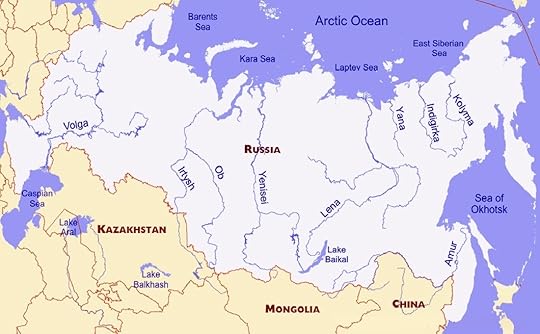
The Yenisei river plays a major part in this work
The story:
This autofiction follows the events in Vagabond of the Steppe (Таежный бродяга), when the hero, a former criminal (blatnoy) leaves the forced labour camp in Krasnoyarsk, tries to start a new life from scratch, and ends up wandering throughout Siberia.
In this instalment, the hero is more or less forced to come back to the Republic of Khakassia so as to make amends for his past as a mobster. However, this is easier said than done. He has to write articles for regional newspapers without properly stating the obvious or criticizing the policy carried out by the new Khrushchev regime. Obviously, he makes a blunder, is dismissed and has to find a new job... These tribulations will lead him into Western Mongolia with a team of scientists looking for the earliest population center in Eastern Siberia. Finally, he faces Cain, the dreaded leader of the Black Cat gang in a final confrontation near Ienisseisk, an important base for an important network of smugglers.
What is standing out in this work is the essential ambiguous nature of everyone met by the main character/narrator. Friends crowding around the main character after his first literary success, and turning their backs on him as soon as he is reported to be guilty of thoughtcrime, exiled Old Belivers, hiding Skoptsy, secretive fire-worshippers in the Khakassian Mountains, a professor of ancient languages cultivating a fascination for a supposed 'silico-organic' form of life which existed before man and thrives in fire, a traumatized young man living with his mother who actually took part in organized crime as an accomplice, a harmless-looking forester actively snitching for a local gang, people letting one of their own drown in a river because of animistic beliefs, Chukchi men 'turning into' teraki (monsters, paryas).
And, well, the main character who embodies many characters, plays many roles as the story unfolds.
Places visited and mentioned in the 'Russet Devil':

The Republic of Khakassia
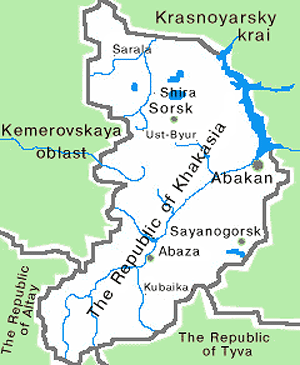
Abakan, the capital of Khakassia
Otchury (a tiny village built by the Ienissei river, south of Abakan, in Khakassia, and important smuggling center)
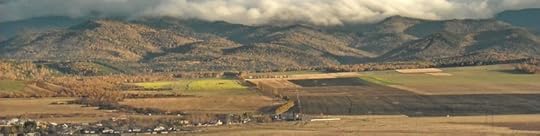
Tachtyp
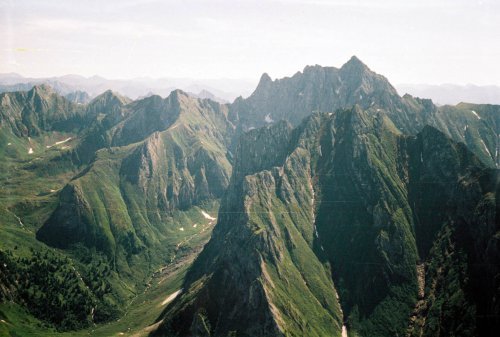
The Saian Mountain Range
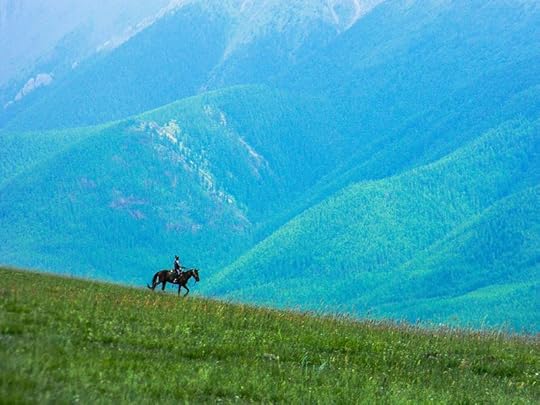
Tannu-Ola Mountains, Tuva Republic, Chedi-Kholsky District
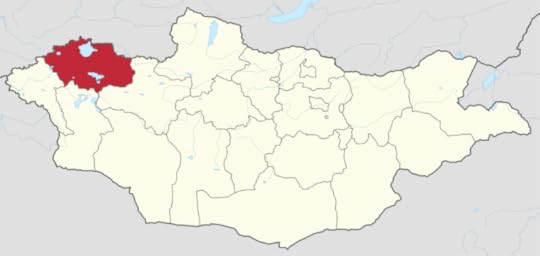
Uvs Aimag (region in the North-West of Mongolia)
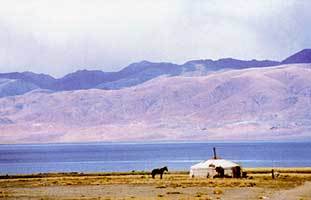
The banks of the Uvs Lake, Mongolia
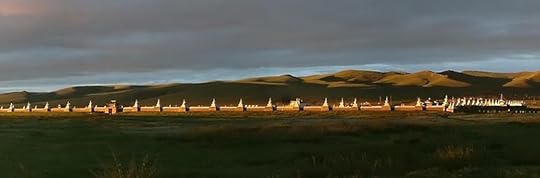
Erdene-Zuu Buddhist Monastery, Central Mongolia
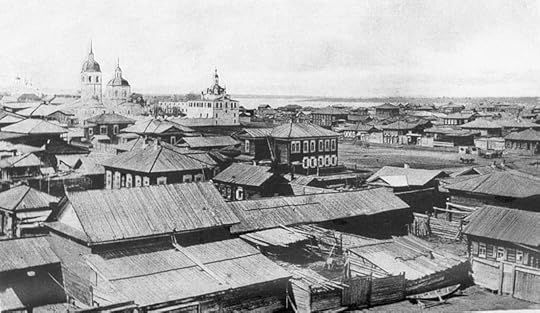
Ienisseisk (in 1913)
Turukhansk
------
People met and mentioned
Skoptsy
Kerzhaki & Orthodox Old Belivers in general
Chaldony (Native Siberians, a permanent population of immigrants from European Russia - especially Don Cossacks - formed in Western Siberia at the end of the 16th and 17th centuries)
People in Khakassia and the Sayan moutain range area: Evenki, Tuvans (Tuvintsy), Kamasins (Kamasintsy)...
Tungusic peoples
Chukchi
Further reading and related books:
The previous tome in Mikhail Diomine's cycle, taking place in the Republic of Khakassia:
Таежный бродяга
It's all about political correctness:
The Joke
The life of the Leskovs in southern Siberia (taking place in Khakassia too and involving a recluse family of Old Believers)
Ermites dans la Taïga
Ethnography:
Tristes Tropiques
Considerations about katorga on the banks of the Ienissei River :
Souvenirs de la maison des morts
The Yenisei river plays a major part in this work
The story:
This autofiction follows the events in Vagabond of the Steppe (Таежный бродяга), when the hero, a former criminal (blatnoy) leaves the forced labour camp in Krasnoyarsk, tries to start a new life from scratch, and ends up wandering throughout Siberia.
In this instalment, the hero is more or less forced to come back to the Republic of Khakassia so as to make amends for his past as a mobster. However, this is easier said than done. He has to write articles for regional newspapers without properly stating the obvious or criticizing the policy carried out by the new Khrushchev regime. Obviously, he makes a blunder, is dismissed and has to find a new job... These tribulations will lead him into Western Mongolia with a team of scientists looking for the earliest population center in Eastern Siberia. Finally, he faces Cain, the dreaded leader of the Black Cat gang in a final confrontation near Ienisseisk, an important base for an important network of smugglers.
What is standing out in this work is the essential ambiguous nature of everyone met by the main character/narrator. Friends crowding around the main character after his first literary success, and turning their backs on him as soon as he is reported to be guilty of thoughtcrime, exiled Old Belivers, hiding Skoptsy, secretive fire-worshippers in the Khakassian Mountains, a professor of ancient languages cultivating a fascination for a supposed 'silico-organic' form of life which existed before man and thrives in fire, a traumatized young man living with his mother who actually took part in organized crime as an accomplice, a harmless-looking forester actively snitching for a local gang, people letting one of their own drown in a river because of animistic beliefs, Chukchi men 'turning into' teraki (monsters, paryas).
And, well, the main character who embodies many characters, plays many roles as the story unfolds.
Places visited and mentioned in the 'Russet Devil':
The Republic of Khakassia
Abakan, the capital of Khakassia
Otchury (a tiny village built by the Ienissei river, south of Abakan, in Khakassia, and important smuggling center)
Tachtyp
The Saian Mountain Range
Tannu-Ola Mountains, Tuva Republic, Chedi-Kholsky District
Uvs Aimag (region in the North-West of Mongolia)
The banks of the Uvs Lake, Mongolia
Erdene-Zuu Buddhist Monastery, Central Mongolia
Ienisseisk (in 1913)
Turukhansk
------
People met and mentioned
Skoptsy
Kerzhaki & Orthodox Old Belivers in general
Chaldony (Native Siberians, a permanent population of immigrants from European Russia - especially Don Cossacks - formed in Western Siberia at the end of the 16th and 17th centuries)
People in Khakassia and the Sayan moutain range area: Evenki, Tuvans (Tuvintsy), Kamasins (Kamasintsy)...
Tungusic peoples
Chukchi
Further reading and related books:
The previous tome in Mikhail Diomine's cycle, taking place in the Republic of Khakassia:
Таежный бродяга
It's all about political correctness:
The Joke
The life of the Leskovs in southern Siberia (taking place in Khakassia too and involving a recluse family of Old Believers)
Ermites dans la Taïga
Ethnography:
Tristes Tropiques
Considerations about katorga on the banks of the Ienissei River :
Souvenirs de la maison des morts
Displaying 1 - 1 of 1 review