

What do you think?

Curiosity
Award-winning novelist Joan Thomas blends fact and fiction, passion and science in this stunning novel set in 19th-century Lyme Regis, England — the seaside town that is the setting of both The French Lieutenant's Woman and Jane Austen's Persuasion .
More than 40 years before the publication of The Origin of Species , 12-year-old Mary Anning, a cabinet-maker's daughter, found the first intact skeleton of a prehistoric dolphin-like creature, and spent a year chipping it from the soft cliffs near Lyme Regis. This was only the first of many important discoveries made by this incredible woman, perhaps the most important paleontologist of her day.
Henry de la Beche was the son of a gentry family, owners of a slave-worked estate in Jamaica where he spent his childhood. As an adolescent back in England, he ran away from military college, and soon found himself living with his elegant, cynical mother in Lyme Regis, where he pursued his passion for drawing and painting the landscapes and fossils of the area. One morning on an expedition to see an extraordinary discovery — a giant fossil — he meets a young woman unlike anyone he has ever met…
More than 40 years before the publication of The Origin of Species , 12-year-old Mary Anning, a cabinet-maker's daughter, found the first intact skeleton of a prehistoric dolphin-like creature, and spent a year chipping it from the soft cliffs near Lyme Regis. This was only the first of many important discoveries made by this incredible woman, perhaps the most important paleontologist of her day.
Henry de la Beche was the son of a gentry family, owners of a slave-worked estate in Jamaica where he spent his childhood. As an adolescent back in England, he ran away from military college, and soon found himself living with his elegant, cynical mother in Lyme Regis, where he pursued his passion for drawing and painting the landscapes and fossils of the area. One morning on an expedition to see an extraordinary discovery — a giant fossil — he meets a young woman unlike anyone he has ever met…
416 pages, Hardcover
First published January 1, 2010
About the author
Joan Thomas
6 books110 followersWild Hope, my fifth novel, is a love story, a mystery, and a critique of contemporary values. Two of my previous books, Five Wives and Curiosity, were fictional dives into real events. My novels have won numerous prizes, including the Governor General's Award for Fiction, the Amazon Prize, the McNally Robinson Prize, and a Commonwealth Prize. I live in Winnipeg. You can visit me at joanthomas.ca.
Ratings & Reviews
Friends & Following
Create a free account to discover what your friends think of this book!
Community Reviews
Displaying 1 - 30 of 80 reviews

February 14, 2011
The focus of Joan Thomas's historical fiction in Curiosity is the life of Mary Anning. Mary Anning(1799-1847) was a self-educated paleontologist & fossil collector from Lyme Regis, on the Jurassic Coast in the South West of Dorset in England.

Portrait of Mary Anning by Henry De la Beche
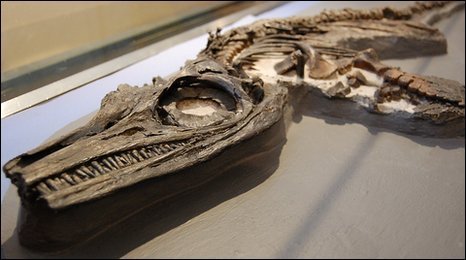
With her brother, when she was 11 years old, Mary found the first complete Ichthyosaur. During her lifetime she collected, identified and sold many fossils, among them: skeletons of more ichthyosaurs, a long-necked Plesiosaurus (aka the ‘sea-dragon’) and a Pterodactylus (aka ‘flying-dragon’).
 [image error]
Anning's spectacular marine finds and her contribution to scientific thought challenged her contemporaries' biblical interpretations of the story of creation. Her specimens were important early finds in the fields of what would later become known as paleontology, geology and evolutionary biology.
Thomas' book was rumoured to be more fully realized than Tracy Chevalier's Remarkable Creatures, another work of historical fiction that imagines what Anning's life might have been like. Both books provide fascinating looks into a woman, time, and place that have each played an incredibly important role in scientific thought. Curiosity definitely satisfies in the way it explores the relationship between scientists and theories of the time.
Joan Thomas's Mary Anning is quite a different person than Tracy Chevalier's in Remarkable Creatures. Not much is truly known for certain of Mary Anning's romantic relationships (if any). Each author puts forward a different male love interest for Anning, readers will have to determine for themselves if either is believable or likely!
What both authors are certain about is that Anning undoubtedly faced many challenges in her childhood and early twenties because of her family's poverty. Thomas clearly respects Mary Anning and tries to understand and illustrate the circumstances of her life.
The child mortality rate of the time was frightening. To put it in perspective, Paul Revere had 17 children -the last one in 1789, a mere ten years before Mary Anning was born. Of Revere’s children, only 12 lived to adulthood -he lost eight children, the same as Mary’s parents. But where 70% of the Revere children survived to adulthood, only only 20% of The Anning children lived.
For today's readers, child mortality rates like these and their toll on the family, and mothers in particular, are almost impossible to personally imagine. Thomas does an excellent job of presenting Mary Anning simply and remarkably living on as the sole surviving daughter of a couple who'd lost eight of their ten children
She writes: "The poor love life as passionately as the rich do. Perhaps more, for the effort it takes to cling to it."
The perplexities of growing up in a small community that knows Mary's history of loss and witnesses her childhood as an idiosyncratic poor man's daughter are presented from the child's point of view in a way that introduces the reader slowly to Mary's character.
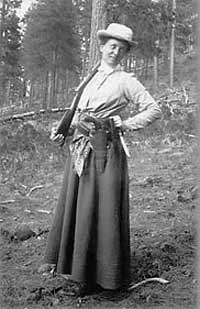
Annie Alexander
A favorite lady fossilist and collector's bio of mine is: On Her Own Terms: Annie Montague Alexander and the Rise of Science in the American West. Alexander and her partner, Louise Kellogg, collected with vigour and determination. As with Anning, their specimens eventually spoke for them as their life's work, more than their writings or any kind of memoir.
The scientific contributions of women like Anning, her contemporary Elizabeth Philpot, (and just 50 years later, Alexander in the US) were known and to a certain extent tolerated (even eventually accepted during their lives) because of their notoriety and small numbers, but also because of the way collections house specimens.
In the end once a specimen is identified and accessioned, scientists may argue over its similarity or difference to other specimens, but as that conversation heats up, it is the specimen and its identification (not the collector) that becomes the subject of the debate. Anning, Philpot, and Alexander all participated in science by their very act of collecting, whether they were within or without the academy, part of that scholarly debate or not.
Portrait of Mary Anning by Henry De la Beche
With her brother, when she was 11 years old, Mary found the first complete Ichthyosaur. During her lifetime she collected, identified and sold many fossils, among them: skeletons of more ichthyosaurs, a long-necked Plesiosaurus (aka the ‘sea-dragon’) and a Pterodactylus (aka ‘flying-dragon’).
[image error] Anning's spectacular marine finds and her contribution to scientific thought challenged her contemporaries' biblical interpretations of the story of creation. Her specimens were important early finds in the fields of what would later become known as paleontology, geology and evolutionary biology.
Thomas' book was rumoured to be more fully realized than Tracy Chevalier's Remarkable Creatures, another work of historical fiction that imagines what Anning's life might have been like. Both books provide fascinating looks into a woman, time, and place that have each played an incredibly important role in scientific thought. Curiosity definitely satisfies in the way it explores the relationship between scientists and theories of the time.
Joan Thomas's Mary Anning is quite a different person than Tracy Chevalier's in Remarkable Creatures. Not much is truly known for certain of Mary Anning's romantic relationships (if any). Each author puts forward a different male love interest for Anning, readers will have to determine for themselves if either is believable or likely!
What both authors are certain about is that Anning undoubtedly faced many challenges in her childhood and early twenties because of her family's poverty. Thomas clearly respects Mary Anning and tries to understand and illustrate the circumstances of her life.
The child mortality rate of the time was frightening. To put it in perspective, Paul Revere had 17 children -the last one in 1789, a mere ten years before Mary Anning was born. Of Revere’s children, only 12 lived to adulthood -he lost eight children, the same as Mary’s parents. But where 70% of the Revere children survived to adulthood, only only 20% of The Anning children lived.
For today's readers, child mortality rates like these and their toll on the family, and mothers in particular, are almost impossible to personally imagine. Thomas does an excellent job of presenting Mary Anning simply and remarkably living on as the sole surviving daughter of a couple who'd lost eight of their ten children
She writes: "The poor love life as passionately as the rich do. Perhaps more, for the effort it takes to cling to it."
The perplexities of growing up in a small community that knows Mary's history of loss and witnesses her childhood as an idiosyncratic poor man's daughter are presented from the child's point of view in a way that introduces the reader slowly to Mary's character.
Annie Alexander
A favorite lady fossilist and collector's bio of mine is: On Her Own Terms: Annie Montague Alexander and the Rise of Science in the American West. Alexander and her partner, Louise Kellogg, collected with vigour and determination. As with Anning, their specimens eventually spoke for them as their life's work, more than their writings or any kind of memoir.
The scientific contributions of women like Anning, her contemporary Elizabeth Philpot, (and just 50 years later, Alexander in the US) were known and to a certain extent tolerated (even eventually accepted during their lives) because of their notoriety and small numbers, but also because of the way collections house specimens.
In the end once a specimen is identified and accessioned, scientists may argue over its similarity or difference to other specimens, but as that conversation heats up, it is the specimen and its identification (not the collector) that becomes the subject of the debate. Anning, Philpot, and Alexander all participated in science by their very act of collecting, whether they were within or without the academy, part of that scholarly debate or not.

November 16, 2011
I had a difficult time getting into this book but the story of Mary Anning's life caught my interest and the writing issues became irrelevant.
I never really had a good handle on the time frame within the novel. The years just went by....one page Mary is 12 years old, the next she seems to be about 18 or so. That issue never resolves itself throughout the book but, again, the story is interesting and one just goes with the flow and forgets Mary's age or the time.
This story focusses on a lot: gender issues (women had no voice), class issues (Mary's family's status as "low" class meant that "gentlemen" didn't see or hear them), it touched on creationism: in Mary's time, the Flood of Noah was thought to have been 3000 years ago and all the fossils were from that flood. This led to some issues with aging the fossils. There was also some very basic suggestions of evolution (although it wasn't called that yet).
Mary's story, although interesting, wasn't explored as deeply as I would have liked. I didn't feel that I got to know her or her thoughts; just her life's work.
Despite all that, I enjoyed this book. An interesting read.
ETA February 2016; from Archeology magazine (Mar/Apr 2016):
On Church Cliff Beach in Lyme Regis, a beachcomber recently found a small metal token inscribed "Mary Anning MDCCCX" on one side and "LYME REGIS AGE XI" on the other. ...... Researchers suspect the token might have been a lost gift from her father, a cabinet maker and the source of her passion for fossil-collecting, on the occasion of her 11th birthday, in 1810, the same year that he died.
It's a shame that Mary lost this little token and a wonder that it was found after all this time.
I never really had a good handle on the time frame within the novel. The years just went by....one page Mary is 12 years old, the next she seems to be about 18 or so. That issue never resolves itself throughout the book but, again, the story is interesting and one just goes with the flow and forgets Mary's age or the time.
This story focusses on a lot: gender issues (women had no voice), class issues (Mary's family's status as "low" class meant that "gentlemen" didn't see or hear them), it touched on creationism: in Mary's time, the Flood of Noah was thought to have been 3000 years ago and all the fossils were from that flood. This led to some issues with aging the fossils. There was also some very basic suggestions of evolution (although it wasn't called that yet).
Mary's story, although interesting, wasn't explored as deeply as I would have liked. I didn't feel that I got to know her or her thoughts; just her life's work.
Despite all that, I enjoyed this book. An interesting read.
ETA February 2016; from Archeology magazine (Mar/Apr 2016):
On Church Cliff Beach in Lyme Regis, a beachcomber recently found a small metal token inscribed "Mary Anning MDCCCX" on one side and "LYME REGIS AGE XI" on the other. ...... Researchers suspect the token might have been a lost gift from her father, a cabinet maker and the source of her passion for fossil-collecting, on the occasion of her 11th birthday, in 1810, the same year that he died.
It's a shame that Mary lost this little token and a wonder that it was found after all this time.

April 16, 2010
what a wonderful novel! thomas did a great job evoking the time and the setting, and conveying the challenges mary anning faced. to me, there seemed to be slight dabblings in the realm of magical realism - mary being struck by lightening, her father's perceived protection from the cliffs, and anning using her senses to gain knowledge (where might a specimen be found? is henry home?) - but while these facets of the story were very interesting, they didn't really get explored as much as i would have appreciated. (and i am not one who has really had success in reading magical realism before (a couple of exceptions), so the fact i noticed this and wished for a bit more is a little surprising to me.)
i loved the image thomas created of anning, in her skirts and black top hat scouring the cliffs and shore for specimens. i really could picture the scene, and anning, so well. there is a line in the story that really stood out to me: "Oh, she's a history and a mystery, our Mary." while i know only a little bit about anning, i hope that thomas' fictional portrayal is embraced and enjoyed by many readers. anning did not receive the recognition she deserved in her lifetime, given the divide between men and women, as well as the class divide, and anning's lack of formal education and training.
so, this book is definitely a tribute to a remarkable woman and i am so glad i finally took the opportunity to read it!
edited to add:
while i was google searching things, i came across this drawing of mary anning, created by henry de la beche. (it's on the wikipedia page for mary anning: http://en.wikipedia.org/wiki/Mary_Anning )
i loved the image thomas created of anning, in her skirts and black top hat scouring the cliffs and shore for specimens. i really could picture the scene, and anning, so well. there is a line in the story that really stood out to me: "Oh, she's a history and a mystery, our Mary." while i know only a little bit about anning, i hope that thomas' fictional portrayal is embraced and enjoyed by many readers. anning did not receive the recognition she deserved in her lifetime, given the divide between men and women, as well as the class divide, and anning's lack of formal education and training.
so, this book is definitely a tribute to a remarkable woman and i am so glad i finally took the opportunity to read it!
edited to add:
while i was google searching things, i came across this drawing of mary anning, created by henry de la beche. (it's on the wikipedia page for mary anning: http://en.wikipedia.org/wiki/Mary_Anning )

November 22, 2021
Published in 2010.
The first book I read of Canadian novelist Joan Thomas was Five Wives, which I discovered when searching online for something new to read. I’ve since read more of her work.
This book is an interesting read. I found it almost dreamlike, somewhat hypnotic.
But reading other reviews after finishing this book, I noticed quite a few people had difficulty getting into it and liking it.
The style of the language takes getting used to.
For example:
Page 785. No. I must needs earn my keep now.
Page 805: Must needs ship the specimen from Weymouth
and the word – “mayhap” instead of perhaps
such as: Mayhap they were dragons made by the Devil to tempt the week away from God.
And there you have the challenge to religion. How to explain these strange finds that Mary Anning and others were finding. These curiosities.
On page 267
“Is it a shell? “He asks. “How was it made?”
“It’s a curiosity,” says Alger in rebuke. “Why would they call it a curiosity if they knew?”
They would later come up with “a new word” fossil.
Curiosity is based on historical records. Where the author could find no information, she invented it. Characters are based on real individuals. It takes place in Lyme Regis, West Dorset, England.
Mary dug and sold these “curiosities”, a lot of pyrite ammonite—which looks much like the curled body of a small snake—to the tourists and other men of science. Men of science who ended up getting credit for her hard work. For it was Mary Anning who collected the first British pterodactyl in 1828.
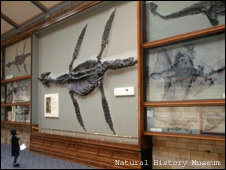
Many of her fines are in the National History Museum in London. But they are credited to the man who bought them from her.
Religion struggled to understand these strange finds that made no sense to the history as they understood it. So, it had to be the Devils’ work.
Some of the real-life characters:
Georges Cuvier
William Buckland
George Sowerby
William Conybeare
The other main character is Henry De la Beche, a geologist and palaeontologist, who inherited a slave-worked sugar plantation in Jamaica. He is the man the author believes had a brief romantic relationship with Mary Anning.
The high-brow, Henry and the lower-class, Mary.
The cover of the novel is from one of De la Beche’s drawings in 1830 “Duria antiquior” It can be viewed in full online.
I loved tidbits of history throughout this book!
The mention of seeing Saartjie Baartman. A South African, Khoekhoe woman, who ended up as part of a freak show in England on Piccadilly Street/ Piccadilly Circus, and later in France, where she died. Her body was put on display.
She wasn’t buried until 1974 when Nelson Mandela finally got her body returned to South Africa.
You can view her story on: “Ironic Corpse-Saartjie “Sarah” Baartman - YouTube.
When I read this on page 61, I couldn’t believe it was true:
A calf was allowed to suck its full before it was killed and the curdled milk from its stomach used to curdle cheese.
So, I did an online search and sure enough… I learned about rennet. Which is an essential part of the cheesemaking process.
Rennet is an enzyme obtained from the 4th stomach of an unweaned calf.
Thank goodness there is vegetarian rennet.
But animal rennet (strips of dried stomach) is used for the traditionally produced Beaufort cheese. I’m horrified!
On another note, the author writes: Scientific credentials did not begin until the 1930s for Mary Anning. But their remained the folklore. The well-known tongue twister: “She sells sea shells by the seashore” is almost certainly about her.
I enjoyed this read. Loved learning about things I didn’t know before. All in all, that makes for a great book!
The first book I read of Canadian novelist Joan Thomas was Five Wives, which I discovered when searching online for something new to read. I’ve since read more of her work.
This book is an interesting read. I found it almost dreamlike, somewhat hypnotic.
But reading other reviews after finishing this book, I noticed quite a few people had difficulty getting into it and liking it.
The style of the language takes getting used to.
For example:
Page 785. No. I must needs earn my keep now.
Page 805: Must needs ship the specimen from Weymouth
and the word – “mayhap” instead of perhaps
such as: Mayhap they were dragons made by the Devil to tempt the week away from God.
And there you have the challenge to religion. How to explain these strange finds that Mary Anning and others were finding. These curiosities.
On page 267
“Is it a shell? “He asks. “How was it made?”
“It’s a curiosity,” says Alger in rebuke. “Why would they call it a curiosity if they knew?”
They would later come up with “a new word” fossil.
Curiosity is based on historical records. Where the author could find no information, she invented it. Characters are based on real individuals. It takes place in Lyme Regis, West Dorset, England.
Mary dug and sold these “curiosities”, a lot of pyrite ammonite—which looks much like the curled body of a small snake—to the tourists and other men of science. Men of science who ended up getting credit for her hard work. For it was Mary Anning who collected the first British pterodactyl in 1828.
Many of her fines are in the National History Museum in London. But they are credited to the man who bought them from her.
Religion struggled to understand these strange finds that made no sense to the history as they understood it. So, it had to be the Devils’ work.
Some of the real-life characters:
Georges Cuvier
William Buckland
George Sowerby
William Conybeare
The other main character is Henry De la Beche, a geologist and palaeontologist, who inherited a slave-worked sugar plantation in Jamaica. He is the man the author believes had a brief romantic relationship with Mary Anning.
The high-brow, Henry and the lower-class, Mary.
The cover of the novel is from one of De la Beche’s drawings in 1830 “Duria antiquior” It can be viewed in full online.
I loved tidbits of history throughout this book!
The mention of seeing Saartjie Baartman. A South African, Khoekhoe woman, who ended up as part of a freak show in England on Piccadilly Street/ Piccadilly Circus, and later in France, where she died. Her body was put on display.
She wasn’t buried until 1974 when Nelson Mandela finally got her body returned to South Africa.
You can view her story on: “Ironic Corpse-Saartjie “Sarah” Baartman - YouTube.
When I read this on page 61, I couldn’t believe it was true:
A calf was allowed to suck its full before it was killed and the curdled milk from its stomach used to curdle cheese.
So, I did an online search and sure enough… I learned about rennet. Which is an essential part of the cheesemaking process.
Rennet is an enzyme obtained from the 4th stomach of an unweaned calf.
Thank goodness there is vegetarian rennet.
But animal rennet (strips of dried stomach) is used for the traditionally produced Beaufort cheese. I’m horrified!
On another note, the author writes: Scientific credentials did not begin until the 1930s for Mary Anning. But their remained the folklore. The well-known tongue twister: “She sells sea shells by the seashore” is almost certainly about her.
I enjoyed this read. Loved learning about things I didn’t know before. All in all, that makes for a great book!

April 26, 2011
Brilliant and engaging, although towards the end I felt the novel suffered because the author was trying to stick close to the facts instead of rewriting history for the sake of a better story. Then again, maybe I'm just a romantic and Thomas' plot choices are far more realistic and authentic.
I only wish I could remember the words for seven daily meals. Dewsip, then breakfast, then nuncheon, then something something and finally supper. Other obsolete words are also scattered through the layers of the text, like fossils, waiting to be unearthed and rediscovered.
I only wish I could remember the words for seven daily meals. Dewsip, then breakfast, then nuncheon, then something something and finally supper. Other obsolete words are also scattered through the layers of the text, like fossils, waiting to be unearthed and rediscovered.

August 29, 2010
"Oh, she's a history and a mystery, our Mary."
Mary Anning, the heroine of Joan Thomas' novel, CURIOSITY, was indeed a mystery and has, for a long time, been a mere footnote in the history of paleontology. Her recognition as "the greatest fossilist the world ever knew"*) came long after her death in 1847. Basing herself on whatever facts are known about Mary, her family and English society mores and rules in the first quarter of the nineteenth century, Thomas has created a multi-layered, convincing and engaging portrait not only of her heroine but also of the social realities of her time.
Mary's obstacles to be acknowledged for her contributions and increasing competence and knowledge were two-fold: she was still a young girl, barely educated and self-taught, when she made the first sizeable prehistoric fossil find, the first specimen of an *Ichthyosaurus*, and she was "lowborn", living in the poorest part of Lyme Regis, on England's southern shore and a centre for "fossilizing" during her lifetime. To support her family, Mary had been selling ammonites and other small petrified treasures as "curiosities" to visitors and "gentlemen geologists". Among the latter was Henry De la Beche, who took a liking to her beyond the curios. Close in age, they met initially when there were still teenagers and over the years he followed her explorations up and down the cliffs of Lyme Regis with great enthusiasm and growing respect for her detailed knowledge of the taxonomy of her fossils. **)
Lyme Regis is defined by the cliffs, with the poor people living close to the seashore. Storms, high tides with resulting flooding of low-lying areas of town are frequent and the cliffs prone to landslides. Daily, Mary is driven by both hunger and intellectual "curiosity" to discover new creatures and/or work methodically on digging them out of their rocky grave. The dangers of the tides and the changing landscape in response to the weather are constant reminders how fragile the land is and how precarious the digging for fossils could be.
Henry's story is told in often alternating chapters, allowing the author to add another facet of the social context: Henry grew up in Jamaica as son of a slave-owning plantation owner. In part, this explains his nonconformist behaviour but also his financial and other constraints at a time when the moves towards the abolition of slavery may have further reduced his income from the plantation. Eventually and based on his work, indirectly helped by Mary, Henry is accepted into the prestigious Geological Society and debates with other then well-known early paleontologists across Europe.
Thomas suggests that Henry and Mary may have been romantically linked as well working together. She imagines touching, yet guarded, encounters during walks along the cliffs and through the undergrowth above them. The descriptions illustrate the social stigma any such contact would have carried, given the strict class rules of the day. The author pursues the depiction of their social differences into the language they use in dialog and also into Mary's inner reflections.
These early fossil finds challenged the scientific thinking on the origin of life (decades prior to Darwin's ON THE ORIGIN OF SPECIES) and led to intellectual controversies by leading scientists and religious leaders of the day. With great skill Thomas explores these often emotional debates in some depth by bringing several geologists into the core of her novel. A few had met and bought from Mary, others did not believe that her work could be genuine. While none of them ever acknowledged Mary's contributions, her fossils were used, nonetheless, in evidence for any of the theories centred on the newly coined concept of "evolution". Above all, it challenged the scientists how the fossil evidence could be brought into harmony with the Bible and Christian beliefs in Genesis, the Flood and Noah's Ark. Fascinating debates indeed.
One of the challenges for a novel that fictionalizes the life of historical figures and their real-life circumstances is to maintain the momentum of the narrative and balance between an interesting wider context and an engaging personal dramatic story. Thomas writes perceptively about Mary and with great sensitivity, presenting her as a strong-willed young woman who, despite knowing her 'personal lower station' increasingly fought against her social limitations. Overall, the author has succeeded, in my view, to combine the various threads of the narrative well. At times, however, the detailed portrayal of Mary's daily struggle and her family's efforts on the one hand, and life among the "highborn" on the other, may seem a bit slow and drawn out to some readers. Similarly, for others less interested in the scientific explorations and debates, the intricate descriptions of the early fossil finds and the details about the gentlemen geologists's lives and debates may seem to be lacking in dramatic drive. The book ends in 1824 somewhat abruptly and I for one found this a bit disappointing. A more informative and rounded ending may have added to the sense of a completed novel.
*) The British Journal of the History of Science in 1999, the bicentenary of her birth, describes Mary Anning in this way.
**) She was eventually credited with, among others, the first nearly complete example of the Plesiosaurus, discovered in 1824.
Mary Anning, the heroine of Joan Thomas' novel, CURIOSITY, was indeed a mystery and has, for a long time, been a mere footnote in the history of paleontology. Her recognition as "the greatest fossilist the world ever knew"*) came long after her death in 1847. Basing herself on whatever facts are known about Mary, her family and English society mores and rules in the first quarter of the nineteenth century, Thomas has created a multi-layered, convincing and engaging portrait not only of her heroine but also of the social realities of her time.
Mary's obstacles to be acknowledged for her contributions and increasing competence and knowledge were two-fold: she was still a young girl, barely educated and self-taught, when she made the first sizeable prehistoric fossil find, the first specimen of an *Ichthyosaurus*, and she was "lowborn", living in the poorest part of Lyme Regis, on England's southern shore and a centre for "fossilizing" during her lifetime. To support her family, Mary had been selling ammonites and other small petrified treasures as "curiosities" to visitors and "gentlemen geologists". Among the latter was Henry De la Beche, who took a liking to her beyond the curios. Close in age, they met initially when there were still teenagers and over the years he followed her explorations up and down the cliffs of Lyme Regis with great enthusiasm and growing respect for her detailed knowledge of the taxonomy of her fossils. **)
Lyme Regis is defined by the cliffs, with the poor people living close to the seashore. Storms, high tides with resulting flooding of low-lying areas of town are frequent and the cliffs prone to landslides. Daily, Mary is driven by both hunger and intellectual "curiosity" to discover new creatures and/or work methodically on digging them out of their rocky grave. The dangers of the tides and the changing landscape in response to the weather are constant reminders how fragile the land is and how precarious the digging for fossils could be.
Henry's story is told in often alternating chapters, allowing the author to add another facet of the social context: Henry grew up in Jamaica as son of a slave-owning plantation owner. In part, this explains his nonconformist behaviour but also his financial and other constraints at a time when the moves towards the abolition of slavery may have further reduced his income from the plantation. Eventually and based on his work, indirectly helped by Mary, Henry is accepted into the prestigious Geological Society and debates with other then well-known early paleontologists across Europe.
Thomas suggests that Henry and Mary may have been romantically linked as well working together. She imagines touching, yet guarded, encounters during walks along the cliffs and through the undergrowth above them. The descriptions illustrate the social stigma any such contact would have carried, given the strict class rules of the day. The author pursues the depiction of their social differences into the language they use in dialog and also into Mary's inner reflections.
These early fossil finds challenged the scientific thinking on the origin of life (decades prior to Darwin's ON THE ORIGIN OF SPECIES) and led to intellectual controversies by leading scientists and religious leaders of the day. With great skill Thomas explores these often emotional debates in some depth by bringing several geologists into the core of her novel. A few had met and bought from Mary, others did not believe that her work could be genuine. While none of them ever acknowledged Mary's contributions, her fossils were used, nonetheless, in evidence for any of the theories centred on the newly coined concept of "evolution". Above all, it challenged the scientists how the fossil evidence could be brought into harmony with the Bible and Christian beliefs in Genesis, the Flood and Noah's Ark. Fascinating debates indeed.
One of the challenges for a novel that fictionalizes the life of historical figures and their real-life circumstances is to maintain the momentum of the narrative and balance between an interesting wider context and an engaging personal dramatic story. Thomas writes perceptively about Mary and with great sensitivity, presenting her as a strong-willed young woman who, despite knowing her 'personal lower station' increasingly fought against her social limitations. Overall, the author has succeeded, in my view, to combine the various threads of the narrative well. At times, however, the detailed portrayal of Mary's daily struggle and her family's efforts on the one hand, and life among the "highborn" on the other, may seem a bit slow and drawn out to some readers. Similarly, for others less interested in the scientific explorations and debates, the intricate descriptions of the early fossil finds and the details about the gentlemen geologists's lives and debates may seem to be lacking in dramatic drive. The book ends in 1824 somewhat abruptly and I for one found this a bit disappointing. A more informative and rounded ending may have added to the sense of a completed novel.
*) The British Journal of the History of Science in 1999, the bicentenary of her birth, describes Mary Anning in this way.
**) She was eventually credited with, among others, the first nearly complete example of the Plesiosaurus, discovered in 1824.

June 6, 2017
I thoroughly enjoyed the story, the characters (all of them based on real people), the flowing evocative prose, and the setting. We will be visiting Lyme Regis as part of our trip to the UK, and this is a book I will probably re-read--memories of the novel and of the town.
September 14, 2012
I had a really hard time getting into this book. It took me a week to read the first 30 pages! There is a lot of old British slang used at the beginning of the book and I found that confusing and off-putting. I also kept feeling like I missed something important and kept flipping back and re-reading to no avail. By the time I got to 100 pages (about a quarter of the book), it was moving very slowly and I couldn't really tell you what the book was about. It didn't capture my attention at all. This was a book club selection so I kept plodding thorough. After 100 pages, the story picked up and it became more interesting and by about 200 / 250 pages, there was less old British slang and I started enjoying it. The author does a great job of staying true to the historical record and illustrating the class differences between the two main characters as well as their common interests of fossil collecting and science. It also demonstrates the challenges the Biblical story of Genesis presented to advancing science. It shows how many major scientific discoveries were credited to gentlemen, as opposed to a lower-class poverty-stricken woman. Because of the formality of the language, I found it hard to "get to know" the main characters for the majority of the book. However, there are passages and chapters in the last third to quarter of the book that I found luminous and I could finally empathize with the characters and their real-life constraints. I'm not sure I can recommend this book due to the extremely slow start but the book gets progressively better if you stay with it.If I could rate this book in sections I would give it a "1" for the first quarter, a "2" for the second quarter, a "3" for the third quarter, and a "4" for the last quarter.

February 17, 2011
This well-researched and believable historical novel has characters who are all based on real people. Mary Anning was unschooled, female, and working class poor - all characteristics that should have doomed her to a life of obscurity in 17th century England. But she happened to live in Lyme Regis during a time when people were beginning to be interested in finding and trying to understand the nature and history of fossils, and she happened to be a brilliant, natural paleontologist. Because she lived in a society more stratified than the rock she dug through to release her incredible finds she got little or no credit in her lifetime for what she accomplished. However, many objects in the British Museum have now been relabeled so that Mary Anning gets credit for their discovery, not the men who purchased them from her. The book does an admirable job of portraying the dismal poverty of Mary’s life and her struggle to better herself and to look after her family. It’s on somewhat shakier factual ground where it posits a romance between Mary and Henry de la Beche, a gentleman artist/scientist who certainly touched the real Mary’s life and illustrated some of her finds. (I like the use of de la Beche’s drawings on the cover and endpapers of this edition.) The romance is an intriguing flight of fancy and warms a book that might otherwise be mired in the dismal circumstances of the lowest strata in a class-bound society. There can be no “happy ending” for such a romance in such a time, and it’s too bad that the eventual “happy ending” of collegial recognition came so long after Mary’s death. Good story though - worth a read.

July 15, 2021
It turns out this is the second book by Joan Thomas I have read. This one is getting one less star than Five Wives because the flaws I found in that book were also in this one.
The story, according to the summary on the back of the book, is supposed to be about Mary Anning, a young Dorset woman from a poor family who finds one of the first intact skeletons of a dinosaur in England. Not surprising, Mary's gender and social status means she was never properly recognized for her contribution, as the wealthy men who purchased her finds were the ones to name and describe them.
What I was hoping for was a good tale of a talented and hard working woman who is now getting her place in science. What was provided was a sloppy and meandering tale that spent more time worrying about the career asperations and marital woes of the higher class male, Henry De la Beche, than it did on Mary. The great discovery of an ichthyosaurus, that was Mary's first impressive find (she found a number more and of different types) took up maybe four paragraphs. Time was spent on how she excavated the head on her own, but the entire removal of the body was skipped and the reader was taken straight to the sale of the remains. Hardly the treatment of a historical event that should be of some note.
Joan Thomas fabricates an entire supposed love story out of some vague hints from a third party who knew Mary Anning. This story isn't even based on any information from the parties involved. So the only true history it contains is that it uses real people's names. I think it would have been better to entirely fictionalize the book.
I also noticed that Joan Thomas either can't write or doesn't like strong and intelligent female characters. I felt that way about Rachel Saint in Five Wives, where she was portrayed more as a nuisance and trying to hone in on her brother's work, rather than a woman who dedicated her life to the Waorani people. And I find that Mary is also written in an unsympathetic and cold manner. The reader is given little to like about Mary, a woman who lives in extreme poverty and hardship, but still perseveres.
The story, according to the summary on the back of the book, is supposed to be about Mary Anning, a young Dorset woman from a poor family who finds one of the first intact skeletons of a dinosaur in England. Not surprising, Mary's gender and social status means she was never properly recognized for her contribution, as the wealthy men who purchased her finds were the ones to name and describe them.
What I was hoping for was a good tale of a talented and hard working woman who is now getting her place in science. What was provided was a sloppy and meandering tale that spent more time worrying about the career asperations and marital woes of the higher class male, Henry De la Beche, than it did on Mary. The great discovery of an ichthyosaurus, that was Mary's first impressive find (she found a number more and of different types) took up maybe four paragraphs. Time was spent on how she excavated the head on her own, but the entire removal of the body was skipped and the reader was taken straight to the sale of the remains. Hardly the treatment of a historical event that should be of some note.
Joan Thomas fabricates an entire supposed love story out of some vague hints from a third party who knew Mary Anning. This story isn't even based on any information from the parties involved. So the only true history it contains is that it uses real people's names. I think it would have been better to entirely fictionalize the book.
I also noticed that Joan Thomas either can't write or doesn't like strong and intelligent female characters. I felt that way about Rachel Saint in Five Wives, where she was portrayed more as a nuisance and trying to hone in on her brother's work, rather than a woman who dedicated her life to the Waorani people. And I find that Mary is also written in an unsympathetic and cold manner. The reader is given little to like about Mary, a woman who lives in extreme poverty and hardship, but still perseveres.

April 19, 2010
I cannot continue. What I have discovered is that both Remarkable Creatures and Curiosity accurately depict the time period and its religious turmoil. The depiction is spot-on, but to me suffocating. I cannot deal with the "oh-so-proper" dialogue of the upper-class people. Whether Mary becomes hopelessly infatuated with Colonel Birch or Henry De la Beche is not interesting to me. I am at fault, not the book. I should not have picked up this book in the hope that it would give me enjoyment. I should have realized that such a topic as this was doomed to failure for me, me being whom I am. Joan Thomas was very kind to send this book to me. She was kind; I was an idiot! Those who appreciate Victorian literature - give it a try! You will probably love it!I know, I know, the time period of the book is a bit before the Victorian era, but it fits anyhow. It is better than Remarkable Creatures. I will send this book on to another person in the hope that she DOES enjoy it. I wish I could hide my head in a paper bag......
Through page 148: Oh, sometimes this is so boring..... I hate reading about high-society life. Polite luncheon talk. False standards, hypocrisy and pretensions, it drives me up a tree. OK, this WAS how life was in Bristol, but it is not my cup of tea! Please, when is Henry moving to Lyme Regis....anything to leave this setting!
Through page 120: I clearly enjoy this book more than Remarkable Creatures. There is humor. There is irony. There are beautiful descriptive passages of the Dorset landscape. Often the humor is tongue in cheek. On page 107 one reads:
He's speaking jovially, man to man. "How could I have foreseen such a thing? No one could have! However, with respect to yourself and your recent history, I can assure you I was the soul of discretion. The very soul." He tugs at his night cap, which seems to have shrunk in the laundry.
It is the last sentence I find amusing. This proper, aristocratic being is just like all the of us - troubled by laundry and ill-fitting clothes.
Or this comment from Henry:
"They shuffle along the ground, a modest, nervous bird. I watched them as a boy. The male and female are identical. I found a nest close to here, with eggs. Blue, like a robin's. Except for one larger egg, which was grey. They are often host to cuckoos, inadvertent hosts. Rather like my uncle Alger's situation at the moment."
Henry is currently living with his uncle Alger!
I love the line:
"She wears her nothing can touch me face."
We all know how that looks!
The huge science vesus religion controversy of the time is central to both books. The stratification of society and the repression of women is another common denominator. In Curiosity the chapters alternate between Henry and Mary, while in Remarkable Creatures they alternate between Mary and Elizabeth Philpot, but in Thomas' book there is humor and happiness too. Henry's teenage fixation on women is amusing. Mary's vibrant curiosity and relentless struggle to make sense of both the accepted "religious truths" and science is invigorating. The atmosphere in Curiosity is lighter, although the same dilemas are focused upon. I simply did not like the chemistry between Mary and Elizabeth.
I received this book directly from the author. I wish to thank her very much for sending me the book! I was interested in comparing this book with Remarkable Creatures. Although both books cover the same subject how will they differ? I found Chevalier's portrayl bleak and dismal.
I must say I love the cover to the hardcover edition sent to me. It is the 1830 watercolor painting done by Hnry De la Beche entitled Dunia Antiquior. It shows the prehistoric creatures of the fossilized skeletons which Mary discovered. Henry had the artist George Scharf make lithographic prints of his original painting. They were sold to aid Mary Anning financially.
Through page 148: Oh, sometimes this is so boring..... I hate reading about high-society life. Polite luncheon talk. False standards, hypocrisy and pretensions, it drives me up a tree. OK, this WAS how life was in Bristol, but it is not my cup of tea! Please, when is Henry moving to Lyme Regis....anything to leave this setting!
Through page 120: I clearly enjoy this book more than Remarkable Creatures. There is humor. There is irony. There are beautiful descriptive passages of the Dorset landscape. Often the humor is tongue in cheek. On page 107 one reads:
He's speaking jovially, man to man. "How could I have foreseen such a thing? No one could have! However, with respect to yourself and your recent history, I can assure you I was the soul of discretion. The very soul." He tugs at his night cap, which seems to have shrunk in the laundry.
It is the last sentence I find amusing. This proper, aristocratic being is just like all the of us - troubled by laundry and ill-fitting clothes.
Or this comment from Henry:
"They shuffle along the ground, a modest, nervous bird. I watched them as a boy. The male and female are identical. I found a nest close to here, with eggs. Blue, like a robin's. Except for one larger egg, which was grey. They are often host to cuckoos, inadvertent hosts. Rather like my uncle Alger's situation at the moment."
Henry is currently living with his uncle Alger!
I love the line:
"She wears her nothing can touch me face."
We all know how that looks!
The huge science vesus religion controversy of the time is central to both books. The stratification of society and the repression of women is another common denominator. In Curiosity the chapters alternate between Henry and Mary, while in Remarkable Creatures they alternate between Mary and Elizabeth Philpot, but in Thomas' book there is humor and happiness too. Henry's teenage fixation on women is amusing. Mary's vibrant curiosity and relentless struggle to make sense of both the accepted "religious truths" and science is invigorating. The atmosphere in Curiosity is lighter, although the same dilemas are focused upon. I simply did not like the chemistry between Mary and Elizabeth.
I received this book directly from the author. I wish to thank her very much for sending me the book! I was interested in comparing this book with Remarkable Creatures. Although both books cover the same subject how will they differ? I found Chevalier's portrayl bleak and dismal.
I must say I love the cover to the hardcover edition sent to me. It is the 1830 watercolor painting done by Hnry De la Beche entitled Dunia Antiquior. It shows the prehistoric creatures of the fossilized skeletons which Mary discovered. Henry had the artist George Scharf make lithographic prints of his original painting. They were sold to aid Mary Anning financially.
May 9, 2011
Joan Thomas based "Curiosity" on a journal written by Anna Maria Pinny, a wealthy woman who lived in Lyme Regis, Dorset who wrote that Mary Anning had confessed to Anna Pinney that she had been in love with an upper class gentleman who was involved in studying fossils. Joan Thomas has looked at the various men who were in Lyme Regis studying fossils and decided that Henry Del la Beche is the most likely person Mary was in love with. From this journal and the historical information Thomas has written this story. All of the men involved in the fossil search and attempt to explain the origin of the fossils were actual individuals.
Thomas has written a fascinating story in which she combines a love story and the story of the development of the study and understanding of fossils. Forty years before Darwin published "On the Origin of Species," Mary Anning found and excavated the first intact skeleton of a prehistoric creature. The complete skeleton of the pterodactyl is on exhibit in Natural History Museum in London along with many other of Mary's finds under the name of the person she sold these fossils to.
Mary hunted for "curiosities" on soft cliffs near Lyme Regis and sold them to visitors who arrived by coach. These "curiosities" were fossils, but at that time no one understood what they were or how they came to be in the cliffs. Mary spent her life hunting fossils and learning about them. She worked with many of the prominent upper class gentlemen who were also studying these fossils as paleontology and geology were just becoming into being.
This is not a biography but a novel. Thomas weaves the facts about Mary Anning and her guess at to who Mary was talking about when she told Anna Pinney that she had been in love with an upper class gentleman into a story I had difficulty putting down. It is not a typical love story but the story of how two people both worked at learning about the fossils which fascinated them both and how their lives were separated by class.
Thomas has written a fascinating story in which she combines a love story and the story of the development of the study and understanding of fossils. Forty years before Darwin published "On the Origin of Species," Mary Anning found and excavated the first intact skeleton of a prehistoric creature. The complete skeleton of the pterodactyl is on exhibit in Natural History Museum in London along with many other of Mary's finds under the name of the person she sold these fossils to.
Mary hunted for "curiosities" on soft cliffs near Lyme Regis and sold them to visitors who arrived by coach. These "curiosities" were fossils, but at that time no one understood what they were or how they came to be in the cliffs. Mary spent her life hunting fossils and learning about them. She worked with many of the prominent upper class gentlemen who were also studying these fossils as paleontology and geology were just becoming into being.
This is not a biography but a novel. Thomas weaves the facts about Mary Anning and her guess at to who Mary was talking about when she told Anna Pinney that she had been in love with an upper class gentleman into a story I had difficulty putting down. It is not a typical love story but the story of how two people both worked at learning about the fossils which fascinated them both and how their lives were separated by class.

July 25, 2011
"Curiosity","Joan Thomas"
"Mary Anning is a very interesting historical character. She lived in the early 19th century in Lymis Regis, England. Living in extreme poverty, she was a noted collector of fossils in the area. Being a woman she was denied credit for much of her work, and could not be admitted to the Royal Geological Society. Male collectors and geologists took credit for many of her discoveries, including the first ichthyosaur skeleton found when she was 12 years old, the first two plesiosaur skeletons,and one of the first pterodactyl skeletons. History tells us that she had a brief romance with an upper class man which turned out badly. The author speculates that it was geologist Henry Da le Beche, who spent his early years on a slave plantation in Jamaica, and became friends with Mary when they were teenagers. He is known to have painted a picture which included depictions of what her fossils would look like when alive and sold prints to help raise money for her in her impoverished circumstances.
I found this book difficult to get into due to the use of a lot of obsolete words and slang, and the nicknames given to the locals for the fossils at the time.The book got more interesting as it got into the role of women in the early 19th century England, and the arguments of the men collectors, some being members of the clergy, against the possibility of any extinctions. As the world was only 6000 years old they believed, these prehistoric creatures had only migrated and were still alive elsewhere. The discovery of the first mammoth remains caused one to speculate that the elephant-like creature lived underground and had migrated to America. None of Mary's findings were believed to be animals which no longer existed on earth as that was against their religious beliefs."
"Mary Anning is a very interesting historical character. She lived in the early 19th century in Lymis Regis, England. Living in extreme poverty, she was a noted collector of fossils in the area. Being a woman she was denied credit for much of her work, and could not be admitted to the Royal Geological Society. Male collectors and geologists took credit for many of her discoveries, including the first ichthyosaur skeleton found when she was 12 years old, the first two plesiosaur skeletons,and one of the first pterodactyl skeletons. History tells us that she had a brief romance with an upper class man which turned out badly. The author speculates that it was geologist Henry Da le Beche, who spent his early years on a slave plantation in Jamaica, and became friends with Mary when they were teenagers. He is known to have painted a picture which included depictions of what her fossils would look like when alive and sold prints to help raise money for her in her impoverished circumstances.
I found this book difficult to get into due to the use of a lot of obsolete words and slang, and the nicknames given to the locals for the fossils at the time.The book got more interesting as it got into the role of women in the early 19th century England, and the arguments of the men collectors, some being members of the clergy, against the possibility of any extinctions. As the world was only 6000 years old they believed, these prehistoric creatures had only migrated and were still alive elsewhere. The discovery of the first mammoth remains caused one to speculate that the elephant-like creature lived underground and had migrated to America. None of Mary's findings were believed to be animals which no longer existed on earth as that was against their religious beliefs."

July 21, 2012
A reader living in Alberta will most certainly be drawn to Joan Thomas’s new novel “Curiosity”. Great finds of palaeontology are right in our backyard so a novel set in a time when this science was still in its infancy sounds very interesting. And Joan Thomas does deliver a book that has all the ingredients a Canadian prize winner should have: it is obviously well researched, it is historical without romanticizing, beautifully written in its details, has compelling characters including a strong women who was ignored by her contemporaries and only more recently recognized for her tremendous contributions.
I started reading it and right away wanted to learn more about life at the beginning of the 19th century, about how class, religion and science would come together in the small town of Lyme Regis on the south western coast of England. I wanted to see how people might change as well when fossils that were seen as pieces of “curios” changed into evidence of “science”.
And over the process of reading the book I certainly did learn all that and more. However, it was a very slow process. The storyline moves at a very slow pace, somewhat mirroring the slow pace of geological time it seems. Being true to the historical context the main characters behave and think just like people in their time would have – very different from our modern perspective. And that makes it somewhat difficult for me to connect with the protagonists. They remain at a distance.
As interesting as the topic and the characters might be, the novel can’t really draw me closer to them. I read along because of the topical interest but with not much enjoyment rather like reading a better textbook. Unfortunately, the entertainment factor I look for in a novel was missing entirely.
I started reading it and right away wanted to learn more about life at the beginning of the 19th century, about how class, religion and science would come together in the small town of Lyme Regis on the south western coast of England. I wanted to see how people might change as well when fossils that were seen as pieces of “curios” changed into evidence of “science”.
And over the process of reading the book I certainly did learn all that and more. However, it was a very slow process. The storyline moves at a very slow pace, somewhat mirroring the slow pace of geological time it seems. Being true to the historical context the main characters behave and think just like people in their time would have – very different from our modern perspective. And that makes it somewhat difficult for me to connect with the protagonists. They remain at a distance.
As interesting as the topic and the characters might be, the novel can’t really draw me closer to them. I read along because of the topical interest but with not much enjoyment rather like reading a better textbook. Unfortunately, the entertainment factor I look for in a novel was missing entirely.

October 31, 2015
As much as I wanted to get into the book - and who knows if I don't learn something more about it on Thursday's book club meeting - it was a bit off-putting that so much of it was about the quasi-scientists taking credit for someone else's discoveries. A few weekends ago, our neighbour's daughter had attended a science-themed birthday party dressed as Mary Anning and I was impressed with the few facts I could share with her. I had not yet got to the steamy lewdness of Book II just yet, and it seemed like "a love story" that was billed on the title page could have been dinosaurs she discovered, or that her somewhat talented artist friend Henry respected her determination. Not that there weren't highlights to enjoy, like the tangential connection to Austen's Persuasion and the starstruck locals who may appear as literary background character. For the sake of our neighbours, it was a fascinating look into a young heroine who was struck by lightning and developed a spidey-sense for plesiosaurs.
July 31, 2011
A wholly imagined love between two historical figures, this is an engaging and intricate story. Mary Anning was the impoverished 12 year-old who discovered and excavated the first Ichthyosaurus skeleton ever found. Unorthodox and artistic, young Henry de la Beche was a budding geologist when he first met Mary in the village of Lyme Regis on the coast of southern England. It is here that Anning lived out her entire life and career, making numerous other discoveries and helping to develop, along with de la Beche, the science of archeology. Through meticulous research and deep insight, Thomas brings these two characters, archeology, and the village and era to life. Curiosity really held my attention and I want to learn more about Anning and de la Beche. That is, if Thomas has left any more to be learned!

October 10, 2012
I was intrigued by a story featuring Mary Anning (I'm fascinated by many things dino) and was particularly happy that a female paleontologist was the focus of this book. This isn't a straight historical, as it's a fictionalized story of a part of Mary's life. But I loved this book. I loved the prose and found myself unwilling to put this book down once I finished it.

December 26, 2024
This story is about a figure who history overlooked because she was a woman. It is based on the lives of two real people who came from very different backgrounds but shared a connection to their work with fossilized remains. At age 12, Mary Anning finds a fossilized skeleton in the cliffs above an English beach and goes on to become a self-taught paleontologist. Henry de la Beche, son of an elite family and having run away from a military college, makes and paints drawings of fossils. Thomas has a real knack for transporting you back to the 1800’s and the debates going on prior to Darwin’s ‘On the Origin of Species’. Her in depth prose makes the read both a pleasure and sometimes a difficulty understanding. The uncommon love story weaves throughout and makes for an unforgettable read.

February 1, 2022
Mary Anning's character is so endearing in this historical fiction piece; her characterization is beautifully complex, vivid, pathetic, and fierce... Unfortunately, Mary is the only character given this treatment by the author. Everyone else in the book is one-note and many of them are highly problematic or overtly abusive *cough cough* Henry.
I'm going to watch Ammonite in the hopes of seeing Mary Anning's persona get the queer love story and laudible career arch as a class-marginalized woman in early STEM that she deserves.
I'm going to watch Ammonite in the hopes of seeing Mary Anning's persona get the queer love story and laudible career arch as a class-marginalized woman in early STEM that she deserves.

February 25, 2020
It isn't until the last hundred pages do we finally get clues as to how our protagonists are feeling. So often, just a few words of explanation, of context, would make this a much more readable book. Perhaps the author was trying to emulate the 19th century style of writing, a dispassionate, removed third person. Mary's thoughts are hidden from us, we are left guessing. This book came so close to being really good. Glad I finished, but it was a slog.

June 17, 2021
Like many, I found this book rather slow to get into. However, in the end, I admire and appreciate Thomas’ ability to inhabit the constricted, class-bound, early Victorian world in which the real life Mary Anning did her important paleontological work - work that was unrecognized for decades, because her discoveries were always credited to men with more credentials and money. Thomas’ slow method of our getting to know Anning makes her all the more real.

April 18, 2018
As much as the premise to this book seemed interesting, I just couldn't get into it. As I borrowed it from the library, when it came due I decided to abandon it. If I had had more time, perhaps it would have hooked me, but none of the characters drew me in and the story line was confusing from the start.

April 8, 2019
Mary Anning was born during the wrong century. Now she would be a hero to women instead of just a footnote but at least a couple of authors have seen the wealth of information in her life and what she provided during her time.

May 18, 2022
Another perspective on the life of Mary Anning. This work is mainly concerned with her early years. Class is a bigger issue in this ok than in Chevalier's. It was interesting to learn about Henry de la Beche and his role as a slave owner..
January 11, 2023
I have to say I was disappointed in this book. I had read another historical fiction book about Mary Anning, and was looking forward to another perspective. But I found the reading difficult and the story not nearly as enticing as the presentation in the other book I read.

May 26, 2017
Well written fictional account based on a true story of a poor but brilliant English woman in the late 1700's who was a fossil hunter and sought to have her name included in the annals of science.

September 9, 2019
Interesting characters, could have been a good story, but ended up boring.

January 17, 2019
I was a little disappointed in this book. I had a hard time following the story at times when going between the past and present . That being said, Mary Anning was a fascinating and intelligent woman living in a time when neither attributes were appreciated or respected. I did enjoy the scientific aspect relating to all of the fossils. For another look at Mary Anning , read Remarkable Creatures by Tracy Chevalier.

February 22, 2017
I had a few quibbles with this - it is slow and the two main characters don't meet until about 100 pages in. Also, for me, Mary Anning is so much more interesting than anyone else in the novel.
But I loved the topic - fossils! and the place - Lyme Regis! and the writing is truly lovely.
But I loved the topic - fossils! and the place - Lyme Regis! and the writing is truly lovely.

April 17, 2012
“Mary, who be your friends and who be your enemies?”
Although Curiosity can be said to be a sublimely fashioned novel that delves into forgotten sections of history and science with nicely arranged themes, it still sadly disappointed me with its certain characters, labored pace and digressing chapters. I admit, I nearly put this work down several times in the beginning but the attention to historical details, fashioned dialogue, regional descriptions and unique traditional superstitions of stones and objects kept me turning the pages. Thinking back for positives, the author captured and brilliantly presented Mary Anning’s constant struggle to endure tragic hardships and understand her ever changing world as she unearthed a whole new one with her first co-find with her brother. These types of chapters featuring the central character with topics of class status, religion and other descriptive historic issues overall impressed me and were well-worth the effort to finish.
I have now purchased and read the listed historical fiction titles that display the available facts of Mary Anning’s life and I can now say I like Curiosity more for the vintage-style writing and notable excavating of Mary’s inner character. As I followed along with this book, I could see the growth of spirit and better understand the reason this fascinating woman became as she did (avoiding others and suspicious of those who followed her as she walked on the beach or searched the cliffs for her next discovery), I also appreciated that the author chose a sensitive depiction of Mary’s battles of will and vices. History and imagination can be cruel with regards to forgotten figures and Curiosity found a decently balanced line of entertainment and fact. Still I wish this novel continued after the one forced storyline concluded and went on to share the other significant finds by Mary Anning. Her brief life was interesting enough without all the supposed flourishes and I can’t help but think; this book along with the others about this absolutely remarkable figure could have been better.
Although Curiosity can be said to be a sublimely fashioned novel that delves into forgotten sections of history and science with nicely arranged themes, it still sadly disappointed me with its certain characters, labored pace and digressing chapters. I admit, I nearly put this work down several times in the beginning but the attention to historical details, fashioned dialogue, regional descriptions and unique traditional superstitions of stones and objects kept me turning the pages. Thinking back for positives, the author captured and brilliantly presented Mary Anning’s constant struggle to endure tragic hardships and understand her ever changing world as she unearthed a whole new one with her first co-find with her brother. These types of chapters featuring the central character with topics of class status, religion and other descriptive historic issues overall impressed me and were well-worth the effort to finish.
I have now purchased and read the listed historical fiction titles that display the available facts of Mary Anning’s life and I can now say I like Curiosity more for the vintage-style writing and notable excavating of Mary’s inner character. As I followed along with this book, I could see the growth of spirit and better understand the reason this fascinating woman became as she did (avoiding others and suspicious of those who followed her as she walked on the beach or searched the cliffs for her next discovery), I also appreciated that the author chose a sensitive depiction of Mary’s battles of will and vices. History and imagination can be cruel with regards to forgotten figures and Curiosity found a decently balanced line of entertainment and fact. Still I wish this novel continued after the one forced storyline concluded and went on to share the other significant finds by Mary Anning. Her brief life was interesting enough without all the supposed flourishes and I can’t help but think; this book along with the others about this absolutely remarkable figure could have been better.
Displaying 1 - 30 of 80 reviews