
Discover new books on Goodreads
Meet your next favorite book



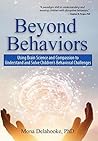
Developmental Trauma Disorder, captured the full range of what was wrong with these children. It would enable us to give them a single diagnosis, as opposed to multiple labels, and would firmly locate the origin of their problems in a
...more


“The scholars who see parallels between the American and Nazi racial classification schemes are to that extent wrong,” Whitman said, “but only because they understate the relative severity of American law.”
― Caste: The Origins of Our Discontents
― Caste: The Origins of Our Discontents
“Nazi Germany and the American South devised shockingly similar means of punishment to instill terror in the subordinate caste. Hostages in Nazi labor camps were subjected to public hangings, in front of a full assemblage of camp prisoners, for any minor offense or merely to remind the survivors of the power of their captors.”
― Caste: The Origins of Our Discontents
― Caste: The Origins of Our Discontents
“By the time that Hitler rose to power, the United States "was not just a country with racism," Whitman, the Yale legal scholar wrote. "It was the leading racist jurisdiction - so much so that even Nazi Germany looked to American for inspiration." The Nazis recognized the parallels event if many Americans did not.”
― Caste: The Origins of Our Discontents
― Caste: The Origins of Our Discontents

“In 2016, many observers were stunned at evangelicals’ apparent betrayal of their own values. In reality, evangelicals did not cast their vote despite their beliefs, but because of them.”
― Jesus and John Wayne: How White Evangelicals Corrupted a Faith and Fractured a Nation
― Jesus and John Wayne: How White Evangelicals Corrupted a Faith and Fractured a Nation
“Evangelicals hadn’t betrayed their values. Donald Trump was the culmination of their half-century-long pursuit of a militant Christian masculinity. He was the reincarnation of John Wayne, sitting tall in the saddle, a man who wasn’t afraid to resort to violence to bring order, who protected those deemed worthy of protection, who wouldn’t let political correctness get in the way of saying what had to be said or the norms of democratic society keep him from doing what needed to be done. Unencumbered by traditional Christian virtue, he was a warrior in the tradition (if not the actual physical form) of Mel Gibson’s William Wallace. He was a hero for God-and-country Christians in the line of Barry Goldwater, Ronald Reagan, and Oliver North, one suited for Duck Dynasty Americans and American Christians. He was the latest and greatest high priest of the evangelical cult of masculinity.”
― Jesus and John Wayne: How White Evangelicals Corrupted a Faith and Fractured a Nation
― Jesus and John Wayne: How White Evangelicals Corrupted a Faith and Fractured a Nation
 The F-word
— 5755 members
— last activity Jan 16, 2026 02:23PM
The F-word
— 5755 members
— last activity Jan 16, 2026 02:23PM
This is our reading group for anybody who loves to read and identifies as a feminist. We'll be reading a variety of books that may fall into one of th ...more

Diana’s 2025 Year in Books
Take a look at Diana’s Year in Books, including some fun facts about their reading.

18,904 books
|
439 friends

10,127 books
|
5 friends

1,028 books
|
31 friends

2,503 books
|
105 friends

127 books
|
35 friends

4,128 books
|
3,269 friends

793 books
|
262 friends

84 books
|
22 friends
More friends…


Polls voted on by Diana
Lists liked by Diana